

...

2026 Best Pure Aluminum Powder Types for Global Buyers?

Choosing the 2026 best Pure Aluminum Powder requires more than comparing price or purity percentages.

The 2025 U.S. Geological Survey Mineral Commodity Summaries estimates global primary aluminum production at roughly 72 million metric tons in 2024. The International Aluminium Institute reports a similar scale, near 73 million tonnes. These figures show strong upstream capacity, but they do not measure powder quality. That distinction matters.

Powder buying is more precise.

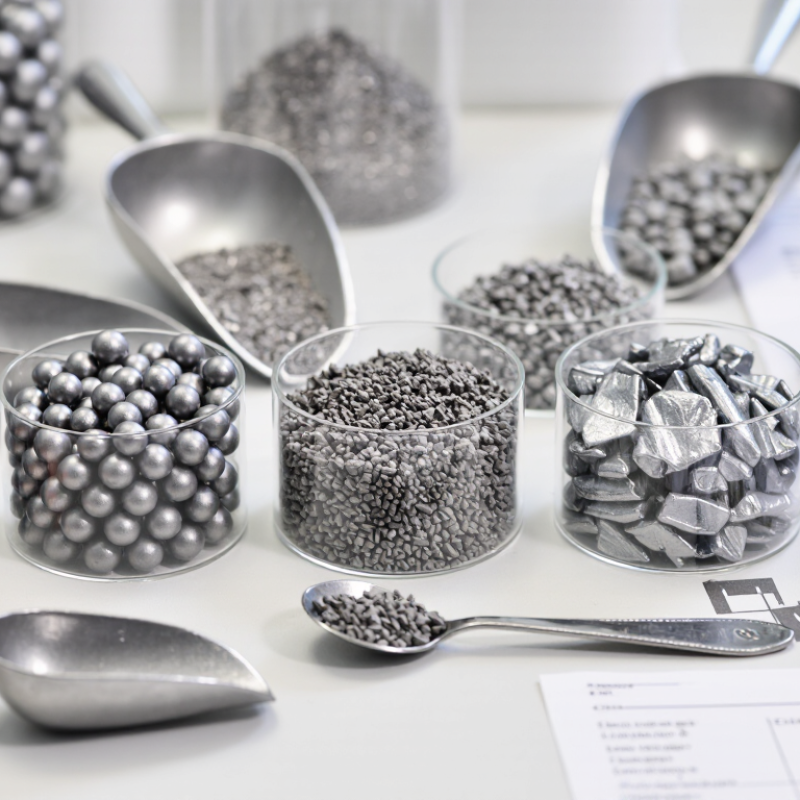
Particle size distribution, morphology, oxygen content, tap density, and packaging can change performance significantly. Gas-atomized powder usually offers more spherical particles and better flow. Air-atomized powder can provide a practical cost balance. Flake powder may suit coatings, pigments, and selected thermal applications. However, “best” depends on the process, equipment, and required finish.

As powder-metallurgy specialist Dr. Randall M. German explains, “Powder is not just a raw material; it is a process.” This principle remains useful for global buyers in 2026. A laboratory certificate may show 99.5% aluminum, yet production results can still vary. Moisture exposure, inconsistent sieving, or weak lot traceability may create problems inside a factory.

This guide compares major Pure Aluminum Powder types by application, consistency, handling, and procurement risk. It also considers ISO documentation, SDS availability, batch testing, and responsible international shipping. The analysis is not perfect; market data often covers aluminum metal rather than powder. Buyers should verify every supplier claim through independent testing, sample trials, and current regulatory review.
2026 Best Pure Aluminum Powder Types for Global Buyers?

What Defines Pure Aluminum Powder in 2026

In 2026, “pure aluminum powder” should describe more than a headline percentage. Buyers need a clear statement of aluminum content, the measurement method, and which impurities were tested. A certificate reporting 99.7% is less useful if it does not identify the remaining fraction. Looks simple. It isn’t always.

Purity should be assessed alongside oxygen, moisture, and trace metals such as iron and silicon. Aluminum powder naturally develops a thin oxide layer, so reported results can vary with sampling and analytical methods. Ask whether the supplier uses a representative batch sample and provides a current certificate of analysis. For critical applications, agree on test methods and acceptable limits before ordering.

Particle size distribution, shape, and surface condition also define whether a grade suits a buyer’s process. A fine sample may behave differently from a coarser one, even when both show the same aluminum content. Request a specification covering these properties, plus batch traceability and packaging details. I would not rely on “high purity” alone; the phrase can hide important variation. Documentation matters, but it should match the powder actually delivered.

Main Types of Pure Aluminum Powder and Their Properties

Pure aluminum powder is commonly supplied as spherical, irregular, or flake-shaped particles. Spherical grades are often made by atomization and tend to flow smoothly. Their rounded grains can support consistent dosing and dense packing. Irregular particles have rougher surfaces and may show less predictable flow. Small differences matter. Flake powder consists of thin, plate-like particles, giving it a larger surface area relative to its mass. Its appearance and behavior differ noticeably from spherical grades.

Particle size, purity, oxide-film thickness, and moisture exposure all affect performance. A fine powder may disperse differently from a coarser grade, even when both have similar stated purity. Check the full particle-size distribution, not only the average size. Also compare apparent density and flow data when evaluating suppliers. A datasheet helps, but it cannot describe every handling condition. That is worth remembering. Storage history and humidity can change how a powder behaves, so samples should be assessed under realistic conditions. Aluminum powder can present fire and inhalation hazards; follow the relevant safety data sheet and workplace controls when receiving or handling it.

How Particle Size and Shape Affect Powder Performance

2026 Best Pure Aluminum Powder Types for Global Buyers?

How Particle Size and Shape Affect Powder Performance

For buyers comparing pure aluminum powders, particle size is more than a catalog number. A finer distribution provides more surface area per unit mass, which can affect blending, coating, and other process outcomes. It may also increase cohesion and make feeding less consistent. Small differences matter.

Shape matters, too. Spherical particles often flow and pack more evenly, while irregular grains may interlock and feed less smoothly. Flake-shaped particles can offer broad surface coverage, but their orientation may vary during processing. These are tendencies, not guarantees; equipment and handling conditions can change the result.

Check the data. Ask suppliers for the particle-size distribution, measurement method, morphology images, purity, and lot-to-lot variation. A single average size can hide a wide spread that affects production. It is tempting to choose the finest powder, but finer is not automatically better. Compare a representative sample under your intended process, and review the safety data and handling guidance before purchase. Even a tidy specification may leave unanswered questions about real-world flow, so record the test conditions when comparing options.

Production Standards, Quality Grades, and Safety Requirements

Pure aluminum powder is not one uniform product. Atomized powders often have rounded particles, while milled grades may be flake-shaped. Those differences affect flow, packing, and performance in the intended process. Buyers should compare purity, particle-size distribution, morphology, and any surface treatment rather than relying on a grade name alone. Small differences matter.

Production quality depends on controlled processing and consistent testing. Request a batch-specific certificate showing aluminum content, particle-size results, and relevant impurity limits. Confirm how the supplier measures particle size, since different methods can produce different reported values. Traceable lot numbers and retained samples make later quality checks more practical. A tidy certificate is useful, but it cannot replace independent verification when specifications are critical.

Safety requirements deserve the same attention as performance. Fine aluminum powder can create combustible dust hazards, so facilities need suitable dust controls, ignition prevention, and trained handling procedures. Review the current safety data sheet before purchase, and check that packaging protects the powder from moisture and damage during transport. Storage and handling rules vary by product and location; consult qualified safety staff and applicable local requirements. Even experienced buyers can focus too heavily on purity. A powder that meets the chemistry target may still be unsuitable if its particle profile or handling controls do not fit the application.

2026 Best Pure Aluminum Powder Types for Global Buyers? - Production Standards, Quality Grades, and Safety Requirements
Powder Type Typical Morphology and Production Route Common Selection Considerations Quality Checks for Buyers Relevant Test Methods and Standards Safety and Handling Considerations
Spherical atomized aluminum powder Predominantly rounded particles, commonly produced by atomizing molten aluminum. Particle size distribution depends on the process and classification. Considered where flow, packing consistency, and repeatable particle geometry are important. Confirm suitability for the intended process rather than relying on morphology alone. Verify total aluminum content and impurity limits; particle size distribution; particle shape; apparent density; flow behavior; moisture; and lot-to-lot consistency. ASTM B214 or ISO 4497 for sieve analysis; ISO 13320 for laser-diffraction particle-size analysis where appropriate; ASTM B212 for apparent density; ASTM B213 for flow rate. Use the method suited to the powder and agreed specification. Fine aluminum powder can form combustible dust. Prevent dust release and ignition sources; use suitable dust controls, bonding/grounding, and protective equipment based on the site risk assessment and SDS.
Irregular or non-spherical atomized aluminum powder Particles have less regular shapes than spherical grades. Shape and size can vary with atomization and subsequent processing. May be selected when a buyer’s process accepts irregular particles or requires a particular packing, surface, or handling profile. Confirm performance through process-specific trials. Check chemistry, particle-size distribution, morphology, apparent or tap density as relevant, moisture, and any process-specific acceptance criteria. ASTM B214 and ISO 4497 are commonly used for sieve-based size analysis; ISO 3953 covers tap density of metal powders. These are test methods, not aluminum powder product-grade certifications. Do not assume irregular powder is non-combustible. Avoid creating airborne dust; keep material away from incompatible substances and follow the product SDS and local combustible-dust requirements.
Flake aluminum powder Thin, plate-like particles, generally made by mechanical milling and classification. Surface treatments or coatings may be present in some products; confirm whether the material is uncoated and meets the required chemistry. Often chosen for applications that need a flake-shaped particle form. Its handling, dispersion, and performance differ from atomized spherical or irregular powders. Confirm aluminum content, coating or treatment status, particle-size distribution, flake dimensions or morphology, volatile content where applicable, and batch consistency. Agree a method suitable for flake geometry: sieve analysis alone may not describe lateral dimensions or thickness adequately. Request the supplier’s validated measurement method and test report. Flake powders may create combustible dust and can be sensitive to handling conditions. Follow the SDS, avoid dust clouds and ignition sources, and use controls suitable for the specific product.
Coarse aluminum powder or granulated powder Larger particles or granules produced by classification, compaction, or other processing. The term “coarse” has no single universal particle-size boundary. Useful where a process specification calls for a coarser feed form or reduced fines. Ask for the actual size distribution and the definition of “coarse” used in the purchase specification. Check the full size distribution, fines fraction, chemistry, moisture, bulk handling characteristics, and packaging integrity. ASTM B214 or ISO 4497 may be used for sieve analysis when appropriate. Specify sieve series, sample preparation, and acceptance limits in the purchase contract. Coarser material may still contain hazardous fines. Assess the supplied particle-size distribution and follow the SDS and applicable workplace rules.
High-purity aluminum powder A chemistry-defined grade that may be supplied in spherical, irregular, or other morphologies. “High purity” does not identify a universal grade unless limits are stated. Choose by the required aluminum assay and limits for individual impurities, together with the particle form and size needed for the application. Request a lot-specific certificate of analysis with the analytical method, aluminum content, individual impurity results, particle-size data, and traceability information. Specify the analytical method and impurity reporting limits in the contract. ASTM and ISO powder test methods generally describe measurement procedures; they do not establish one universal purity grade for all aluminum powders. High chemical purity does not remove the fire, dust, or reactivity hazards of finely divided aluminum. Apply the same product-specific SDS controls.
Buyer-defined controlled-size grade Any morphology supplied to a jointly agreed particle-size distribution and chemistry specification. Grade names and size ranges vary among suppliers and applications. Best defined through explicit limits rather than labels such as “fine,” “standard,” or “premium.” State target distribution, allowable oversize and fines, morphology, and intended use. Require agreed sampling, test methods, acceptance limits, retest rules, batch identification, and documentation. Compare test results only when methods and sample preparation are comparable. Potential methods include ASTM B214 or ISO 4497 for sieve analysis, ISO 13320 for laser diffraction, ASTM B212 for apparent density, and ASTM B213 for flow rate. Select methods appropriate to the powder and contract. Packaging, storage, transport classification, and workplace controls must be based on the specific product, its SDS, and destination-country regulations.
Buyer note: There is no single globally applicable set of aluminum-powder “quality grades” or universal particle-size limits. Treat grade descriptions as procurement categories unless a recognized product specification is explicitly cited. Put chemistry, impurity limits, particle-size distribution, morphology, test methods, sampling rules, packaging, and acceptance criteria in the purchase specification. ASTM B212, ASTM B213, ASTM B214, ISO 4497, ISO 3953, and ISO 13320 are measurement methods, not blanket product approvals.
Safety note: Aluminum powder hazards depend on particle size, surface treatment, moisture, and packaging. Obtain and follow the current product-specific Safety Data Sheet (SDS), assess combustible-dust risks, and confirm applicable workplace, storage, and dangerous-goods transport rules in each destination market. Transport classification must be determined for the exact product and shipment; do not infer it from the generic product name alone.

How Global Buyers Can Select the Best Aluminum Powder Type

Choosing the best pure aluminum powder starts with the end use, not the product label. Different applications require different particle shapes, sizes, and purity levels. Atomized powder usually offers consistent flow and rounded particles. Flake powder can provide stronger surface coverage and a brighter metallic appearance. Finer particles may improve blending, but they also require stricter dust control. A perfect choice is rare.

Tips: Ask for a current certificate of analysis, particle-size distribution, purity data, and safety data sheet. Check whether the stated purity matches your process tolerance. Request a small sample before placing a large order. Examine flow, color, moisture, and residue after mixing. Small differences can affect production results.

Global buyers should also verify packaging, storage conditions, and transport compliance. Sealed moisture-resistant containers help protect powder during long shipments. The supplier should explain its testing method and batch traceability clearly. I would not rely on purity alone. Two powders with similar purity can behave differently because of particle morphology or surface treatment. Confirm applicable regional requirements before purchase, especially for workplace exposure, combustible dust, labeling, and import documentation. One test may not be enough. Repeat testing after extended storage when reliability matters. Practical selection depends on matching technical evidence with the real production environment.

2026 Best Pure Aluminum Powder Types for Global Buyers

Typical commercial ranges are shown for comparison. Actual purity, particle size, morphology, and apparent density vary by production process and supplier specification.

Selection guide: Gas-atomized powder is generally preferred for spherical particles and consistent flow. Water-atomized powder offers irregular particles for compacting and sintering. Air-atomized powder is suitable for broader industrial applications, while flake powder is commonly selected for coatings, pigments, and conductive formulations.