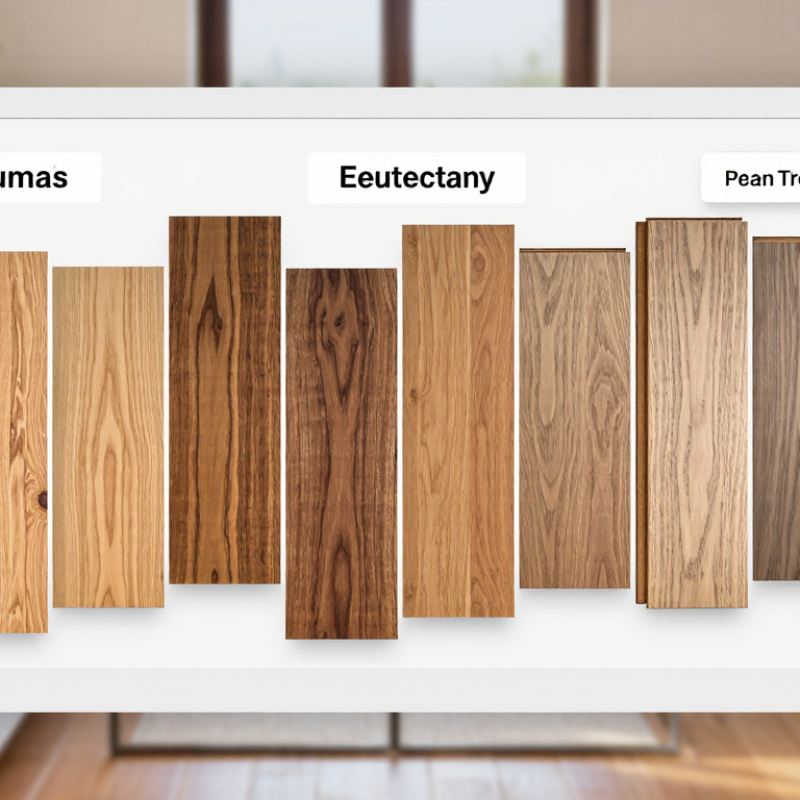
Choosing Hard Wood Flooring in 2026 requires more than comparing color swatches. Global buyers now assess species, grain, stability, origin, finish, and maintenance needs. A warm oak plank may suit a dry apartment, while walnut or engineered timber may behave differently in humid interiors. Climate matters. So does subfloor preparation. A beautiful product can still fail when moisture readings are ignored or acclimation is rushed. This guide introduces leading hardwood flooring types and explains where each option may perform best.
Solid oak remains a dependable reference because its grain is familiar, repairable, and widely available. Maple offers a clean, pale surface with subtle movement. Walnut brings deeper brown tones and a more expressive pattern. Hickory creates strong visual contrast and impressive hardness, although its character may not suit minimalist rooms. European oak can provide wider boards and refined grading choices. Engineered hardwood often offers better dimensional stability through its layered construction, which can help in changing climates. Yet quality varies. Hardness alone is not the answer.
For international projects, buyers should look beyond photographs and showroom lighting. Ask for moisture data, wear-layer thickness, finish specifications, product testing, and responsible sourcing evidence, such as FSC or PEFC documentation where available. Samples should be viewed beside windows, furniture, and existing trim. No ranking is universal. Performance depends on installation, cleaning habits, traffic, and local humidity. This overview offers a professional starting point, but some uncertainty remains. Confirm technical details with manufacturers and qualified flooring installers in the destination market.
Hardwood flooring begins with its structure. Solid wood uses one piece of timber throughout its thickness. Engineered wood combines a real hardwood surface with cross-laminated wood layers. This layered construction reduces seasonal movement, especially over concrete or radiant heating. The top wear layer matters because it determines future sanding options. Thicker surfaces usually offer more repair potential.
Grades describe appearance, not simple quality. Clear grades show fewer knots and more uniform color. Select grades may include small knots and gentle grain changes. Rustic grades display larger knots, mineral streaks, and filled cracks. These features are not defects. They change the room’s visual character and may require more careful cleaning. Grade names can vary between suppliers, so a physical sample deserves attention.
Performance depends on more than wood species or hardness. A harder species can resist dents, but it may still scratch under grit and furniture movement. Finish quality, board stability, installation, and indoor humidity work together. In practice, keep humidity reasonably stable and place mats near exterior doors. Do not trust a tiny showroom sample completely. It may hide color variation and joint movement. Even experienced buyers can misjudge daylight changes. No hardwood floor is maintenance-free. That is the part many specifications fail to emphasize.
In 2026, global buyers are comparing hardwood species by appearance, stability, and daily performance. Oak remains a practical benchmark. White oak shows open grain, pale tan color, and strong resistance to visible wear. Red oak has warmer pink undertones and a more active grain pattern. Both species accept stains well, but color samples can look different under showroom lighting.
Maple offers a clean, fine-grained surface with a naturally light tone. Its dense structure suits busy hallways and modern interiors. However, its subtle grain may reveal dents less dramatically, making repairs harder to blend. Walnut creates rich brown depth and a softer visual mood. It is less dense than maple, so sharp furniture legs can leave marks. Beautiful, but not careless-proof.
Hickory brings high hardness and striking variation, from creamy sapwood to dark brown heartwood. That contrast can make a large floor feel lively, though some buyers may find it visually restless. Teak handles moisture better because of its natural oils, but responsible sourcing requires verified legal documentation. Species alone does not determine quality. Plank width, moisture content, milling accuracy, and local humidity matter equally. I have seen attractive floors fail because installers ignored acclimation. That lesson is easy to overlook. For reliable purchasing, request test data, origin records, and a sample viewed beside the room’s actual daylight.
| Hardwood Species | Common Botanical Name | Typical Origin | Natural Color Range | Grain and Visual Character | Approx. Janka Hardness | Dimensional Stability | Typical Flooring Advantages | Key Considerations for Global Buyers | Best-Fit Applications |
|---|---|---|---|---|---|---|---|---|---|
| Red Oak | Quercus rubra | Eastern and central North America | Light brown to salmon and reddish-pink tones | Prominent open grain, cathedral patterns, and occasional flecking | 1,290 lbf Approx. 5.7 kN | Good | Widely available, easy to machine, accepts stains evenly, and offers a familiar traditional appearance | Color and grain can vary between boards; open pores may show more texture and collect dirt without proper finishing | Residential living areas, bedrooms, stairways, and classic interior schemes |
| White Oak | Quercus alba | Eastern and central North America | Light beige to medium brown with subtle olive or gray undertones | Open but generally less pronounced grain than red oak; distinctive ray fleck in quarter-sawn boards | 1,360 lbf Approx. 6.0 kN | Good to very good | Durable, versatile, compatible with natural and contemporary finishes, and suitable for engineered flooring construction | Natural color can differ by growing region; quarter-sawn and rift-sawn grades usually cost more | High-traffic homes, hospitality interiors, offices, and modern or Scandinavian designs |
| Hard Maple | Acer saccharum | Canada and the northern and eastern United States | Creamy white to pale beige, sometimes with light reddish-brown tones | Fine, generally closed grain with a clean and uniform appearance; occasional curly or birdseye figure | 1,450 lbf Approx. 6.4 kN | Good | Hard-wearing surface, bright appearance, fine texture, and excellent suitability for clean contemporary interiors | Light color can show dirt and dents from sharp impacts; it may develop a yellow-golden tone with some finishes and light exposure | Retail spaces, studios, kitchens, sports-related interiors, and minimalist residential floors |
| Hickory | Carya spp. | Eastern and central North America | Nearly white sapwood contrasted with tan, reddish-brown, or dark heartwood | Strong variation, bold grain, mineral streaks, and dramatic color contrast | 1,820 lbf Approx. 8.1 kN | Good | Very high dent resistance and a distinctive rustic character that disguises minor everyday marks | High color variation requires careful board selection and layout; harder material can require more demanding installation and machining | Busy households, country-style homes, open-plan spaces, and rustic or lodge-inspired interiors |
| Black Walnut | Juglans nigra | Eastern and central North America | Chocolate brown, purple-brown, gray-brown, and lighter sapwood tones | Mostly straight grain with occasional waves, curls, and attractive dark mineral lines | 1,010 lbf Approx. 4.5 kN | Good | Premium appearance, warm depth of color, relatively easy machining, and strong design impact | Softer than oak, maple, and hickory; darker colors can show scratches and fading more visibly in high-light areas | Feature floors, executive offices, libraries, bedrooms, and luxury residential interiors |
| Black Cherry | Prunus serotina | Eastern North America | Pinkish brown to rich reddish brown | Fine, usually straight grain with a smooth texture and understated visual movement | 950 lbf Approx. 4.2 kN | Good | Warm color, smooth surface, easy workability, and a refined appearance that becomes richer with age | Relatively soft and light-sensitive; the color typically darkens and becomes more reddish-brown over time | Low-to-moderate traffic rooms, dining areas, bedrooms, and traditional interiors |
| Ash | Fraxinus americana and related species | North America and Europe, depending on species | Nearly white to pale tan with light brown heartwood | Open, pronounced grain with a lively cathedral pattern and clear annual growth rings | Approx. 1,320 lbf Approx. 5.9 kN | Good | Bright appearance, resilient surface, noticeable grain, and a useful alternative to oak for light-colored interiors | Species and supply region should be verified because hardness, color, and availability vary; open pores need thorough finishing | Contemporary homes, Scandinavian designs, retail interiors, and moderately high-traffic rooms |
| European Beech | Fagus sylvatica | Central, western, and southern Europe | Light cream to pale pinkish brown | Fine, generally straight grain with a smooth texture and subtle visual variation | Approx. 1,450 lbf Approx. 6.4 kN | Moderate | Hard surface, smooth appearance, and good wear resistance in properly controlled interior conditions | More responsive to humidity changes than many oak products; stable subfloor preparation and moisture control are important | Dry, climate-controlled homes, apartments, offices, and light modern interiors |
| European Birch | Betula pendula and related species | Northern and eastern Europe | White to pale yellow-brown, sometimes with reddish or brown heartwood | Fine to moderately straight grain with a smooth, relatively uniform texture | Approx. 1,260 lbf Approx. 5.6 kN | Moderate | Light appearance, smooth texture, and suitability for clean, understated interior designs | Can move with seasonal humidity changes; light color may highlight wear, stains, and uneven finishing | Bedrooms, apartments, low-to-moderate traffic areas, and pale Nordic-style interiors |
| Teak | Tectona grandis | South and Southeast Asia; also cultivated in tropical regions | Golden brown to medium brown, often darkening with age | Usually straight grain, sometimes wavy, with a naturally oily feel and moderate texture | Approx. 1,000 lbf Approx. 4.5 kN | Very good | Good dimensional stability, natural oil content, attractive golden-brown color, and strong resistance to moisture-related movement | Supply-chain legality and responsible forestry documentation should be checked; surface oils may affect adhesive and finish selection | Premium interiors, humid-climate applications, feature areas, and carefully specified engineered floors |
| Jatoba | Hymenaea courbaril | Central and South America | Salmon red to reddish brown, often becoming deeper and darker with age | Interlocked grain, medium-to-coarse texture, and strong visual variation | Approx. 2,690 lbf Approx. 11.9 kN | Good | Exceptional hardness, high wear resistance, and rich color for demanding high-traffic interiors | Very hard material can be difficult to cut and nail; color change and responsible sourcing documentation should be considered | Commercial interiors, entrance areas, high-traffic homes, and dramatic feature floors |
| Merbau | Intsia bijuga and related species | Southeast Asia, the Pacific, and northern Australia | Orange-brown to reddish brown, often with darker streaks | Interlocked grain with a moderately coarse texture and distinctive mineral deposits | Approx. 1,840 lbf Approx. 8.2 kN | Very good | Hard, durable, and comparatively stable, with strong resistance to everyday abrasion | Natural extractives may bleed or discolor adjacent materials; verify legal origin and test finish compatibility | High-traffic interiors, commercial projects, and warm-toned contemporary designs |
| Acacia | Acacia spp. | Asia, Africa, Australia, and the Americas, depending on species | Highly variable: cream, honey, golden brown, reddish brown, and dark brown | Often dramatic, with contrasting colors, knots, mineral streaks, and irregular grain | Species-dependent Often approximately 1,700–2,300 lbf | Moderate to good | Distinctive natural variation, strong visual character, and a broad range of color effects | “Acacia” covers many species with different performance levels; buyers should request the exact botanical name, hardness data, and moisture specifications | Feature floors, rustic interiors, hospitality projects, and spaces seeking high visual variation |
Technical note: Janka hardness figures are approximate reference values in pounds-force and may vary by species, growing region, moisture content, test method, and sample selection. Actual flooring performance also depends on board construction, finish system, installation method, subfloor condition, and indoor humidity control.
2026 Top Hard Wood Flooring Types for Global Buyers
Engineered Versus Solid Hardwood Flooring Explained
Engineered and solid hardwood are not interchangeable choices. Solid flooring uses one timber species throughout each plank. Engineered flooring combines a hardwood wear layer with cross-laid wood layers beneath. This structure improves dimensional stability when humidity changes.
Grand View Research valued the global wood flooring market at about USD 9.1 billion in 2023. Its 2024 market outlook expects continued growth through 2030. The National Wood Flooring Association’s technical guidance also recognizes engineered flooring as a practical option for basements and concrete subfloors. In my installation experience, engineered boards usually tolerate seasonal movement better. Solid oak, however, offers deeper future sanding potential. That advantage matters in busy hotels and older houses. It also costs more during installation.
Tips: Check the wear layer before comparing prices. A thicker hardwood layer allows more refinishing. Ask for moisture readings from both the subfloor and the room. The USDA Forest Products Laboratory explains that wood responds to relative humidity, so acclimation should never be treated as a formality. A small measurement error can create large gaps later. Still, engineered flooring is not automatically superior. Poor core construction, weak locking joints, or unsuitable adhesives can reduce service life. Buyers should request technical sheets, installation limits, and independently verified sustainability documentation. Market forecasts are useful, but they cannot replace a site inspection.
Choosing hardwood flooring in 2026 requires more than matching color with furniture. Climate affects movement, surface wear, and long-term stability. Engineered oak remains a practical choice for many regions because its layered structure handles seasonal changes better than solid boards. Dense walnut suits moderate interiors, while maple offers a harder surface for busy homes. Species matter, but construction matters more.
In humid tropical climates, choose narrow engineered planks, moisture-resistant finishes, and careful subfloor testing. Leave expansion gaps around walls and door frames. High humidity can make wide boards swell and cup. In dry continental regions, solid hardwood can work well, but indoor humidity should remain stable, often near 40–60 percent. A humidifier may prevent winter gaps. Cold climates also need insulated subfloors and gradual acclimation before installation.
Coastal homes face salt air, dampness, and tracked sand. A matte, durable finish can hide small scratches better than a glossy surface. In hot, dry areas, lighter woods may reduce the visual impact of fading, but direct sunlight still changes color. No flooring type solves every climate problem. One detail is often overlooked: local moisture readings should guide the final decision. A beautiful board can fail when installation ignores the building’s real conditions. Sometimes, choosing a narrower plank is less fashionable, but more reliable.
Janka hardness comparison and climate-selection guidance
Janka hardness indicates resistance to dents and wear; higher values are useful for high-traffic areas, but hardness alone does not determine climate performance. In humid tropical regions, use properly acclimated engineered flooring, stable installation methods, and indoor humidity control. In temperate climates, oak, maple, ash, walnut, cherry, teak, and hickory can perform well when indoor relative humidity is maintained around 35–55%. In dry or cold climates, engineered construction and seasonal humidity management can help reduce gaps, cupping, and shrinking. Values are representative Janka hardness ratings in pounds-force based on commonly published U.S. Forest Products Laboratory reference data.
For global buyers, hardwood selection starts with the room, not the color. European oak offers stable grain and moderate hardness. Maple resists dents but shows scratches clearly. Ash creates a lighter appearance, yet its open grain needs careful finishing. In humid regions, engineered hardwood can reduce seasonal movement. Solid planks remain valuable, but they require stricter moisture control. Measure twice.
Durability should be checked through hardness data, wear-layer thickness, finish quality, and warranty terms. A high hardness rating does not guarantee long service life. Poor subfloor preparation can damage even premium flooring. Ask for moisture-test records and product samples before ordering. Scrape a sample gently with a key. It will not replace laboratory testing, but it reveals weak finishes quickly.
Sustainability requires more than a recycled-looking package. Buyers should request legal timber documentation, traceability records, and credible forest-management certification. Consider local species, repairability, and expected service life. Short transport distances can also reduce emissions. Installation demands equal attention. Acclimate the flooring according to the supplier’s instructions, test the subfloor, and leave expansion gaps around walls. Adhesives and finishes should meet the destination market’s emission requirements. I would not trust a label alone. Documents can be incomplete, and installation teams sometimes ignore them. A clear checklist, independent inspection, and photographic records create stronger protection.