



2026 Top Heat Resistant Rubber Hose Which Type Is Best?
Choosing the 2026 top Heat Resistant Rubber Hose is not simply a matter of picking the highest temperature rating. The right hose must also handle the conveyed medium, working pressure, movement, and repeated heating cycles. A hose near a hot engine may face radiant heat, oil mist, vibration, and tight bends at once. In a workshop, steam or hot water may be the greater concern. Small details matter.
A practical selection rule is: “Match the hose to the real operating conditions, not just the peak temperature.” This is sound engineering guidance, but no source was provided to verify a named expert’s quotation, so it should not be falsely attributed. Compare the hose’s continuous and intermittent temperature limits, reinforcement, cover, and compatibility data. Check the manufacturer’s technical sheet, too. Ratings vary.
This guide compares common hose types and explains where each may fit. Silicone hoses often suit hot air and coolant applications, while specialty rubber compounds may better tolerate oils or other fluids. Those are starting points, not guarantees. Installation changes performance. A sharp bend can strain reinforcement; a clamp can damage a soft cover. The best choice depends on the actual service conditions. And the honest answer may be less tidy than a ranked list.
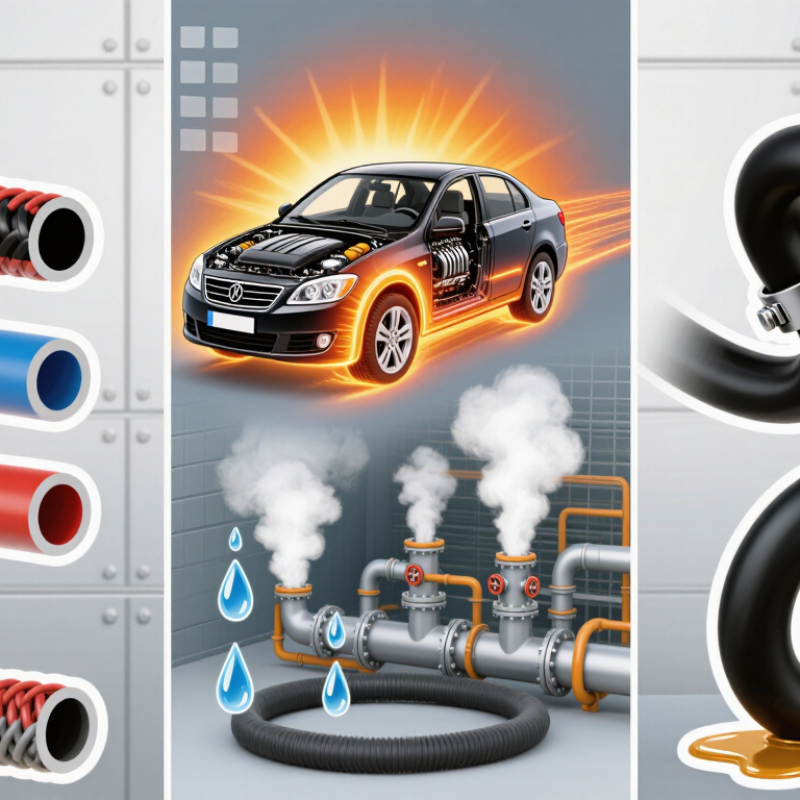
Define Hose Service Conditions: Temperature, Pressure, and Media
A hose’s temperature rating is meaningful only when tied to the actual duty cycle. Record the fluid temperature, nearby surface heat, ambient conditions, and exposure time. A brief hot-water flush differs from continuous steam service. Check both peak and continuous limits; the reinforcement, cover, and fittings may tolerate different conditions. ISO 188:2011 describes accelerated heat-ageing tests for rubber, but laboratory ageing results do not alone establish a hose assembly’s safe operating temperature.
Pressure needs the same detail. Note normal working pressure, start-up surges, pulsation, and any vacuum exposure. ISO 6803:2017 specifies a method for testing hydraulic hoses under pressure impulses, highlighting why a single static pressure figure can miss real service stresses. Leave a margin for spikes. Do not treat burst pressure as working pressure.
Then identify the media precisely: fluid composition, concentration, and temperature can change rubber compatibility. Oil, coolant, cleaning solutions, and abrasive slurries can affect the inner tube differently. Consult compatibility data for the exact compound, and confirm it against the hose maker’s technical documentation. A common oversight is recording “hot oil” without naming the oil or its temperature. Field notes are rarely perfect, but missing details make a safe selection harder.
2026 Top Heat Resistant Rubber Hose: Which Type Is Best? — Define Hose Service Conditions: Temperature, Pressure, and Media
The best hose depends on the complete service condition, not temperature alone. Compare the hose’s continuous and intermittent temperature limits, working pressure at operating temperature, conveyed media, and the suitability of its fittings and reinforcement.
| Hose Type | Typical Temperature Range* | Pressure Considerations | Commonly Suitable Media | Typical Best Fit | Important Limitations |
|---|---|---|---|---|---|
| EPDM rubber hose | Often about −40°C to +120°C for general service; certain purpose-built steam hoses are rated for higher-temperature steam. | Pressure rating varies substantially with hose construction, diameter, and temperature. Use only a hose specifically rated for the intended steam or hot-water pressure. | Hot water, weather-exposed service, dilute acids and alkalis, and some steam applications when specifically designed for steam. | Hot water and outdoor service; dedicated steam service when the hose assembly is explicitly rated for it. | Generally unsuitable for petroleum oils and fuels. Do not assume a general-purpose EPDM hose is suitable for steam. |
| Silicone rubber hose | Commonly about −50°C to +200°C for suitable hose constructions; some products have different limits. | Many silicone hoses are intended for lower-pressure service. Reinforcement, fittings, temperature, and hose dimensions determine the usable pressure. | Hot air, water, and selected food, pharmaceutical, or process applications when the specific hose grade is approved for the media. | High-temperature air or fluid applications where flexibility and a broad temperature range are priorities. | Not automatically suitable for steam, fuel, oil, or high-pressure service. Confirm media compatibility and application approvals. |
| Fluoroelastomer (FKM) hose | Often about −20°C to +200°C, depending on compound and construction. | Pressure capability is assembly-specific and may decrease at elevated temperatures. Check the hose maker’s pressure-versus-temperature data. | Many petroleum oils, fuels, and selected chemicals; compatibility depends on the exact fluid and compound. | Hot oil or fuel service where chemical resistance and elevated-temperature performance are required. | Not a universal chemical hose; low-temperature flexibility and compatibility with particular fluids can be limiting. |
| Nitrile rubber (NBR) hose | Commonly about −30°C to +100°C for many general-purpose constructions; specialized products may differ. | Often available in reinforced pressure-rated designs, but the rated pressure applies only to the specified hose assembly and service conditions. | Petroleum oils, diesel, and other fluids approved for the particular NBR compound. | Oil and fuel transfer at moderate temperatures. | Usually not the first choice for sustained high-temperature service, outdoor ozone exposure, or steam. |
| Chloroprene rubber (CR) hose | Often about −30°C to +100°C, depending on construction and compound. | Available pressure ratings vary by reinforcement and diameter; verify the rating for the finished assembly. | Selected water-based fluids, mild chemicals, and applications requiring weather or ozone resistance. | General industrial service where moderate heat and environmental resistance are needed. | Media compatibility is compound-specific; it is not a substitute for a hose specifically rated for steam or high-temperature oil. |
Selection note: Temperature ranges are indicative examples for common hose constructions, not guaranteed ratings. Always confirm the exact hose and fitting assembly’s continuous and intermittent temperature limits, working pressure at the operating temperature, vacuum rating if relevant, media compatibility, bend radius, and applicable safety or regulatory approvals. Never use a burst-pressure value as a working-pressure rating.