

...

How to Choose the Right Intramedullary Nail?

Choosing an intramedullary nail is not a matter of picking the longest implant on the shelf. Fracture location, bone shape, canal width, and the patient’s overall condition all matter. A nail that looks suitable on a planning screen may behave differently once the surgeon considers the fracture’s stability and surrounding soft tissue. Small details count.

Professor Hans-Christoph Pape is a recognized orthopedic trauma researcher. A practical paraphrase of the fracture-care principles reflected in his work is: “Match the fixation strategy to the injury and the patient, not to habit.” This is a paraphrase, not a verbatim quotation. The distinction matters. Device selection should draw on current evidence, the manufacturer’s instructions, and the treating team’s judgment—not a slogan.

This guide examines the decisions that shape nail choice: fracture pattern, nail design, diameter, length, locking options, and material. It also considers anatomy and practical constraints, such as a narrow canal or limited imaging access. The right choice is rarely determined by one feature alone. And no checklist can replace clinical judgment. A useful comparison can still expose assumptions worth revisiting, including the temptation to favor familiar hardware over a careful review of the specific case.
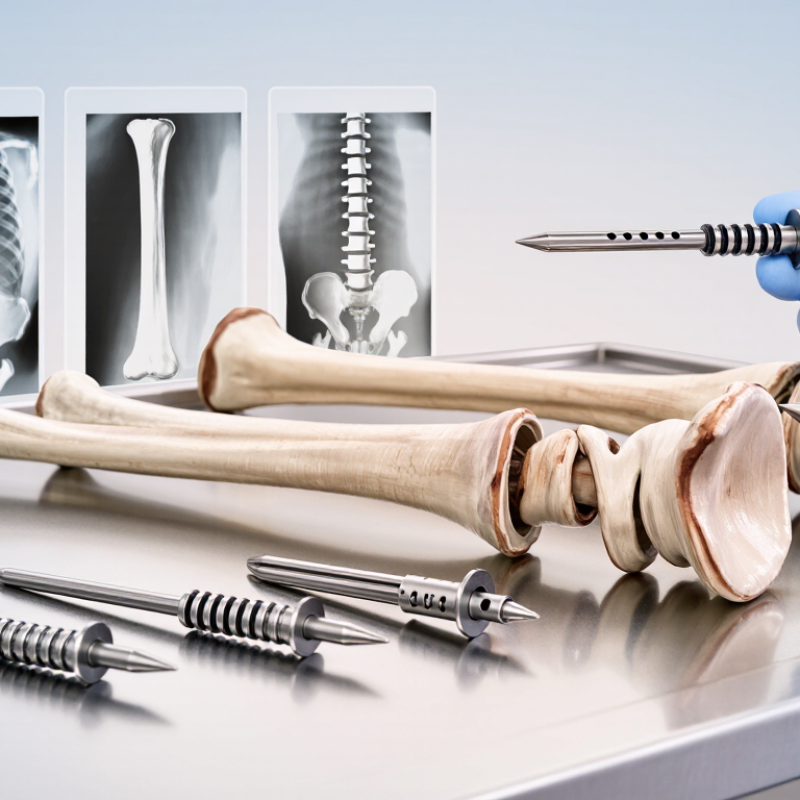
How to Choose the Right Intramedullary Nail?

Assess the Fracture Pattern and Bone Anatomy

A fracture’s level and shape should guide nail selection before diameter or locking options.

A midshaft break often sits within the canal’s narrow isthmus, where nail fit and alignment are easier to control. Proximal and distal fractures are less forgiving. Their wider metaphyseal canals can let the nail drift, causing angular deformity or rotation. AO Surgery Reference guidance stresses matching the implant and reduction technique to fracture location and geometry. Small details matter. Check the canal’s curve, the entry point, and whether the fracture extends into a joint.

Bone anatomy changes the plan, too. A narrow canal, unusual bow, prior deformity, or fragile cortex may affect nail passage and fixation. Measure carefully on imaging, and assess both ends of the bone; a single view can hide rotation or extension.

The 2019 Global Burden of Disease Study, published in The Lancet Healthy Longevity, estimated 178 million new fractures worldwide that year. That scale makes careful assessment important, but population data cannot choose an implant for an individual.

A tidy fracture classification can still miss a meaningful anatomical variation. When the pattern is unstable or the canal is unusual, the surgeon’s judgment and operative findings remain essential.

Compare Nail Designs, Materials, and Locking Options

Choosing an intramedullary nail means matching its geometry to the fracture, not selecting the most complex design. A straight or gently curved nail must fit the bone’s canal without creating avoidable contact at the entry point. Titanium alloys are generally less stiff than stainless steel, while the final feel also depends on nail diameter and shape. Check the patient’s anatomy, fracture level, and any existing implants. Small details matter.

Locking options shape stability. Static locking, with screws at both ends, can control rotation and length in unstable fractures. Dynamic locking may allow controlled compression when the fracture pattern supports it. Multiple screw directions can help secure short or awkward bone segments, but more holes do not automatically mean better fixation. In the SPRINT randomized trial, one-year primary-event rates were 25.2% with reamed nails and 27.8% with unreamed nails; the difference was not statistically significant. The trial compared reaming strategies, not every nail design, so its findings should not be overextended. A tidy rule is tempting. Real fractures rarely cooperate. Consider the evidence alongside bone quality, soft tissues, and the surgeon’s experience with the locking system.

How to Choose the Right Intramedullary Nail? - Compare Nail Designs, Materials, and Locking Options

Nail design Typical applications Common materials Typical locking options Potential advantages Key considerations
Femoral shaft nail (antegrade) Many fractures of the femoral shaft; inserted through an entry point near the hip. Usually titanium alloy or stainless steel, depending on the system. Proximal and distal transverse screws; static or dynamic configurations may be available. Provides internal alignment and rotational control; locking can support length and stability in many fracture patterns. Entry point, nail curvature, fracture location, and nearby anatomy matter. Proximal entry can affect the hip abductor region.
Femoral shaft nail (retrograde) Selected femoral shaft fractures; inserted through the knee end of the femur. Usually titanium alloy or stainless steel. Distal and proximal interlocking screws; some designs offer multiple distal screw orientations. Can be useful when an antegrade approach is unsuitable or when positioning and associated injuries favor a knee-entry approach. The knee joint entry site and distal fracture pattern require consideration; not every fracture is suitable for this approach.
Cephalomedullary nail Many intertrochanteric and subtrochanteric fractures of the proximal femur. Commonly titanium alloy or stainless steel. A large proximal head element, such as a screw or blade, plus distal locking screws; some designs allow controlled sliding. Combines an intramedullary load-sharing implant with fixation into the femoral head and neck. Head-element position, reduction quality, bone quality, and fracture stability influence fixation. Risks include cut-out or cut-through.
Tibial nail Many tibial shaft fractures, including selected proximal or distal shaft patterns. Usually titanium alloy or stainless steel. Proximal and distal transverse screws; multiple locking directions may help control short or metaphyseal segments. An intramedullary position can provide load-sharing fixation and allow options for early movement when clinically appropriate. Proximal and distal fractures can be harder to align and control. Soft-tissue condition, entry technique, and screw placement are important.
Humeral nail Selected fractures of the humeral shaft and, with appropriate designs, some proximal humeral fractures. Usually titanium alloy or stainless steel. Proximal and distal locking screws; configuration varies by nail design and fracture location. Provides internal fixation without a long plate along the shaft; may be considered for selected fracture patterns and patients. Shoulder entry can affect the rotator cuff, and distal locking must account for nearby nerves. Fracture pattern and patient factors guide selection.
Flexible or elastic nails Selected pediatric long-bone fractures, particularly in skeletally immature patients. Commonly titanium alloy or stainless steel; material and flexibility vary by system. Typically paired flexible nails provide opposing support; conventional interlocking screws are not usually the primary locking method. Small incisions and flexible fixation can suit selected pediatric fractures while avoiding a long plate. Best suited to specific age groups and fracture patterns. Nail prominence, alignment, and growth-plate considerations need attention.
Long versus short nail Available in some femoral and tibial nail systems; selected according to fracture extent and anatomy. Material depends on the specific implant system; titanium alloy and stainless steel are common. Short nails generally have fewer distal locking options; long nails typically extend farther along the bone and use distal locking screws. A longer nail can span more of the bone; a shorter nail may require less extensive insertion in suitable cases. Length should match the fracture, bone anatomy, and implant plan. A short nail is not suitable for every fracture pattern.

Material, geometry, and locking features vary among implant systems. Selection should be based on fracture pattern, anatomy, bone quality, patient factors, and the treating surgeon’s judgment.

Match Nail Dimensions to the Patient’s Bone

Choosing an intramedullary nail begins with the patient’s bone, not a standard size chart. On radiographs, clinicians assess canal width, bone length, curvature, and fracture location. CT may clarify anatomy when plain images leave uncertainty. Small details matter.

The nail’s diameter should suit the medullary canal. An oversized implant may place excess stress on bone, while a loose fit may reduce stability in some situations. Length matters too: a nail that is too short may not span the intended area, while one that is too long can conflict with nearby anatomy.

The goal is not simply the largest or longest option. Fracture pattern and bone quality also shape the choice.

Measurements help, but they are not perfect. Positioning, image magnification, and irregular bone contours can affect estimates, so surgeons compare views and use established sizing methods. They also consider the nail’s curve and locking options; a bone that looks straight on one image may have a subtle bend.

In younger patients, growth considerations require particular care. The final selection depends on the patient’s anatomy, examination, and specific injury.

Consider Stability, Surgical Access, and Recovery Needs

How to Choose the Right Intramedullary Nail?

Stability, surgical access, and recovery goals should guide nail selection. For a tibial shaft fracture, the surgeon considers its level, pattern, and whether the surrounding soft tissue is damaged. A nail must provide enough control to limit rotation and shortening as the bone heals. Locking-screw position matters, too; a fracture close to the knee or ankle may need different fixation planning.

Surgical access affects both the operation and the patient’s early experience. Entry through the knee can cause anterior knee discomfort, while other approaches may suit particular fracture locations or anatomy. The AAOS 2020 guideline recognizes intramedullary nailing as an established option for adult tibial shaft fractures. In the SPRINT randomized trial, 1,319 patients received reamed or unreamed nails. Its findings underscore that patient and fracture characteristics matter; one nail approach does not guarantee better recovery for everyone. Recovery also depends on injury severity, soft-tissue healing, and safe weight-bearing instructions.

Tips: Ask how the nail’s length, diameter, and locking pattern fit your fracture. Clarify when weight-bearing can begin. Small details matter. No choice is perfect, and imaging or surgical findings may change the plan.

Sources: AAOS, Management of Tibial Shaft Fractures Clinical Practice Guideline, 2020; SPRINT Investigators, Journal of Bone and Joint Surgery, 2008.

Review Risks and Confirm the Choice with the Orthopedic Team

Choosing the right intramedullary nail starts with understanding the fracture, not comparing devices alone. Its location, shape, and stability help the orthopedic team assess suitable options. Bone quality, existing implants, health conditions, and planned activity also matter. Imaging provides useful detail, but it cannot answer every question about healing or daily function.

Review the possible benefits and risks with your orthopedic team before agreeing to a plan. Ask about infection, bleeding, blood clots, delayed healing, poor alignment, ongoing pain, and the possibility of another procedure. The likelihood of each problem varies with the injury and your health. Discuss alternatives, expected weight-bearing limits, and how follow-up imaging will guide care. It is easy to focus only on the operation; recovery can be less predictable than expected. Say so if an explanation feels unclear, and ask the team to explain the trade-offs in plain language.

Tips: Bring your medication list, allergies, and questions to the appointment. Ask whom to contact about fever, wound drainage, or worsening pain after surgery. Also clarify what symptoms need urgent attention.

How to Choose the Right Intramedullary Nail

Review these decision factors and confirm the choice with the orthopedic team.

Each bar marks a topic to discuss; it does not represent a measured score or complication rate. Selection depends on the fracture pattern and location, bone anatomy and quality, alignment and fixation needs, and patient-specific factors. Ask the orthopedic team about relevant risks, such as infection, malalignment, delayed or nonunion, hardware problems, and—particularly with tibial nails—anterior knee pain.

Article Source: