

...

Best 180 Degree Concealed Hinges in 2026?

A cabinet door that swings fully clear can make a tight kitchen or workshop feel easier to use. That is the appeal of a 180 Degree Concealed Hinge: it stays hidden when the door is closed and allows a wide opening when properly installed. Yet the number on the package is only a starting point. Door thickness, frame style, overlay, weight, and available clearance all affect whether a hinge will work as expected.

This guide looks at what matters when comparing concealed hinges in 2026, including opening range, adjustment, construction, installation requirements, and long-term performance. A sturdy hinge should move smoothly without sagging, scraping, or forcing the door out of alignment. Small details count. A few millimeters can change the fit. We also consider whether products offer clear specifications and accessible installation guidance, since vague measurements make buying harder. Manufacturer claims are useful, but they do not replace checking the hinge against your actual cabinet dimensions.

There is no single best option for every project. A heavy pantry door may need a different hinge and mounting pattern than a light cabinet front. Some doors may not reach a full 180-degree swing because nearby walls or handles get in the way. That limitation is easy to overlook. The recommendations ahead are intended to help narrow the choices, not promise a perfect fit in every setup. Measure carefully, review the product documentation, and allow for the occasional adjustment after installation.
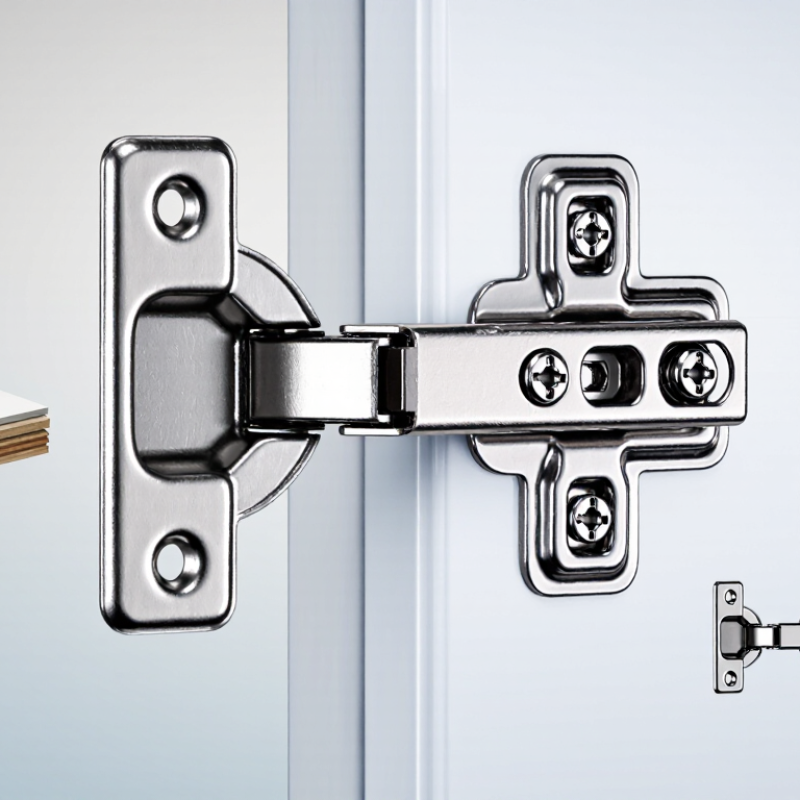
Best 180 Degree Concealed Hinges in 2026?

What 180-Degree Concealed Hinges Are and How They Work

A 180-degree concealed hinge lets a cabinet door swing wide while keeping most of its mechanism out of sight when closed. Inside the cabinet, linked arms guide the door through its movement. As it opens, the arms pivot and shift the door clear of the cabinet edge. At full travel, the door may sit nearly parallel with the cabinet side, leaving the opening easier to access.

The “180 degrees” describes the intended opening range, not a guarantee for every installation. Cabinet walls, door thickness, nearby handles, and hinge adjustment can limit travel. The hinge’s concealed position also depends on precise mounting: small errors in drilling or alignment can make a door rub, sag, or close unevenly. Check the product’s installation drawing and load rating before choosing hardware. It is easy to focus on the angle and overlook the space the door needs.

Tips: Measure the door and cabinet opening first. Test the movement slowly before loading the cabinet, and adjust the hinge if the door catches. A small gap can matter. If the opening is not perfectly square, the result may need more adjustment than expected.

Common Applications and Key Design Features

A 180-degree concealed hinge is useful when a door must swing clear of its opening, not merely look seamless. Common applications include full-access kitchen cabinets, utility cupboards, folding partitions, and flush interior panels. The open door can sit nearly parallel with the cabinet side, making wide drawers easier to reach and nearby surfaces less obstructed. That extra travel needs room, though. Check adjacent walls, handles, and door thickness before choosing a hinge.

The 2024 U.S. Houzz Kitchen Trends Study reports that 76% of renovating homeowners upgraded their cabinets, showing how often cabinet hardware matters in remodels. For a concealed hinge, inspect the opening angle, load rating, adjustment range, and mounting pattern. A three-way adjustment helps correct small alignment shifts after installation. Soft-close action can reduce slamming, but it does not fix a poorly supported door. Measure twice. In practice, a heavy, tall door may need more hinges or a different configuration than a standard cabinet door. Specifications vary, and “180 degree” does not guarantee the same clearance in every installation. The detail is easy to overlook.

How to Evaluate Concealed Hinges in 2026

Best 180 Degree Concealed Hinges in 2026?

How to Evaluate Concealed Hinges in 2026

A 180-degree opening claim is useful only when the hinge clears the cabinet, wall, and neighboring doors. Measure the door thickness, overlay, and available side clearance before comparing models. Check the hinge’s stated opening angle against its installation diagram, not just the product heading. A paper template can reveal trouble early. Fit changes things.

For a dependable comparison, match the hinge’s load rating to the door’s size and weight. Confirm whether the rating applies per hinge or to a complete set. Look for adjustment in three directions; it makes small alignment corrections easier after installation. Ask how many opening cycles the hinge has been tested for, and under what conditions. Those details matter more than a polished finish.

Check that the mounting plate and screws suit the cabinet material, especially with heavier doors. Rust-resistant finishes can help in kitchens or laundry areas, but they do not replace sensible cleaning and care. Do not assume every “concealed” hinge disappears from every viewing angle. A simple trial with a sample door can expose binding, uneven gaps, or a closing feel that specifications miss. Small alignment errors are easy to overlook. I would still treat published ratings as a starting point, not a guarantee for every cabinet.

Best 180 Degree Concealed Hinges in 2026? - How to Evaluate Concealed Hinges in 2026

A practical comparison framework for checking fit, movement, durability, installation, and documentation—without relying on brand rankings.

Evaluation Dimension What to Look For Why It Matters How to Verify
Opening angle A stated 180° opening, with the angle measured in the intended door and frame setup. “180°” describes the intended opening range, but nearby walls, handles, trim, and the mounting position can restrict actual movement. Check the product drawing and test the hinge in a representative frame before specifying it for a tight-clearance installation.
Door and frame compatibility Documented limits for door thickness, door construction, frame type, and mounting arrangement. Concealed hinges use different cup, pivot, and frame-fixing geometries; dimensions are not interchangeable across designs. Compare the technical drawing with the measured door and frame. Confirm required recesses, edge distances, and fixing locations.
Load capacity A clearly stated capacity for the specified number of hinges and the stated door dimensions. Capacity depends on the hinge model, door size and weight, fixing material, mounting quality, and load distribution. Use the manufacturer’s published loading table for the complete installation. Do not treat a per-hinge rating as a door-system rating.
Adjustment range Documented adjustment for alignment in the directions needed by the installation, such as height, lateral position, or depth. Adjustment helps correct small fitting variations and maintain consistent gaps after installation. Check the installation instructions for adjustment directions, available travel, and whether adjustment is possible with the door mounted.
Materials and finish Identified hinge-body and pin materials, plus a finish suitable for the expected indoor or outdoor exposure. Corrosion resistance and wear depend on the material, finish, environment, and maintenance—not appearance alone. Review the material specification and any corrosion-test information. For damp or exterior locations, confirm suitability in writing.
Opening and closing action Movement that is smooth and controlled, with no binding, unexpected looseness, or sharp change in resistance. Consistent action affects everyday usability and can reveal alignment or installation problems. Test a correctly mounted sample through repeated full opening and closing. Check the door at several points in its travel.
Cycle testing A published durability test result that identifies the test method, cycle count, and tested hinge configuration. A cycle figure is meaningful only when its test conditions and sample configuration are clear. Request the test report or technical documentation. Compare results only when the test methods and conditions are comparable.
Installation requirements Clear templates, machining dimensions, fixing details, and guidance for the intended door and frame materials. Accurate machining and suitable fasteners are essential to secure mounting and correct hinge movement. Review the installation sheet before purchase; confirm that the required tools, recesses, and fasteners are practical for the project.
Maintenance and serviceability Accessible adjustment points, replacement-part information, and stated lubrication or inspection guidance. Service access can reduce repair time and help keep a frequently used door aligned. Check whether the hinge can be adjusted or serviced in place and whether wear parts or replacement hinges are available.
Documentation and warranty Current technical drawings, installation instructions, load guidance, and clearly stated warranty terms. Good documentation makes it easier to verify suitability and resolve installation or performance issues. Save the relevant documents and confirm warranty coverage, exclusions, and required installation conditions before specification.

Selection note: There is no universal “best” 180° concealed hinge. Confirm compatibility and load capacity for the specific door, frame, fixing method, and operating environment; published ratings and dimensions are model-specific.

Types of 180-Degree Hinges and Their Trade-Offs

A 180-degree concealed hinge is not one single design. Multi-link hinges use connected arms to guide the door outward, often keeping the hardware hidden when closed. They can provide a broad opening, but their joint geometry needs room inside the cabinet. Check the door thickness and frame clearance before choosing one. Small gaps matter.

Pivot-style concealed hinges support the door around upper and lower pivot points. They suit some flush installations and can feel steady when correctly aligned. However, installation is less forgiving: a slightly misplaced pivot can make the door rub or sit unevenly. Wide-angle concealed hinges use a different arm path to move the door clear of the opening. They may be easier to fit in familiar cabinet layouts, but not every model reaches a true 180 degrees.

Load capacity, opening angle, and mounting space should be checked together. A heavy door can exceed a hinge’s rating even if it opens freely during a quick test. On a sample door, test the full swing with handles, adjacent doors, and nearby walls in place. That catches surprises. I would also leave room for adjustment; real cabinets are rarely as square as drawings suggest. The trade-off is usually between compact hardware, easy fitting, and dependable clearance. No hinge delivers all three in every installation.

How to Choose and Install the Right Hinge

A 180-degree concealed hinge is useful only when the door can open that far without hitting a wall, handle, or neighboring cabinet. Measure the opening angle and door overlay, then check the hinge’s cup size, door thickness range, and adjustment directions. For heavy or wide doors, compare the load rating with the door’s actual weight; hinge count alone does not guarantee stability. Leave room for the door edge and handle to clear the cabinet frame.

Use performance data, not appearance alone. ANSI/BHMA A156.9 cabinet-hardware ratings use endurance testing; commonly cited hinge benchmarks are 25,000 cycles for Grade 3, 50,000 for Grade 2, and 100,000 for Grade 1. Confirm the current standard edition and the supplier’s test documentation before comparing products. These numbers describe repeated test cycles, not a promise of service life in every kitchen. Dust, misalignment, and slamming still matter.

Installation rewards patience. Mark the cup centers with a template, drill to the specified depth, and keep the bit square; a small mistake can break through the door face. Fasten the hinge loosely, align the door with a level, then adjust depth, height, and side position in small turns. Test the full swing before tightening everything. It may still need a second adjustment. Recheck after loading the cabinet, since a door that looks level when empty can sag slightly under use.

Concealed Hinge Opening Angles

Typical concealed hinge options range from about 90° to 180°. Choose a hinge whose opening angle suits the cabinet’s access needs, and check the product specifications and cabinet clearances before installation. Actual opening angles can vary by hinge design and mounting geometry.