

Electric mobility is expanding quickly, making battery management a central engineering decision for global vehicle buyers. The International Energy Agency’s Global EV Outlook 2024 recorded almost 14 million electric-car sales in 2023. It also expected sales to reach about 17 million in 2024. This growth increases demand for accurate monitoring, safer charging, and dependable battery data.
An Ev Bms System measures cell voltage, temperature, current, and battery state. It can protect a pack from overcharging, deep discharge, overheating, and uneven cell behavior. BloombergNEF’s 2024 Battery Pack Prices report placed the average lithium-ion pack price at 115 dollars per kilowatt-hour. Lower costs are valuable, but they do not remove safety risks. A weak balancing strategy can still shorten range and accelerate cell degradation. Safety comes first.
This guide evaluates seven BMS systems for global buyers using practical and technical criteria. These include measurement accuracy, thermal protection, balancing control, communication support, diagnostics, scalability, and integration effort. Compatibility with CAN networks, cloud platforms, and common vehicle architectures also matters. Relevant safety thinking includes ISO 26262 processes and clear fault-response design. Certification claims must be verified with suppliers, not assumed from marketing pages. The selected systems are compared through documented specifications, manufacturer evidence, and realistic deployment needs. A fleet operator may value remote diagnostics, while a battery developer may prioritize flexible firmware access. No ranking is perfect. Regional support, replacement parts, and engineering response times can change the final decision. This review aims to make those trade-offs visible before a costly prototype or fleet rollout.
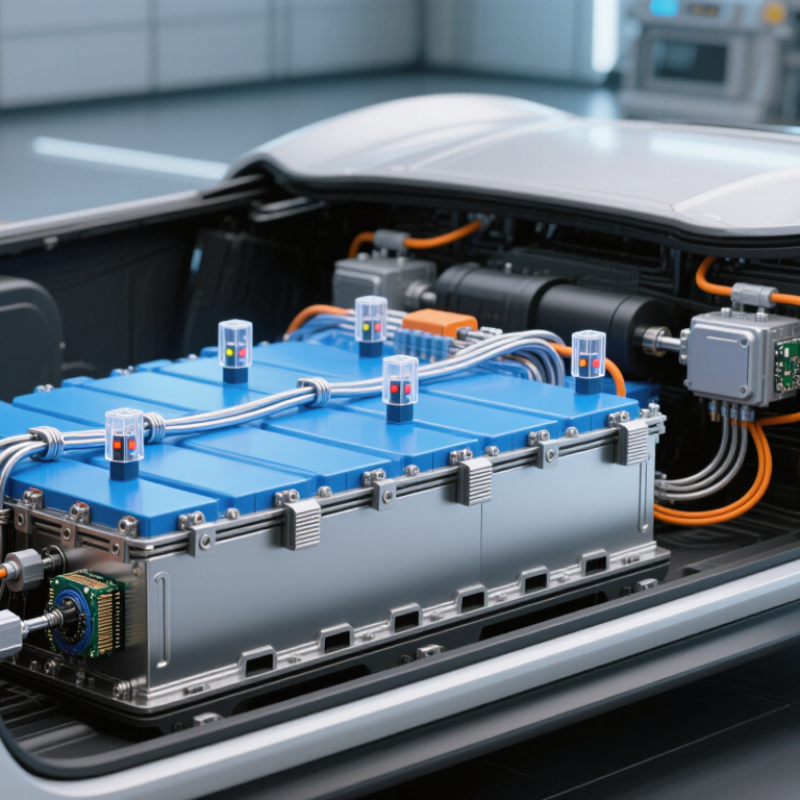
An EV battery management system (BMS) is the battery pack’s operating supervisor. It measures cell voltage, current, and temperature many times each second. It estimates state of charge and state of health during charging and driving. It also balances cells, controls contactors, and shares warnings with the vehicle controller. Without this layer, a pack can age unevenly or operate outside safe limits. Small errors matter.
For global buyers, a BMS is more than a circuit board. Its sensing accuracy should match the pack design, chemistry, cooling method, and charging speed. A useful system records faults clearly and reacts quickly to overvoltage, deep discharge, overheating, or sensor loss. Communication support, such as CAN, must fit the vehicle’s control architecture. Certification readiness, traceable testing, and documented firmware updates also deserve close attention. Local service access can matter more than a longer feature list.
In practical testing, engineers should compare readings with calibrated instruments across cold mornings, hot roads, and steep climbs. A display showing 80 percent charge does not prove the cells are balanced. Field testing can reveal impressive dashboards hiding weak temperature coverage. That is an uncomfortable lesson. Buyers should ask how the BMS handles drift, failed sensors, sleep current, and emergency shutdowns. No system is perfect. The best choice is one whose limits are measured, explained, and supported over the vehicle’s working life.

7 Best EV BMS Systems for Global Buyers
Key Criteria for Comparing EV Battery Management Systems
A reliable EV BMS comparison begins with battery compatibility, not marketing claims. Check cell chemistry, series count, voltage range, peak current, and balancing method. Passive balancing may suit smaller packs, while active balancing can reduce energy differences in larger systems. Confirm whether the BMS measures cell voltage and temperature at enough points. One sensor is not enough. Thermal blind spots can become expensive.
Protection functions deserve close inspection. Look for overvoltage, undervoltage, overcurrent, short-circuit, and overheating responses. Ask how quickly the system disconnects the pack and whether contactor control is built in. Accurate state-of-charge and state-of-health estimates also matter. They should remain stable during acceleration, charging, and cold starts. Test data is more useful than a polished brochure.
Communication can decide whether integration succeeds. Verify CAN protocols, data logging, firmware update methods, and compatibility with the vehicle controller and charger. Clear manuals, traceable test reports, and responsive technical support show practical reliability. For global buyers, check operating temperature, enclosure protection, shipping documentation, and regional compliance evidence. A spreadsheet can still mislead. Real validation with a representative battery pack may reveal wiring faults, delayed alarms, or inaccurate readings. Leave room for that uncomfortable finding.
Comparison of seven widely used EV BMS architecture profiles. Specifications represent common engineering ranges and market requirements rather than data from any specific company or brand.
| Rank | BMS System Profile | Typical EV Application | Battery Voltage Scope | Cell Monitoring Capacity | Balancing Method | Current Measurement | Communication Interfaces | Safety and Diagnostic Functions | Key Buying Advantage |
|---|---|---|---|---|---|---|---|---|---|
| 1 | Distributed High-Voltage BMS Best Overall | Passenger EVs and large battery packs requiring flexible module placement | 400–800 V nominal; pack voltage commonly below 1,000 V DC | Approximately 96–216 series-connected cells, using multiple monitoring units | Passive balancing is common; active balancing is available for higher-cost designs | Hall-effect or shunt-based measurement; typically supports high-current charging and traction loads | Isolated CAN or CAN FD; daisy-chain communication between cell-monitoring units | Overvoltage, undervoltage, overcurrent, short-circuit, insulation, thermal-runaway warning, open-wire and communication diagnostics | Reduces high-voltage wiring, supports scalable battery modules and improved serviceability |
| 2 | Centralized High-Voltage BMS Best for Compact Packs | Compact passenger EVs, prototypes and battery packs with short module-to-controller distances | 200–800 V nominal; commonly designed for high-voltage traction batteries | Approximately 12–96 series-connected cells per controller, depending on the monitoring IC configuration | Usually passive resistive balancing; balancing current commonly remains below 300 mA | Precision shunt or isolated Hall-effect sensor | CAN or CAN FD; optional LIN, UART, SPI or Ethernet at system level | Cell voltage and temperature monitoring, contactor control, pre-charge control, insulation monitoring interface and crash shutdown input | Lower electronic complexity and easier software integration when the pack layout is compact |
| 3 | Modular Master-Slave BMS Best for Scalable Production | Passenger vehicles, electric vans and battery packs manufactured in several capacity variants | 300–800 V nominal, with module count adjusted to the required energy capacity | Commonly 12–18 cells per slave module; multiple modules can be connected in series | Passive balancing is standard; active balancing is suitable where cell mismatch and cycle life are critical | Shunt or Hall-effect sensing at pack level; redundant sensing may be used for safety-related designs | CAN/CAN FD between the master controller and vehicle control unit; isolated internal module link | Redundant plausibility checks, contactor diagnostics, cell deviation monitoring, sensor-fault detection and event logging | Allows one BMS platform to support different pack sizes without redesigning the complete control system |
| 4 | 48 V Low-Voltage BMS Best for Light EVs | Electric scooters, neighborhood vehicles, low-speed vehicles, auxiliary battery systems and mild-hybrid applications | 24–60 V nominal; systems below 60 V DC are commonly treated as low-voltage from a vehicle safety perspective | Typically 8–16 series-connected lithium-ion cells | Passive balancing, commonly in the tens to hundreds of milliamperes | Shunt sensing is common because pack current and isolation requirements are generally lower | CAN, UART, RS-485 or Bluetooth Low Energy, depending on the vehicle and service requirements | Overcharge, over-discharge, overcurrent, short-circuit, overtemperature and undertemperature protection | Cost-effective, compact and easy to integrate into small electric vehicles and auxiliary systems |
| 5 | High-Power Commercial EV BMS Best for Buses and Trucks | Electric buses, trucks, specialty vehicles and high-duty-cycle commercial fleets | 400–1,000 V nominal, depending on vehicle platform and charging architecture | Often 100–300 or more series-connected cells across multiple battery enclosures | Passive balancing for standard packs; active balancing may be selected for large-capacity or heavily cycled fleets | High-accuracy Hall-effect sensors or isolated shunts; redundant current measurement may be required | CAN FD, isolated CAN, Ethernet or automotive communication gateways | Contactor welding detection, insulation monitoring, thermal propagation response, redundant shutdown paths and detailed fault recording | Designed for continuous high current, rapid charging, long operating hours and centralized fleet diagnostics |
| 6 | Performance and Fast-Charging BMS Best for High C-Rate Use | Performance EVs, rapid-charging platforms, motorsport-derived vehicles and high-power development programs | 400–900 V nominal; higher voltage architectures require carefully coordinated insulation and contactor design | Approximately 96–216 series-connected cells, commonly distributed across several modules | Fast passive balancing or active balancing; balancing strategy must account for high charging current and cell temperature | High-bandwidth isolated current sensing with rapid sampling and thermal derating logic | CAN FD is common; automotive Ethernet may be used for advanced diagnostics and high-speed data logging | Dynamic power limits, charge-current control, thermal derating, sensor plausibility checks, insulation monitoring and rapid fault response | Improves charging performance while protecting cells during high-current acceleration and regenerative braking |
| 7 | Connected Fleet and Second-Life BMS Best for Lifecycle Visibility | Fleet vehicles, battery-swapping systems, stationary reuse and applications requiring remote battery-health tracking | 24–800 V nominal, depending on whether the platform is low-voltage, traction or stationary second-life equipment | From 8 to more than 200 series-connected cells using a modular monitoring structure | Passive balancing is common; active balancing is useful when cells have different aging histories | Shunt or Hall-effect sensing with periodic data capture for energy-throughput analysis | CAN/CAN FD, RS-485, Ethernet, Bluetooth or cellular gateway for remote monitoring | State-of-charge, state-of-health, state-of-power, cycle counting, remaining-useful-life estimation, event logging and remote fault alerts | Provides valuable lifecycle data for maintenance planning, warranty analysis, battery grading and safe reuse |
Global buyers should compare seven leading EV BMS approaches: centralized, distributed, modular, wireless, cloud-connected, high-voltage, and safety-focused systems. Each design monitors cell voltage, temperature, current, and state of charge. IEA’s Global EV Outlook 2024 reported nearly 14 million electric car sales worldwide in 2023. That scale raises expectations for reliability. A BMS must perform in freezing ports, humid factories, and dusty highways. Small sensor errors can become expensive failures.
Centralized systems often reduce wiring and cost. Distributed designs can simplify large battery packs. Wireless systems improve assembly flexibility, but electromagnetic interference deserves careful testing.
High-voltage platforms need strong isolation monitoring and clear service procedures. Cloud-connected systems support fleet diagnostics, though poor connectivity can weaken real-time visibility. UNECE Regulation No. 100 emphasizes battery safety, electrical protection, and testing discipline. Independent validation remains essential.
Tips: Ask for measured balancing speed, thermal response time, isolation resistance, and fault-recording capacity. Check whether the system supports your cell chemistry and charging profile. Request test evidence from recognized laboratories. Do not trust attractive dashboards alone. I have seen impressive prototypes fail during vibration testing. That lesson matters. Buyers should also review software update controls, cybersecurity practices, data ownership, and regional technical support. No BMS is perfect, and a cheaper choice may become costly after repeated field repairs.
7 Best EV BMS Systems for Global Buyers
How to Match an EV BMS With Vehicle and Battery Requirements
Selecting an EV BMS starts with the battery, not the marketing label. Confirm the cell chemistry, series count, voltage range, and maximum continuous current. A compact city vehicle may need different protection from a high-load utility platform. Check the battery’s peak current during climbing and acceleration. Short bursts can still damage an undersized system.
Temperature sensing is equally important. Use enough sensors to cover cells, busbars, and cooling paths. The BMS should detect overvoltage, undervoltage, overcurrent, and abnormal heat quickly. Passive balancing may suit small packs, while larger packs can require active balancing. Measure balancing speed, standby consumption, and recovery behavior after a fault. Small details matter.
Communication must match the vehicle controller. Confirm CAN settings, data refresh rates, connector types, and fault messages before installation. I recommend testing the BMS with a real pack, charger, and motor controller. Bench results can look excellent, yet wiring noise may create false alarms. It happens. Review enclosure protection, vibration resistance, service access, and documented firmware updates. A reliable supplier should provide test records, clear limits, and technical support. Do not trust a single rating sheet; compare measured performance under realistic load, temperature, and charging conditions.
Global buyers should judge an EV BMS by safety before adding features. The IEA reported that global electric-car battery demand exceeded 750 GWh in 2023. Higher production also increases the consequences of weak monitoring. A reliable BMS should track cell voltage, temperature, current, insulation, and charging limits. It should detect abnormal heat early and isolate unsafe conditions. Compliance with ISO 26262 and ISO 6469 can support safer vehicle integration, but certification alone is not enough.
Compatibility is equally practical. Check cell chemistry, voltage range, communication protocols, connector design, and cooling hardware before purchasing. A system that works with lithium iron phosphate cells may not suit nickel-based cells. Firmware access matters too. Regional service teams, readable fault logs, and replacement sensors can prevent long vehicle downtime. The IEA Global EV Outlook 2024 highlights rapid EV adoption across different markets, so one configuration rarely fits every region.
Cost needs a wider calculation. BloombergNEF reported an average lithium-ion battery-pack price of 139 dollars per kWh in 2023, after a 14% annual decline. Lower battery prices may encourage cheaper BMS options, yet installation errors can erase those savings quickly. A low-cost controller can appear attractive. That judgment is incomplete. Buyers should compare warranty coverage, testing records, software updates, shipping, and technician training. I would also request real thermal-event data, not only laboratory claims. That evidence is often missing.
