

...

How to Calculate Thermistor Temperature Formula Easily?

Understanding the "Thermistor Temperature Formula" is essential for precise temperature measurements. Thermistors are temperature-sensitive resistors that change their resistance with temperature. This makes them highly valuable in various applications, such as climate control and electronics.

Calculating temperature using a thermistor requires understanding the relationship between resistance and temperature. Many users find the formulas daunting at first. However, with practice and clear explanations, anyone can master this calculation. Small errors can lead to significant discrepancies in temperature readings, which is why accuracy is crucial.

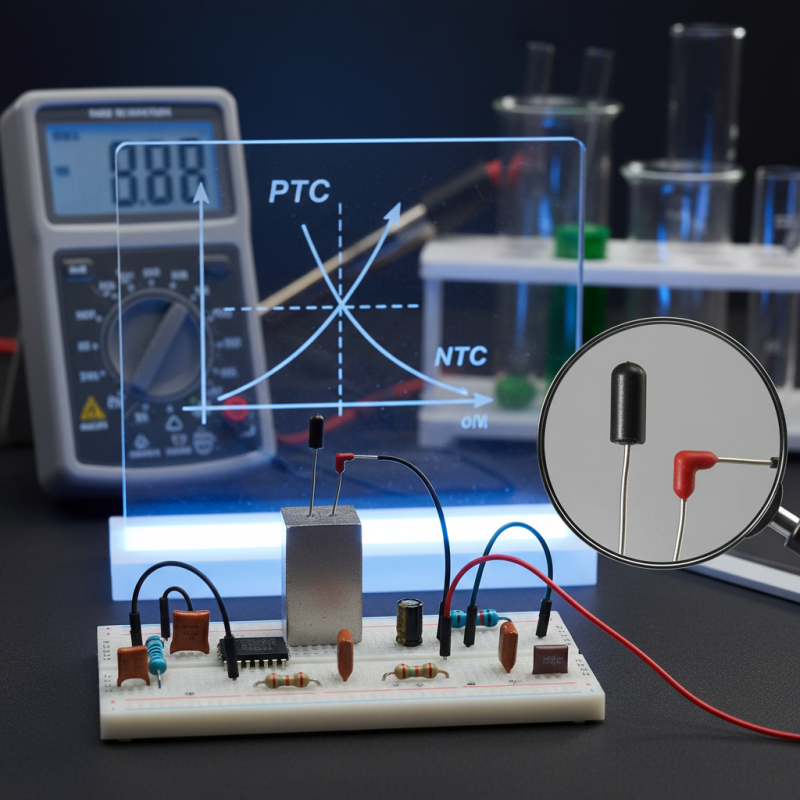
One common challenge is selecting the correct thermistor type. There are NTC (negative temperature coefficient) and PTC (positive temperature coefficient) thermistors. Understanding their differences is critical for accurate calculations. Users often overlook this detail, impacting their results. With the right knowledge and tools, mastering the "Thermistor Temperature Formula" becomes an achievable goal.
How to Calculate Thermistor Temperature Formula Easily?

Understanding Thermistors and Their Functionality

Thermistors are temperature-sensitive resistors. They play a crucial role in many electronic devices. Understanding their functionality helps you use them effectively. A thermistor's resistance changes with temperature, allowing it to measure and control temperatures accurately. There are two main types: NTC and PTC. NTC (Negative Temperature Coefficient) thermistors decrease resistance as temperature rises. PTC (Positive Temperature Coefficient) thermistors increase resistance with heat.

When working with thermistors, accuracy is essential. Factors like precision and calibration can impact your readings. It is vital to select the appropriate thermistor for your application. Minor errors can lead to significant deviations in results. Always test the thermistor in real-world conditions to ensure it meets requirements.

Tips: Always calibrate your thermistor before critical measurements. Consider ambient temperature effects when placing it. Understand the material and application environment to achieve optimal performance. Sometimes, the simplest setups yield the most reliable results. Don’t hesitate to revisit your calculations and methodologies to enhance your understanding and application of thermistors. This iterative process can improve accuracy.

How to Calculate Thermistor Temperature Formula Easily?

Thermistor Type Resistance at 25°C (Ohm) Temperature Coefficient (β) Accuracy (% at 25°C) Operating Range (°C)
NTC Thermistor 10,000 3977 ±1% -40 to 125
PTC Thermistor 1,000 -4,000 ±5% 0 to 100
High Temp NTC 5,000 3950 ±2% -50 to 150
Bimetallic Thermistor 15,000 3900 ±3% -10 to 120

Exploring the Types of Thermistors: NTC vs. PTC

Thermistors are widely used temperature sensors, categorized mainly into two types: NTC (Negative Temperature Coefficient) and PTC (Positive Temperature Coefficient). NTC thermistors decrease in resistance as temperature rises. They offer high sensitivity and are commonly used in temperature measurement and control applications. According to a recent industry report, NTC thermistors account for over 70% of the thermistor market due to their efficiency and reliability in various environments.

On the other hand, PTC thermistors increase in resistance with temperature. They are often used for overcurrent protection and self-regulating heating applications. Despite their advantages, PTC thermistors are less popular than their NTC counterparts. This disparity raises questions about their applications and long-term reliability. Some engineers find the selection process challenging, especially when faced with varying environmental conditions.

Yet, both types have unique advantages in different situations. Engineers must consider the specific application demands when selecting a thermistor type. The decision can be influenced by factors like response time, temperature range, and sensitivity. It's vital to analyze these aspects to ensure optimal performance. While NTC thermistors may be ideal for precise temperature measurement, PTC thermistors excel in safety applications. Understanding these nuances helps engineers make informed choices.

Thermistor Temperature Characteristics

Key Parameters for Thermistor Temperature Calculations

When calculating the temperature using a thermistor, understanding key parameters is essential. The resistance of a thermistor changes with temperature. This characteristic is quantified using the Steinhart-Hart equation or the Beta parameter formula. The Beta value relates resistance at two temperatures. Knowing these parameters helps to achieve accurate readings.

Resistance is another critical factor. It is measured in ohms and typically varies significantly across temperature ranges. For a thermistor with a high Beta value, small changes in temperature lead to larger resistance changes. This makes precise measurements possible but can also introduce complexity in calculations.

Calibration plays a vital role as well. Regular calibration ensures that your thermistor maintains accuracy over time. Environmental factors can also affect readings, leading to fluctuations. Consider the placement of the thermistor; incorrect positioning can result in misleading temperature data. This shows that while thermistors are highly effective, careful consideration is necessary for reliable temperature calculations.

Step-by-Step Guide to Using the Thermistor Equation

Understanding how to use the thermistor equation can help simplify temperature calculations. A thermistor is a temperature-sensitive resistor. To determine the temperature from resistance, you can follow a straightforward method. The thermistor equation involves parameters such as resistance at a given temperature and the material constants.

Start by obtaining the resistance of your thermistor at room temperature. This value is essential. Next, identify the beta value, which pertains to the thermistor's material. This value reflects how the resistance changes with temperature. With these figures, you can plug them into the thermistor equation.

Analyzing the results can sometimes be perplexing. The temperature calculated may not match expected values. This discrepancy can stem from external factors like surrounding conditions. Variations in the thermistor's environment can alter readings. Therefore, consider calibrating your thermistor for more accurate measurements. Testing in different scenarios enhances reliability. Experimenting with various temperatures can lead to deeper insights.

Practical Applications of Thermistor Temperature Measurements

Thermistors play a crucial role in diverse applications, especially in temperature monitoring systems. Their sensitivity to temperature changes makes them ideal for precise measurements. For instance, in medical devices, thermistors are often used to monitor body temperature. Accurate readings are vital for patient care. A small error could lead to incorrect treatments.

In industrial settings, thermistors assist in maintaining optimal temperatures in processes. This ensures safety and efficiency. For instance, in HVAC systems, they monitor air temperature, helping maintain comfort levels. The importance of reliability cannot be overstated. Inaccurate thermistor readings could disrupt operations or compromise safety. Hence, calibration and regular maintenance are essential.

Thermistors are also used in consumer electronics. They help prevent overheating by monitoring component temperatures. If a component exceeds a certain threshold, the device can shut down. However, they are not perfect. Factors like humidity and age can affect their accuracy. Regular checking of their performance is necessary to ensure reliability in such applications.