What Is Car Paint Protection Film and How Does It Work?
A stone flicks up from the road. The mark it leaves may be tiny, but it can catch your eye every time sunlight hits the hood. Car Paint Protection Film, often called PPF, is a clear, flexible layer fitted over painted panels to reduce damage from road debris, light scratches, and everyday abrasion. It is not armor. It is a sacrificial surface, and that distinction matters.
Ryan Pape, CEO of paint-protection-film maker XPEL, has described the film’s purpose this way: “Paint protection film is designed to protect your vehicle’s paint from everyday road hazards.” The exact level of protection depends on the film, the vehicle, and the installation. A well-fitted film can absorb small impacts and help keep the original finish cleaner. It cannot prevent every chip, hide existing damage, or make careless washing harmless.
How does it work? The film’s top layer takes contact first, while its adhesive holds it against the paint. Some modern films can soften the appearance of fine surface marks when warmed, though performance varies by product. Installation also matters. Dust beneath a clear edge can remain visible; stretched film may lift near a curve. Small details count.
This guide explains what Car Paint Protection Film is, how its layers function, where it helps, and what it cannot do. The honest answer is less glamorous than a showroom promise: protection is real, but never perfect.
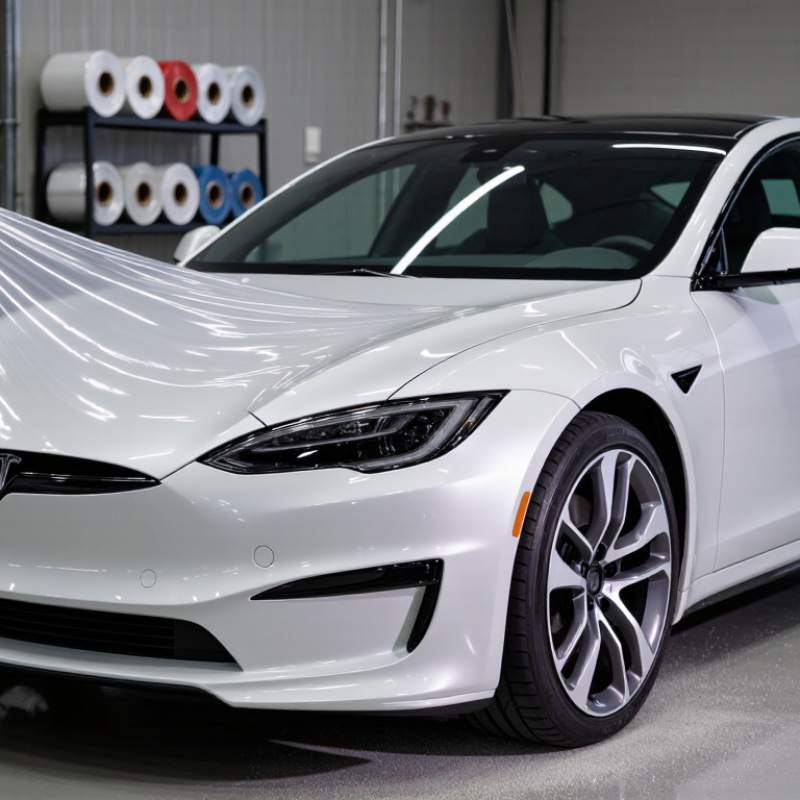
What Car Paint Protection Film Is
Car paint protection film, often called PPF, is a flexible layer of thermoplastic urethane placed over painted body panels. It is usually clear, though matte finishes are available. The film acts as a sacrificial surface between the paint and everyday hazards, such as loose road grit, small stones, and insect residue. Think of it as a clear raincoat for vulnerable paint, not a hard shell.
PPF is supplied in sheets and carefully fitted to a vehicle’s contours. An installer cleans the paint, positions the film with a slip solution, then smooths out moisture and air. Edges may be tucked around panel seams for a less visible finish, where the panel shape allows. Some films can reduce the appearance of shallow surface marks when warmed, but this feature varies. Not magic. The film can still be cut, stained, or worn, and poor installation may leave visible edges or bubbles. A close look at a hood under angled light can reveal details missed from a few steps away. PPF protects the film-covered areas; it does not prevent every dent, deep scratch, or paint problem underneath. Cleaning it gently matters. A little care goes a long way.
Materials and Layers That Make Up the Film
Paint protection film is a layered, transparent barrier, not simply a thick plastic sheet. Most constructions use a flexible thermoplastic polyurethane (TPU) base, an acrylic adhesive, and a clear outer coat. A removable release liner protects the adhesive before installation; it is not part of the finished film. Commercial technical data sheets commonly list total film thickness near 150–200 micrometres, or about 6–8 mil, though products and measurement methods vary.
Each layer has a distinct job. The TPU absorbs small impacts from gravel and resists tearing, while the adhesive bonds the film to clean, painted panels. The top coat helps resist staining and fine surface marks; some formulations soften with warmth, allowing shallow marks to fade. Not magic. ASTM International’s D882 method measures tensile properties, and D1003 measures haze. These recognized test methods help assess strength and optical clarity, but they do not guarantee identical performance in every vehicle or climate. Thickness alone can mislead: a poorly fitted edge may collect dirt, and harsh washing can still mark the surface. I’d check layer descriptions and test data together, rather than treating one number as proof of protection.
What Is Car Paint Protection Film and How Does It Work? — Materials and Layers That Make Up the Film
| Position in the film | Material or layer | What it does | Useful details |
| Outermost surface | Clear topcoat | Helps resist staining, surface abrasion, and contamination; some formulations also improve water beading and help minor heat-related marks fade. | Often made from a thin polymer coating. Features and performance vary by film construction; “self-healing” generally refers to certain light surface marks, not deep cuts. |
| Main protective layer | Thermoplastic polyurethane (TPU) | Forms the flexible, transparent body of the film and absorbs or disperses some impacts from road debris, helping protect the paint beneath it. | TPU is widely used in paint protection films because it combines flexibility with toughness. The film is a sacrificial barrier and can still be punctured or cut by sufficiently severe impacts. |
| Bonding layer | Pressure-sensitive acrylic adhesive | Holds the film to the vehicle’s painted surface while allowing it to conform to curves during installation. | The adhesive is designed for film installation and removal, but results depend on paint condition, installation, film age, and removal technique. |
| Temporary backing before installation | Release liner | Protects the adhesive during storage and handling and is peeled away before the film is applied. | It is an installation aid, not part of the finished protective layer on the vehicle. |
| Complete installed film | Layered film construction | Combines a durable surface, flexible impact-absorbing body, and paint-compatible adhesive to create a transparent barrier over painted panels. | Many products are around 6–8 mil (about 150–200 μm) thick, though specifications and measurement conventions differ. The release liner is excluded from installed thickness. |
| How it protects | Physical barrier and energy absorption | The film takes the first contact from small stones, insects, and road grime, reducing direct exposure of the paint to everyday wear. | It does not make paint immune to damage. Cleaning, maintenance, installation quality, and the severity of an impact all affect protection and appearance. |
How the Film Shields Paint from Damage
Paint protection film works as a clear, flexible barrier between road hazards and a vehicle’s paint. Common polyurethane film constructions are typically about 6–8 mil thick, or roughly 150–200 micrometres, according to industry technical specifications. The exact thickness varies with the film’s layers and adhesive. Even this thin layer can absorb and spread some of the force from small stones, reducing chips on exposed areas such as the hood and mirror caps.
The protection has limits. ASTM D3170-14(2020), a gravel-impact test method for assessing coating chipping, shows why controlled impact testing matters; it does not guarantee that any film will stop every stone. Not armor. A sharp, heavy object can still cut through. The film can also help guard against light scratches, insect residue, and bird droppings, but those should be cleaned promptly. Heat may help some films recover from minor surface marks, yet deep cuts remain visible. Fit matters, too: dirt trapped at an edge or poorly wrapped seams can weaken protection. Film is useful, but it cannot replace careful washing or sound paint underneath.
How Paint Protection Film Is Applied to a Vehicle
Applying paint protection film (PPF) is a surface-preparation job before it is a cutting job. SEMA’s 2023 market report estimates U.S. specialty-equipment sales reached $52.3 billion in 2022. That broad figure includes many products, not PPF alone, but shows the scale of the vehicle-care and customization sector. A technician washes and decontaminates the paint, then checks it under bright lights. Existing chips or rough spots may remain visible beneath clear film. Cleanliness matters.
Next, the installer aligns a vehicle-specific pattern or carefully trims film to fit each panel. Pre-cut patterns can reduce the need to cut near painted surfaces. The film is positioned with an application solution, then pressed from the center outward with a squeegee. This pushes out liquid and air while the installer works around curves, mirrors, and panel edges. Small adjustments matter. Edges are smoothed, and controlled heat may help the film conform, following the film maker’s instructions. The vehicle usually needs time to dry before washing. Fresh paint also needs to meet the paint maker’s curing guidance. A dust fleck can still spoil an otherwise careful finish, so inspection and patience matter as much as precise cutting.
How Paint Protection Film Is Applied to a Vehicle
Paint protection film (PPF) is a clear thermoplastic polyurethane film applied over painted surfaces to help guard against stone chips, scratches, and other minor damage. The chart shows indicative installation times for each stage; actual times vary with vehicle shape, film coverage, and paint condition.
Typical process: Clean and prepare the paint, position the film using application solution, squeegee out moisture and air, then finish the edges and inspect the result.
Care, Durability, and Common Limitations of the Film
Car paint protection film (PPF) is a thin, transparent layer fitted over painted body panels. It helps reduce chips from small stones, light scratches, and insect residue. Some films can soften minor surface marks in warmth, but PPF cannot prevent every dent or deep scratch. It is not armor. Good results depend on careful installation and realistic expectations.
Tips: Wash the film with clean water and a soft mitt. Lift grit gently; rubbing a dry, dusty panel can leave marks. Avoid harsh cleaners, and dry edges carefully. If dirt collects along a seam, ask an installer how to clean it without lifting the film.
With sensible care, quality film can last for years, though heat, sunlight, road salt, and frequent abrasion affect its life. Edges may lift, and staining or yellowing can appear over time. Damage can also pass through the film and reach the paint beneath it. Check edges and high-impact areas during routine washes. Replacement takes time and can be costly. A clear film may also change the paint’s finish slightly, which is easy to overlook when choosing coverage.