

...

China Best Date Bar Extrusion Line Supplier

Date bars look simple on a shelf. Their production is not. Date paste can be sticky, dense, and sensitive to moisture, so an extrusion line must form consistent bars without crushing nuts or seeds. Grand View Research’s Snack Bar Market Size, Share & Trends Analysis Report estimated the global snack bar market at approximately USD 18.7 billion in 2023, with projected growth through 2030. This figure covers snack bars broadly, not date bars alone. Still, it signals a competitive category where stable weight, clean cuts, and repeatable texture matter.

For buyers comparing a China Best Date Bar Extrusion Line Supplier, market growth is only a starting point. Ask for evidence from trials using a recipe close to yours. Watch the hopper feed, extrusion pressure, cutter action, and cooling conveyor. Small details count. Does the line keep bar lengths uniform when the date mixture warms? Can operators adjust speed and clean product-contact parts without excessive downtime? A supplier’s stated capacity should be checked against the actual formulation and operating conditions. Request test records, material specifications, and references where available. A polished brochure is not proof.

The right Date Bar Extrusion Line should match the product, not just the target output. Compare forming accuracy, changeover time, operator training, and after-sales support alongside price. There is no universal best machine. That deserves a second look. A careful supplier evaluation can reduce production surprises, though no specification sheet can replace a witnessed production test.
China Best Date Bar Extrusion Line Supplier

What Is a Date Bar Extrusion Line?

China Best Date Bar Extrusion Line Supplier
What Is a Date Bar Extrusion Line?

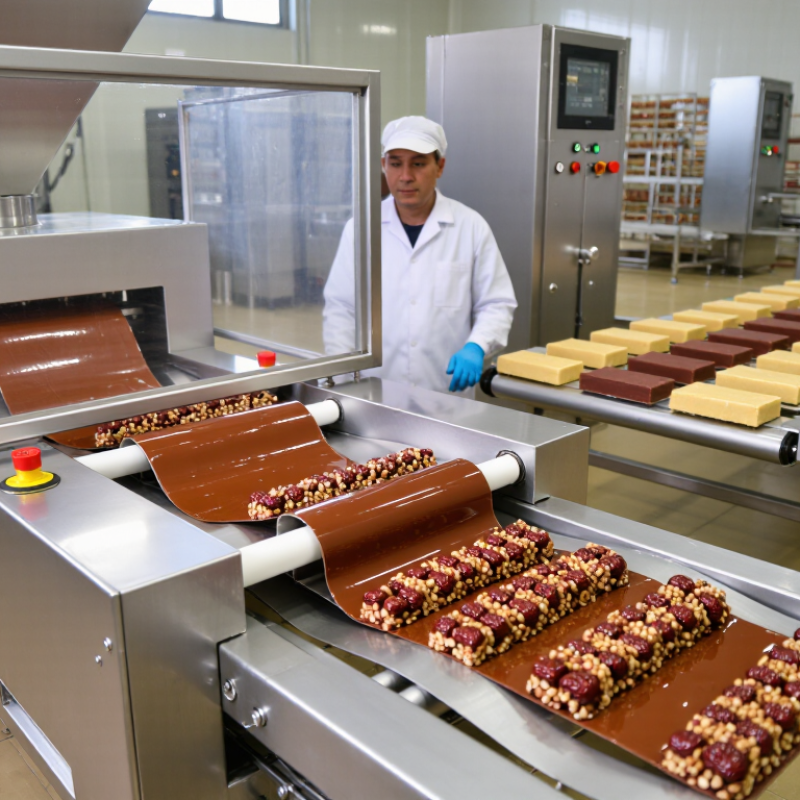
A date bar extrusion line is a group of machines that forms date-based mixtures into even, continuous bars. A typical line includes a hopper, feeding system, extrusion chamber, shaping die, cutter, and conveyor. The hopper receives the prepared mixture. A screw or belt moves it forward, while steady pressure pushes it through the die. The die sets the bar’s width and thickness. A cutter then divides the strip into portions.

Date mixtures can be sticky, especially when they contain soft dates or syrup. Their texture and temperature affect how smoothly they travel through the machine. Too much pressure may deform the bars; too little can leave gaps or uneven edges. Cooling or resting time may help the pieces hold their shape before packaging. In practice, adjustments often take testing. The first settings may not be right.

Tips: Check the mixture’s moisture and particle size before a production run. Ask how the die, cutter, and food-contact parts are cleaned. Small details count. A short trial with your actual recipe can reveal sticking, rough edges, or inconsistent weights before full production.

How Does the Date Bar Extrusion Process Work?

A date bar extrusion line shapes prepared date mixture into a continuous strip before cutting it into portions. The process starts with pitted dates, which are blended with selected ingredients until the mixture holds together. Moisture and particle size matter. A mixture that is too dry may crack; one that is too soft can stick inside the machine. The right texture depends on the recipe, so small test batches are useful.

The mixture enters a hopper and moves through a screw or feed rollers toward a forming die. The die sets the strip’s width and thickness. Operators adjust feed speed and pressure to keep the shape even. Then a cutter divides the strip into bars. Clean cuts matter. If the mixture warms up or varies in texture, edges may look rough, and bar weights can drift. Cooling the pieces helps them firm before packaging. This step still needs judgment. A line can control speed, but it cannot correct every variation in the incoming mixture. Regular checks of weight, dimensions, and surface texture help reveal problems early.

How Does the Date Bar Extrusion Process Work?

Illustrative time allocation for a 100 kg production batch. Actual processing times vary with the recipe, equipment, and product size.

The process typically moves from ingredient mixing and feeding to extrusion, cutting, cooling, and inspection or packaging. The chart shows example stage durations, not a universal production standard.

What Equipment Makes Up an Extrusion Line?

A date bar extrusion line begins with raw-material inspection, followed by washing, destoning, and controlled drying where required. Dates then pass through a mill or pulper, which creates a consistent paste for blending. Mixers combine the paste with ingredients such as oats, nuts, or syrup. The exact recipe changes the paste’s stickiness and flow, so operators should check moisture and temperature before extrusion. FAOSTAT records global date production at approximately 9.66 million tonnes in 2022. That scale highlights why suppliers must accommodate differences in crop variety and incoming fruit quality, not just a target output rate.

The core machine is a screw extruder, which pushes blended paste through a shaped die. A cutter then forms bars to a set length, while conveyors carry them through cooling or setting stages. Metal detection, checkweighing, and flow-wrapping equipment may follow, depending on the product and packaging plan. Small details matter. A warm paste can smear at the cutter; a dry mix may crack after cooling. One weak point is often overlooked: transfer points between machines can cause sticking and uneven feed. Equipment trials with the actual recipe help reveal these issues before installation. FAOSTAT provides production context, but it does not specify line capacity; that requires product trials and verified supplier data.

Which Factors Define a Reliable Supplier in China?

China Best Date Bar Extrusion Line Supplier
Which Factors Define a Reliable Supplier in China?

A reliable supplier should prove that its line can handle your actual date paste, not just a standard sample. Ask for a trial using your recipe, including its moisture level and inclusions. Check whether the extruder maintains bar width and weight during a sustained run. Request clear records of the test. Brochures are not enough.

Equipment design matters. Look for food-contact surfaces that are easy to inspect and clean, guarded moving parts, and accessible wear components. Ask how the supplier measures output, changeover time, and cleaning requirements. The FAO’s 2019 State of Food and Agriculture report estimated that 14% of food is lost globally between post-harvest and retail. This is not a machine-performance benchmark, but it underscores why dependable processing and maintenance matter. Demand evidence.

Tips: Ask for a factory acceptance test with agreed product and performance criteria. Confirm operator training, spare-parts availability, and response times in writing. Speak with comparable users, if possible. One detail is easy to overlook: a fast line can still create bottlenecks if cooling, cutting, or wrapping cannot keep pace. Check the whole process.

China Best Date Bar Extrusion Line Supplier - Which Factors Define a Reliable Supplier in China?

Evaluation Factor What to Check Useful Evidence or Questions Why It Matters
Product and process fit Ability to handle the intended date-bar recipe, texture, dimensions, and production process. Ask whether the line can process the actual mixture and produce the required bar shape, size, and finish. Share a representative sample recipe for assessment. Date mixtures can vary in stickiness, moisture, and inclusion content, affecting feeding, forming, and cutting.
Capacity and operating speed Rated output and expected sustained output under the buyer’s product and operating conditions. Request output figures in clearly stated units, such as kilograms per hour, and confirm the product size, recipe, and test conditions used for the estimate. A stated maximum speed may not reflect normal production with a particular recipe or downstream equipment.
Line configuration and integration Scope of supply, including feeding, extrusion or forming, cutting, conveying, and optional cooling or packaging connections. Request a line layout, equipment list, utility requirements, and a written description of what is included and excluded. Clear scope reduces installation gaps and compatibility issues between production stages.
Food-contact materials and hygiene design Materials and surfaces used on product-contact parts, plus access for cleaning and inspection. Ask for material specifications and documentation for product-contact components. Review disassembly, cleaning access, and the proposed cleaning procedure. Suitable materials and cleanable construction support hygienic operation; requirements depend on the destination market and product.
Controls and adjustability Ease of adjusting feed rate, forming dimensions, cutting length, and operating parameters. Request a control-system description and confirm which settings operators can adjust, save, and reproduce for different products. Accessible, repeatable settings can help operators manage product changes and maintain consistent output.
Build quality and safety Construction, guarding, emergency stops, electrical documentation, and compliance with applicable requirements. Review technical drawings, component specifications, risk-control features, and documents required for the machine’s installation country. Safety and compliance requirements vary by market, so they should be agreed before production and shipment.
Factory testing and acceptance Whether performance can be checked against agreed criteria before shipment. Define a factory acceptance test covering the agreed recipe or test material, output, product dimensions, operation, and inspection records. A documented test makes expectations clearer and helps identify issues before delivery.
Installation and operator training Availability and scope of commissioning, training, manuals, and technical handover. Confirm whether support is on-site or remote, what languages are available, and whether manuals include operation, cleaning, and maintenance instructions. Practical handover helps the production team operate and maintain the equipment correctly.
Spare parts and after-sales service Availability of recommended spare parts and a defined process for technical support. Request a recommended spare-parts list, part identification details, warranty terms, and expected response and shipping arrangements. Planning for wear parts and support can reduce disruption if maintenance or troubleshooting is needed.
Quotation and delivery terms Price breakdown, manufacturing schedule, packing method, shipping terms, and payment milestones. Compare quotations on the same technical scope and delivery basis. Confirm lead-time assumptions and responsibility for transport, insurance, and installation. A transparent quotation makes supplier comparisons more meaningful and helps avoid unexpected costs.

Evaluation note: Confirm all performance, compliance, delivery, and service details in the supplier’s technical proposal and purchase agreement. Suitability depends on the recipe, production requirements, and destination market.

How to Select a Date Bar Extrusion Line for Production Needs?

China Best Date Bar Extrusion Line Supplier

How to Select a Date Bar Extrusion Line for Production Needs?

Selecting a date bar extrusion line starts with your recipe and daily output target. Date paste can vary in moisture, fiber, and stickiness, so a machine that handles one blend may struggle with another. Check whether the line supports adjustable feed speed, die width, and bar thickness. These controls help maintain consistent portions and reduce uneven edges during longer runs.

Consider the full workflow, not just the extruder. Look at how the line feeds, forms, cuts, and transfers bars. Ask for a trial using your actual date mixture, then inspect bar weight, surface finish, and cut accuracy. Review cleaning access and changeover time, too. Tight corners can hold residue, and slow cleaning may disrupt production. A higher output rating is not always the better fit; it can create waste if your packing stage cannot keep pace.

Tips: Request sample bars made at your intended speed. Confirm which recipe details the supplier needs before the trial. Check spare-part availability, operator training, and maintenance requirements. Write down your results. Some variation is normal, but your acceptable range should be clear.