China Top 10 Heavy Equipment Traders for Global Buyers?
Choosing a reliable heavy equipment trader in China requires more than comparing prices online. Global buyers need verified business records, clear specifications, export experience, and responsive after-sales support. This guide introduces ten notable Chinese traders serving international markets, with attention to product range, supplier networks, inspection practices, and shipping coordination.
The comparison considers excavators, wheel loaders, cranes, bulldozers, forklifts, and used construction machinery. Practical details matter. A serious trader should provide serial numbers, operating hours, maintenance records, inspection photos, and accurate loading information. Buyers should also confirm warranty terms, spare-parts access, payment conditions, and delivery responsibilities before signing a contract.
Not every trader fits every project. A small contractor may value flexible quantities, while a mining company may require fleet support and stronger technical service. Port location can affect freight costs. So can machine age.
This list is not a permanent verdict. Market data, management teams, inventory, and service quality can change. Some public information may also be incomplete, especially for smaller exporters. Buyers should independently verify licenses, references, product condition, and transaction documents. That caution is not excessive.
The goal is practical guidance, not a simple popularity contest. By examining each company’s experience, expertise, authority in relevant equipment categories, and reliability, global buyers can create a more defensible shortlist. Site inspections, third-party testing, and written agreements remain valuable, even when a trader appears highly established.
China’s Heavy Equipment Market: 2023 UN Comtrade HS 8429–8430 Data
China Top 10 Heavy Equipment Traders for Global Buyers?
China’s Heavy Equipment Market: 2023 UN Comtrade HS 8429–8430 Data
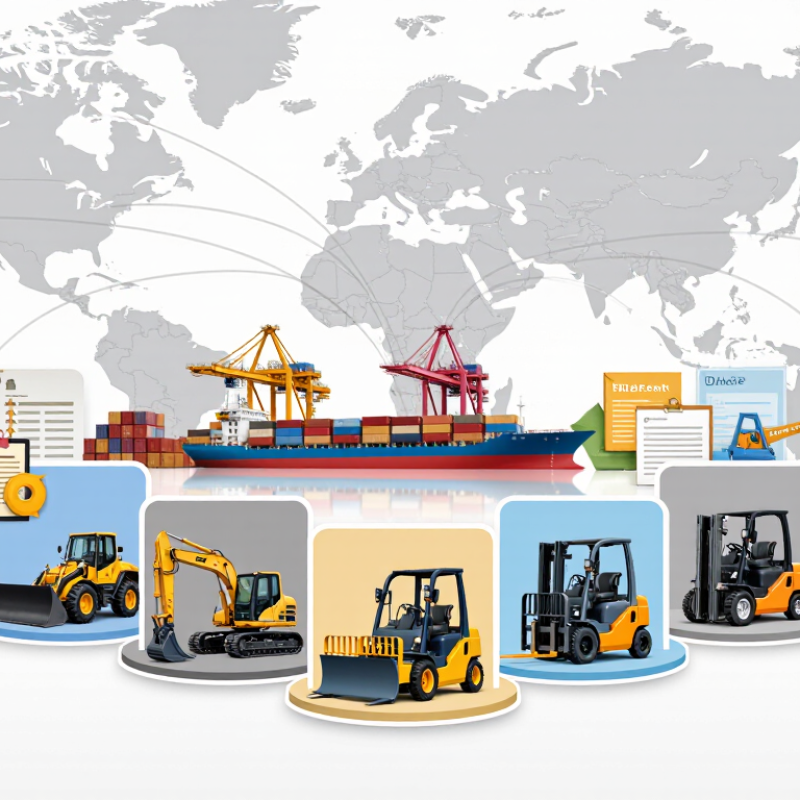
The 2023 UN Comtrade data offers a practical view of China’s heavy equipment trade. HS 8429 covers self-propelled bulldozers, graders, excavators, loaders, and similar machinery. HS 8430 includes other earth-moving, boring, pile-driving, and compacting equipment.
These codes help global buyers compare export activity by destination and product category. They do not identify the best private suppliers. That distinction matters. Customs data records declared trade between economies, not factory reliability, service quality, or spare-parts performance.
A careful buyer should examine China’s reported export values, shipment quantities, and destination markets. Unit values can reveal useful differences. A high value per machine may indicate larger excavators or advanced configurations. A low value may reflect compact equipment, partial shipments, or reporting differences.
Numbers need context.
In field sourcing work, specifications often decide the real cost. A machine working on wet soil needs different protection from one used on dry quarry ground. Buyers should verify operating weight, engine standards, hydraulic capacity, attachment compatibility, and warranty procedures before comparing quotations.
The dataset also has limits. HS codes can group machines with different designs and applications. Trade values may include incomplete customs descriptions. Exchange rates can distort year-to-year comparisons. Therefore, a “top 10” list should be treated as a screening tool, not a final purchasing decision. Independent inspections and written technical documents remain essential.
China Top 10 Heavy Equipment Trading Markets for Global Buyers — 2023 UN Comtrade HS 8429–8430 Data
Top destination markets ranked by China’s 2023 export value for earth-moving, excavating, grading, loading machinery and related equipment under HS 8429 and HS 8430. Values are retrieved from UN Comtrade and shown in US$ millions.
Loading 2023 UN Comtrade data...
Ranking the Top 10 Traders by Export Value, Volume, and Product Scope
China Top 10 Heavy Equipment Traders for Global Buyers?
A reliable top-ten ranking should measure more than shipment counts.
Export value shows commercial strength, while
export volume reveals delivery capacity.
Product scope tests whether a trader handles excavators, loaders, cranes, forklifts, and replacement parts.
A practical model assigns 40% to export value, 35% to volume, and 25% to product coverage.
China Customs Statistics and UN Comtrade data can support this comparison through HS codes such as
8429, 8430, and 8427.
Their records help verify destination markets and annual shipment trends. Industry reports from Off-Highway Research also place global construction equipment demand above
US$200 billion in recent market assessments.
However, customs data often records exporters, not complete trading groups.
That limitation matters.
A ranking may look precise but still contain gaps.
Tips: Request the latest export declarations, product-level HS codes, and destination-country records. Check whether claimed volume means machines, containers, or total weight. Ask for warranty procedures, spare-parts availability, and inspection evidence. A trader with broader product scope may reduce sourcing time, but technical support can be weaker. Compare both metrics carefully. A low-price supplier is not always the lowest-cost choice.
Trader Profiles: Machinery Categories, Brands, Dealer Networks, and Regions
China’s top ten heavy equipment traders are best compared through verified capabilities, not catalog size. The profiles examine excavators, loaders, graders, cranes, mining trucks, and used construction machinery. They also review multi-brand portfolios without treating every listed product as equally available. UN Comtrade data for 2023 places China among the leading exporters of several earthmoving equipment categories, supporting its importance for overseas buyers.
Dealer networks reveal practical strength. Some traders operate directly from coastal warehouses, while others use regional dealers in Southeast Asia, Africa, the Middle East, and Latin America. Stronger profiles show spare-parts stock, technician coverage, multilingual documentation, and clear warranty procedures. Off-Highway Research reports continued global demand for construction equipment, although regional cycles differ sharply. A trader serving one fast-growing region may outperform a larger exporter elsewhere.
The profiles also assess brand depth, factory relationships, lead times, and export experience. China Customs data and shipment records can help verify activity, but they do not prove after-sales quality. That remains a weak point in many online rankings. Buyers should request serial-number checks, inspection photos, service contacts, and recent delivery references. KHL’s Yellow Table offers useful market context, yet it tracks manufacturers rather than traders. This distinction matters. A capable dealer network can reduce downtime, but only when local support is genuinely active.
Buyer Verification Using China Customs Records, ISO 9001, and CE Standards
China Top 10 Heavy Equipment Traders for Global Buyers?
A credible trader should survive document-level verification, not only polished sales conversations. China Customs records can reveal export history, product descriptions, shipment frequency, and destination markets. Ask for records matching the proposed equipment category. A company shipping excavator parts should not suddenly claim years of complete crane exports. Small inconsistencies matter.
ISO 9001 indicates a documented quality management system, but it does not guarantee every machine is reliable. Request the certificate number, issuing body, validity period, and certified business scope. Then compare these details with the trader’s warehouse, inspection process, and after-sales records. A real visit helps. Check serial plates, hydraulic leaks, welding quality, and maintenance logs. Photos can mislead.
CE verification needs careful handling. CE marking applies to relevant products meeting applicable European Union requirements; it is not a universal quality badge. Ask for the EU Declaration of Conformity, technical file references, risk assessment, and test reports where required. The equipment model must match these documents exactly. Do not accept a generic certificate copied from another machine.
Customs data also has limits. It may show transactions, but not hidden defects, late delivery, or weak service. I once treated shipment volume as proof of reliability. That assumption was too simple. A better review combines records, factory evidence, independent inspection, payment safeguards, and clear warranty terms. Keep every verification step documented. Even experienced buyers miss details.
Total Cost Analysis: Freight, Tariffs, Warranty, and Equipment Ownership
Comparing China’s top ten heavy equipment traders requires more than comparing invoice prices. The real figure is landed cost. UNCTAD’s Review of Maritime Transport reports that over 80% of global merchandise trade moves by sea. Route disruptions can therefore change delivery budgets quickly. Ask each trader for freight quotes, port charges, inland haulage, insurance, and demurrage assumptions. A low factory price may hide a costly final-mile move.
Tariffs depend on the destination, machine type, engine specification, and HS classification. The WTO World Tariff Profiles shows that applied duties vary widely between importing economies. Confirm the classification with a licensed customs professional. Do not rely on a trader’s informal estimate. The World Bank’s 2023 Logistics Performance Index also evaluates customs, infrastructure, tracking, and delivery timeliness. These factors affect ownership costs when parts wait at a border.
Warranty terms deserve equal attention. Compare coverage period, labor reimbursement, excluded components, response times, and spare-parts locations. A two-year warranty has limited value if a technician must cross an ocean. Request maintenance intervals and realistic fuel-consumption records. I once underestimated hydraulic oil, tire wear, and storage costs; the spreadsheet looked convincing, but the machine stood idle for three weeks. That was my mistake. A practical model should include financing, taxes, training, downtime, resale value, and a contingency reserve. Leave room for uncertainty.
Sources: UNCTAD Review of Maritime Transport 2024, WTO World Tariff Profiles 2023, and World Bank Logistics Performance Index 2023.