

...

China Top 10 Vacuum Brazing Process Suppliers

China has become an important sourcing destination for vacuum-brazed heat exchangers, aerospace components, medical equipment, and precision assemblies. Yet supplier capabilities vary. This guide to China’s top 10 Vacuum Brazing Process suppliers focuses on evidence buyers can check, not impressive claims alone. Look for documented furnace capacity, material expertise, inspection methods, and experience with parts similar to yours.

A reliable joint begins long before the furnace cycle. Clean surfaces, controlled clearances, suitable filler metals, and stable temperature profiles all matter. Welding metallurgy expert John C. Lippold is a relevant authority on joining processes. The following is an editorial summary, not a verified quotation: “A sound joint is proven by repeatable results, not appearance alone.” That principle offers a practical way to compare suppliers. Ask how they validate process windows, manage batch records, and inspect hidden joints. A polished sample is not enough.

The profiles ahead consider technical range, quality controls, production readiness, and communication. Buyers should also request references, review test reports, and confirm whether a supplier can support prototypes and larger orders. A small test coupon can reveal more than a glossy brochure. Still, no ranking replaces your own audit; even capable suppliers may not fit every alloy, geometry, or delivery schedule. This introduction sets a cautious starting point for finding a partner whose process matches your part and performance needs.
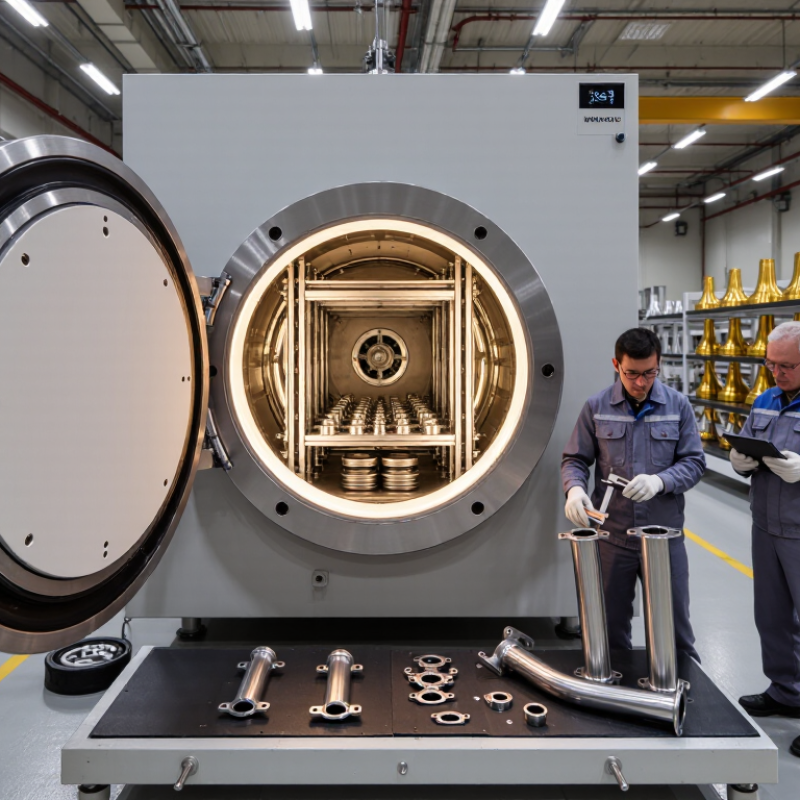
China Top 10 Vacuum Brazing Process Suppliers

Understanding Vacuum Brazing and Its Industrial Applications

Vacuum brazing joins metal parts inside a sealed chamber with very little oxygen. Components are cleaned, assembled with a suitable filler metal, and heated through a controlled cycle. The filler melts without melting the main parts. It flows into narrow gaps through capillary action, then solidifies as the assembly cools. No flux is normally needed, which helps reduce residue and oxidation.

The process suits heat exchangers, aircraft components, electronic assemblies, and precision tooling. A thin, continuous joint can transfer heat efficiently or seal fluid passages.

Details matter. Surface cleanliness, joint clearance, and compatible materials all affect the result. Engineers also consider chamber size, temperature uniformity, and how parts may distort during heating. Finished assemblies may undergo visual inspection, dimensional checks, or leak testing, depending on their use.

Still, vacuum brazing is not a cure-all. Large parts can require costly equipment, and awkward joint designs may produce weak or inconsistent bonds. A polished seam can hide a problem. Practical trials and documented process controls help reveal risks before production scales up.

Overview of China's Vacuum Brazing Supplier Landscape

China’s vacuum-brazing supplier landscape is broad, but difficult to measure precisely. Public statistics do not provide a dedicated count of Chinese suppliers. The National Bureau of Statistics reported that manufacturing value added accounted for 26.2% of China’s GDP in 2023. That creates a substantial industrial base, but it does not prove that every furnace maker or job shop can deliver repeatable brazing quality. Buyers should compare process capability, not catalogue size. Ask for temperature-uniformity records, vacuum-system specifications, sample-batch results, and leak-test data. Small details matter.

Demand also comes from sectors using compact, sealed metal assemblies. The China Association of Automobile Manufacturers reported 31.28 million vehicles produced in 2024, up 3.7% year on year. This points to opportunities in heat exchangers and thermal-management components, though vehicle output alone cannot quantify brazing demand. A capable supplier should explain alloy compatibility, joint clearance, fixture design, and cleaning controls in practical terms. Requesting a trial run can reveal problems that a polished presentation may miss. A gap remains: published reports rarely show comparable supplier-level yield or defect rates, so qualification still requires careful, hands-on verification.

China Top 10 Vacuum Brazing Process Suppliers - Overview of China's Vacuum Brazing Supplier Landscape

This overview compares ten common supplier profiles and service segments in China’s vacuum-brazing market; it is not a verified ranking of individual companies. Temperature ranges are indicative examples only: actual cycles depend on the base alloy, brazing filler metal, component design, and approved process specification.

No. Supplier profile Typical materials Common applications Indicative brazing temperature Useful supplier evaluation criteria
1 Aluminum heat-exchanger brazing specialists Brazing-grade aluminum alloys and aluminum-silicon filler alloys Compact heat exchangers, cold plates, and certain automotive or industrial cooling assemblies Generally around 575–610 °C, depending on alloy and filler Joint leak testing, distortion control, cleanliness, and repeatable temperature uniformity
2 Stainless-steel heat-exchanger and fluid-system specialists Stainless steels with compatible nickel-based or copper-based filler metals Plate assemblies, manifolds, fluid channels, and corrosion-resistant components Often about 1,000–1,200 °C with nickel-based fillers; filler-specific Joint integrity, filler selection, corrosion requirements, and documented leak-test results
3 Copper and copper-alloy component specialists Copper, copper alloys, and compatible silver- or copper-based filler metals Electrical assemblies, heat-transfer parts, and vacuum-compatible copper components Commonly about 700–1,150 °C, depending strongly on filler metal Electrical or thermal performance, joint clearance control, and prevention of oxidation or contamination
4 Nickel-alloy and high-temperature component specialists Nickel-based alloys and nickel-based brazing filler metals High-temperature assemblies, furnace hardware, and selected energy or industrial components Typically within roughly 1,050–1,230 °C for many filler systems Base-metal compatibility, joint design, thermal-cycle records, and post-braze inspection capability
5 Aerospace-oriented brazing service providers Stainless steels, nickel alloys, and other approved aerospace materials Complex assemblies and components requiring controlled, traceable processing Set by the approved material and filler specification; no single universal cycle Traceability, calibrated equipment, documented procedures, inspection records, and customer-specific approvals
6 Titanium and reactive-metal brazing specialists Titanium and titanium alloys with suitable active or other compatible filler systems Specialized lightweight assemblies and selected medical, aerospace, or industrial parts Often around 850–1,000 °C, subject to alloy and filler requirements Atmosphere control, surface preparation, contamination prevention, and material-specific process validation
7 Carbide-tool and dissimilar-material brazing providers Cemented carbide joined to steel or other compatible substrates using suitable fillers Cutting tools, wear parts, and selected industrial tooling assemblies Often approximately 800–1,100 °C, depending on filler and assembly design Stress management, joint-gap consistency, filler placement, and resistance to cracking or separation
8 Automotive and industrial component contract braziers Commonly stainless steel, carbon steel, copper alloys, or aluminum, depending on the part Valves, sensors, fluid-control parts, heat-transfer components, and production assemblies Process-specific; selected material and filler combinations span several hundred degrees Batch consistency, production capacity, dimensional control, inspection coverage, and delivery performance
9 Vacuum-furnace manufacturers offering brazing process support Equipment capability varies; systems may be configured for multiple metal families In-house brazing lines, laboratory development, and outsourced process trials Depends on furnace design, hot-zone materials, and the qualified process recipe Usable work-zone size, temperature uniformity, vacuum performance, controls, service, and application testing
10 General-purpose vacuum-brazing job shops Mixed production materials, subject to the shop’s equipment and qualified procedures Prototype work, small and medium batches, and components across several industrial sectors Varies with part material and filler; confirm the permitted range for each specific job Relevant experience, load capacity, contamination controls, inspection options, and clear acceptance criteria

Key Criteria for Evaluating Vacuum Brazing Process Suppliers

Vacuum brazing quality depends on more than a furnace’s maximum temperature. Ask suppliers about usable chamber dimensions, temperature uniformity, vacuum stability, and control across the full heating cycle. These details affect whether a large assembly heats evenly or a thin joint receives too much heat. Request recent process records for parts similar in size and material to yours. Numbers need context.

Check whether the supplier understands your base metals, filler alloy, joint clearance, and cleaning requirements. A technically sound process should explain how these factors influence wetting and joint strength. Ask for a trial run using representative parts, followed by inspection results and any destructive test data relevant to your application. A small sample can reveal much. It may not reveal everything.

Review how each batch is identified and documented, including furnace-cycle records, material certificates, and inspection findings. Ask how the team handles a failed cycle, furnace maintenance, or a change in production volume. Clear answers matter more than a polished brochure. During a technical discussion, notice whether engineers ask precise questions about your part geometry and service conditions. If they do not, pause. Even a capable supplier may need more information before making reliable process commitments.

Key Criteria for Evaluating Vacuum Brazing Process Suppliers

Suggested evaluation weights for comparing suppliers. These are a screening framework, not supplier ratings or measured industry averages.

Assess process capability, quality controls, equipment capacity, qualification practices, material compatibility, traceability, and delivery performance. Validate claims through audits, documentation reviews, and representative sample runs.

Profiles of China's Top 10 Vacuum Brazing Process Suppliers

Profiles of China’s top 10 vacuum brazing process suppliers are most useful when they show how each shop works, not just what equipment it owns. A credible profile should identify the materials handled, typical component sizes, furnace capacity, and available process controls. These details help buyers judge whether a supplier can braze a compact heat exchanger or a larger, heavier assembly. Consistency matters.

The profiles should also explain how suppliers prepare parts, select filler metals, and inspect finished joints. Ask whether they can provide process records, sample evaluations, and clear guidance on design limits. A supplier serving precision components may prioritize tight temperature uniformity, while another may focus on larger production batches. Neither capability alone proves a good fit. Details matter.

Useful comparisons include engineering support, lead times, communication, and experience with similar assemblies. Look for specific examples, such as how a supplier manages joint clearance or checks for leaks after brazing. Avoid treating a “top ten” label as a verified ranking unless its selection method is disclosed. A neat chart cannot tell everything. I would still ask for a sample review; written profiles rarely show how a team responds when a process needs adjustment.

Comparing Supplier Capabilities, Industries, and Services

China Top 10 Vacuum Brazing Process Suppliers

Comparing suppliers takes more than checking furnace capacity. Ask about usable chamber dimensions, temperature uniformity, vacuum monitoring, and compatible filler metals. These details affect whether a thin stainless-steel assembly or a bulky copper component can be processed reliably. Request sample process records, not just equipment specifications. Details matter.

Suppliers may serve aerospace, automotive, electronics, heat-exchanger, and medical-device manufacturers, but their experience can differ sharply by part geometry and material. A shop handling repeat production runs may not suit a prototype with narrow joints and mixed alloys. Discuss cleaning methods, fixture design, batch size, and whether engineers review drawings before quoting. Not every shop fits.

Service quality also includes inspection and communication. Ask whether the supplier can provide leak testing, dimensional checks, metallographic evaluation, or traceable process documentation when your project requires them. Confirm how nonconforming parts are reported and how process changes are controlled. A site visit can reveal practical details: clean loading areas, labeled fixtures, and clear work instructions. Still, one visit cannot prove long-term consistency. Compare evidence from relevant jobs, and verify that quoted capabilities match your actual components.