

...

China Top Stainless Steel Wire Mesh Filter Suppliers

Choosing a Stainless Steel Wire Mesh Filter supplier in China requires more than comparing prices. The right product must match the fluid, operating temperature, pressure, and filtration target. A mesh that looks suitable in a catalog may perform poorly once installed. Small details matter.

This guide introduces key factors for evaluating suppliers, including stainless steel grades, wire diameter, mesh count, aperture size, weaving method, and edge finishing. Ask for drawings and sample pieces when specifications are unclear. Check how the supplier controls production and verifies dimensions. Request relevant material records and inspection reports, then confirm that they match the order. Clear answers help. Vague claims do not.

A dependable supplier should explain trade-offs without promising results that have not been tested. For example, a finer mesh can capture smaller particles, but it may also restrict flow or clog sooner. That balance depends on the application. It is easy to overlook. The sections ahead outline practical questions for comparing Chinese manufacturers, reviewing communication, and assessing customization, lead times, and after-sales support. No single supplier suits every project, and “top” should mean a strong fit for defined requirements—not simply a prominent listing. Buyers should verify details directly, since product descriptions can leave important gaps. This guide offers a starting point, not a substitute for technical review.
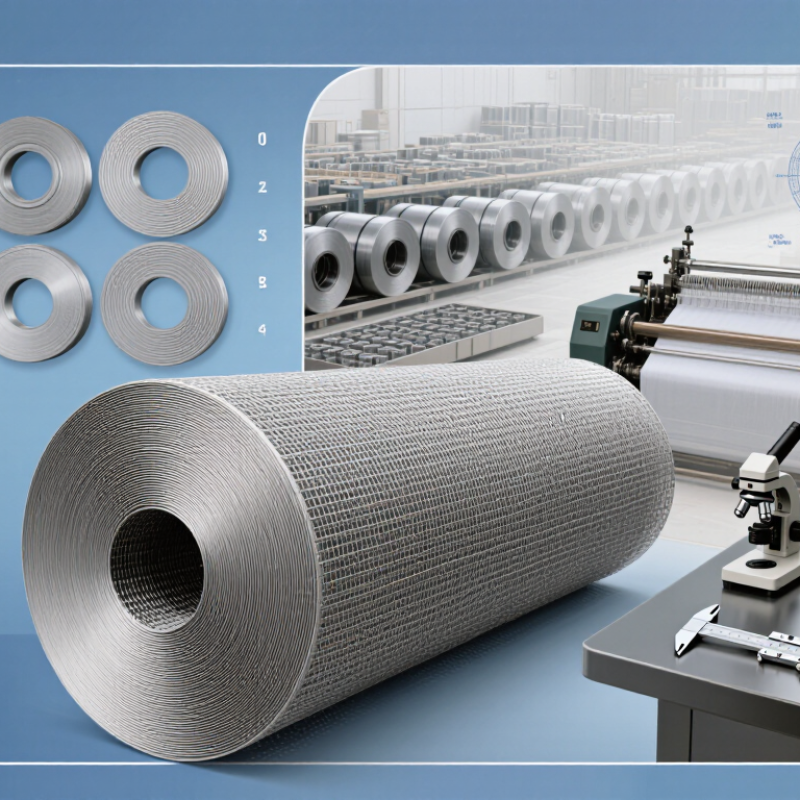
China Top Stainless Steel Wire Mesh Filter Suppliers

Understanding Stainless Steel Wire Mesh Filters and Their Uses

A stainless steel wire mesh filter is woven from intersecting wires, creating openings that screen particles from liquids or air. The opening size, wire diameter, weave, and alloy all affect performance. ASTM E11, a standard for test sieves, specifies aperture and wire details because small variations can change particle separation. In practice, a finer mesh may capture smaller solids, but it can also clog sooner and restrict flow. The opening is decisive.

These filters are used in process-water lines, food production, chemical processing, and equipment pre-filtration. UNESCO’s 2024 World Water Development Report estimates that agriculture accounts for about 70% of global freshwater withdrawals. That figure is not a filter-market statistic, but it underlines the value of managing water and suspended solids carefully. A mesh filter can protect downstream equipment; it cannot remove dissolved salts or every microscopic contaminant.

Selection should match the fluid, particle size, pressure, temperature, and cleaning routine. Stainless grades differ in corrosion resistance, and even a suitable grade can suffer in harsh service. Mesh is not magic. Inspect for stretched wires, blocked openings, and corrosion, especially after repeated cleaning. One detail is easy to overlook: a nominal mesh count alone does not fully describe the usable aperture. Verify the opening and test the filter under actual operating conditions.

How Chinese Suppliers Manufacture and Customize Filter Mesh

Chinese suppliers manufacture stainless steel filter mesh through controlled wire drawing, weaving, and finishing. Stainless steel wire is drawn to a specified diameter, then woven on looms into plain, twill, or Dutch patterns. Each pattern balances opening size, strength, and flow. Small changes matter. A few microns can affect retention and pressure drop.

Customization usually begins with the operating conditions: fluid type, temperature, target particle size, and required flow rate. Suppliers can adjust wire diameter, mesh count, weave, width, and edge treatment. They may also cut, roll, or form mesh into filter discs and cylinders. Ask for a sample and a measured aperture report. A mesh that looks correct can still perform poorly if its openings vary. Tighter filtration is not always better; it may reduce flow or clog sooner. That trade-off deserves a real test, not just a catalog choice.

Tips: Share a drawing and application details. Confirm tolerances, material grade, and inspection methods before production. Test a sample under actual working conditions; specifications alone may not reveal every issue.

China Top Stainless Steel Wire Mesh Filter Suppliers - How Chinese Suppliers Manufacture and Customize Filter Mesh
Data Dimension Typical Options or Process Practical Details for Buyers
Stainless Steel Grades 304, 316 and 316L Grade selection depends on the fluid, temperature and exposure to corrosive substances. 316 and 316L contain molybdenum and are often selected for improved resistance to chloride environments compared with 304; suitability should be confirmed for the specific service conditions.
Weaving Methods Plain weave, twill weave and Dutch weave Plain weave is commonly used for general screening. Twill weave can accommodate finer wires in some specifications. Dutch weaves use different wire diameters and a dense structure to provide fine filtration; the resulting opening and flow characteristics depend on the design.
Mesh Count and Opening Specified by mesh count, wire diameter and nominal aperture For square plain weave, a nominal opening in millimetres can be estimated as 25.4 divided by mesh count per inch, minus wire diameter in millimetres. For example, 100 mesh with 0.10 mm wire gives an estimated opening of 0.154 mm. Confirm the required aperture and tolerances with the supplier.
Wire Diameter Selected to match mesh count, strength and filtration requirements Wire diameter affects aperture, open area, rigidity and pressure resistance. The available combinations are constrained by the weave and mesh specification, so buyers should request a technical drawing or specification sheet for the selected construction.
Manufacturing Steps Wire drawing, weaving, cutting and finishing Typical production begins with stainless steel wire preparation, followed by weaving to the specified pattern. The cloth may then be slit or cut, with edges finished or formed to the order. The exact route depends on whether the product is supplied as roll goods, a disc, a screen or a fabricated filter part.
Customization Material, weave, dimensions, edge treatment and component shape Common order details include grade, mesh count, wire diameter, aperture, roll or cut-piece dimensions, and whether the mesh needs a frame, rim or other support. Provide drawings, operating conditions and target filtration requirements when requesting a quotation.
Quality Checks Visual inspection, dimensional checks and material documentation Inspection may cover mesh count, wire diameter, width, length, weave condition and visible defects. Buyers can specify required inspection records, material certificates or sampling methods in the purchase agreement; testing and documentation availability varies by supplier and order.
Common Applications Liquid and gas filtration, screening and separation Stainless steel woven mesh is used in applications such as process filtration, strainers, screens and separation equipment. The appropriate grade and mesh construction depend on the media, operating temperature, cleaning method and required flow rate.
Quotation Information Technical specification, quantity and delivery requirements A clear inquiry should state the stainless steel grade, weave, mesh count or aperture, wire diameter, dimensions, quantity, finishing requirements and intended use. Confirm tolerances, packaging, lead time and inspection requirements before placing an order.

Specifications shown are general purchasing guidance. Actual availability, tolerances and performance depend on the selected mesh construction and supplier agreement.

Key Quality Standards for Evaluating Chinese Suppliers

When comparing Chinese stainless steel wire mesh filter suppliers, begin with the finished mesh, not a brochure. Ask for the stainless steel grade, wire diameter, aperture size, weave type, and stated tolerances. These details affect flow, particle retention, strength, and cleaning. Small variations matter. Request a sample from the intended production batch and inspect it under consistent lighting. Check for uneven openings, broken wires, loose edges, and visible contamination.

A reliable supplier should provide material test reports linked to the batch, along with clear inspection records. Compare reported chemistry and mechanical properties with your agreed specification; do not rely on a grade label alone. For corrosive or high-temperature service, ask how performance is verified and which test conditions apply. Evidence should be specific. Discuss aperture measurement methods, sampling frequency, and acceptance limits before placing an order.

Review process control as carefully as paperwork. Ask how operators monitor weaving tension, edge finishing, and dimensional consistency across rolls. Check whether packaging protects the mesh from moisture, crushing, and mix-ups during shipment. A factory visit or third-party inspection can help, but neither guarantees every roll will be perfect. In practice, a clear drawing and approved sample reduce avoidable disputes, though they cannot replace incoming checks. That step is easy to underestimate.

Supplier Capabilities, Product Types, and Industry Applications

China’s stainless steel wire mesh filter suppliers may offer woven mesh, sintered mesh, filter discs, and custom-cut cylinders. Capabilities vary: some handle edge finishing and welding, while others focus on standard rolls or simple conversions. Buyers should compare wire diameter, opening size, material grade, and stated filtration rating. These details affect flow, strength, and cleaning needs.

Applications include water treatment, food processing, chemical production, and machinery protection. Fine mesh can capture smaller particles, but it may also clog sooner. Coarser mesh often allows greater flow, though it may miss finer contaminants. A supplier’s technical sheet is useful, but a sample tested under actual operating conditions is more convincing. Catalog claims can look exact. Real process conditions rarely are.

Tips: Ask for material certificates, mesh-opening data, and inspection records. Confirm whether the quoted rating refers to particle retention or mesh size. Check welds and edges on a physical sample. Small defects matter. Also discuss cleaning methods and operating temperature before approving a design.

How to Compare and Select a Suitable Supplier in China

When comparing China-based stainless steel wire mesh filter suppliers, align the specifications before reviewing prices. State the mesh opening, wire diameter, weave, stainless steel grade, roll width, and acceptable tolerances. A quote for “fine mesh” means little without measured details. Ask for a sample cut from the same production line intended for your order, then check openings and wire consistency under magnification. Small differences matter.

Review quality controls with practical questions. How are incoming wire and finished rolls inspected? Can the supplier provide recent test reports and traceable batch records? Request photos of measuring equipment and inspection steps, not only showroom images. A polished PDF is not proof. If a claim seems unclear, ask who performs the test and when. Certifications can help, but verify their scope and validity rather than relying on a logo.

Production capacity and communication deserve equal attention. Confirm the actual lead time, packing method, export documents, and process for handling defects before placing an order. Replies that address technical questions clearly are useful; vague promises are not. A small pilot order can reveal winding, edge, or packaging issues before a larger shipment. Even then, no checklist catches everything, and a low-cost offer may still be the wrong fit. I would leave room for that uncertainty.