

...

How to Choose the Right Ceramic Balls in 2026?

Choosing the right Ceramic Ball in 2026 means matching material and grade to the job, not simply buying the hardest option. A bearing running at high speed has different needs from a valve exposed to abrasive slurry or a pump handling corrosive fluids. Alumina, zirconia, and silicon nitride differ in density, toughness, chemical resistance, and cost. Small differences matter. A ball that performs well in a catalog may behave differently under heat, poor lubrication, or repeated impact.

Several references help make the choice more evidence-based. ISO 3290-2:2014 sets dimensional and tolerance requirements for ceramic balls used in rolling bearings; it does not, by itself, guarantee service life in a particular machine. Grand View Research’s Ceramic Balls Market report tracks market demand by material and application, offering useful context, though forecasts are not purchase specifications. The U.S. Geological Survey’s Mineral Commodity Summaries 2025 covers supply information for materials including alumina-related inputs and zirconium. That matters when sourcing and price stability enter the decision. Yet reports have limits. They cannot replace samples, operating data, or a careful review of the actual load, temperature, speed, and lubricant. Before comparing suppliers, define those conditions and ask for documented dimensions, material composition, and inspection results. One detail is easy to miss: “ceramic” is not a single performance category. A sound choice starts with the operating conditions, then checks whether the evidence supports the promised performance.
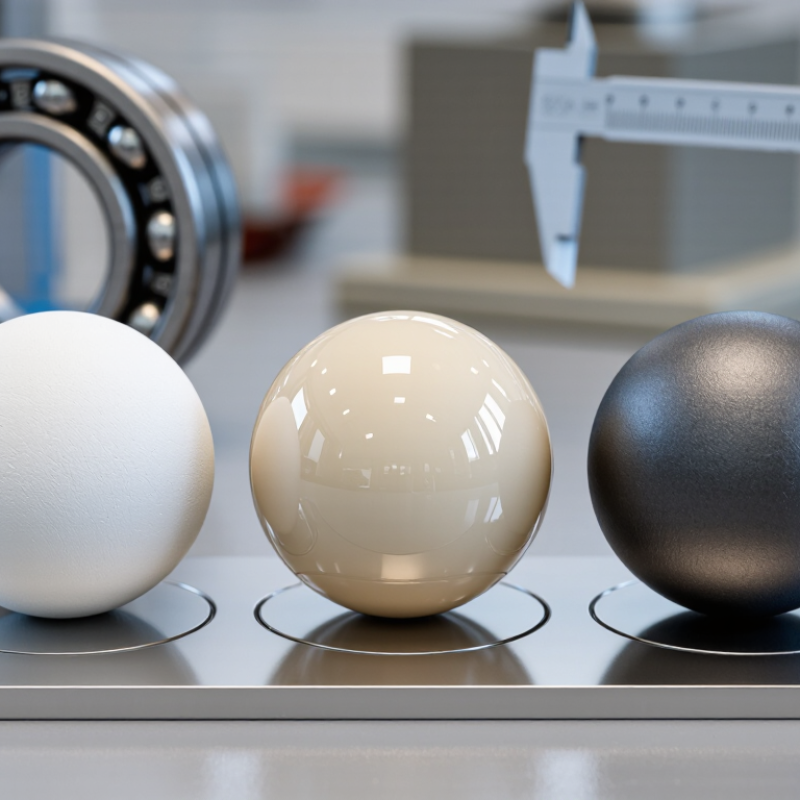
How to Choose the Right Ceramic Balls in 2026?

Ceramic Ball Types and Their Core Properties

Ceramic balls may look alike in a sample tray, but their core properties differ sharply. Alumina Balls offer high hardness, wear resistance, and broad chemical stability, making them a practical choice for many grinding and support duties. They are not indestructible; impact and poor fit can still cause chipping. Zirconia is denser and tougher, so it can deliver efficient milling with less contamination from wear. Its higher cost may not be justified for every process.

Silicon nitride combines low density with strong fatigue and thermal-shock resistance. It suits demanding bearing and high-speed applications, where weight and heat matter. Silicon carbide handles high temperatures and resists many corrosive environments, but its brittleness calls for careful installation. Steatite is generally more economical, though its performance limits may rule it out under heavy loads. That matters.

Match the material to operating temperature, load, speed, fluid chemistry, and acceptable wear—not just to a hardness figure. Ask for test data under conditions close to your process, and check ball size tolerance and surface finish. A neat comparison chart cannot predict every real installation. Sometimes the best choice becomes clear only after a small, controlled trial.

How Ceramic Composition Affects Performance

How Ceramic Composition Affects Performance

Choosing ceramic balls in 2026 starts with the conditions they will face, not just their advertised hardness. Alumina offers strong wear resistance and performs well in many chemically demanding settings. However, it can chip when exposed to sudden impact. Zirconia is tougher and handles repeated contact more effectively, though its weight and cost may not suit every design. Silicon nitride is lighter and tolerates rapid temperature changes, making it useful where heat and movement occur together. Small differences matter. Composition, grade, and manufacturing quality can all change real-world performance.

Tips: Match the material to the actual load, temperature, and surrounding fluid. Ask for a datasheet, and check test conditions before comparing figures.

A ball that lasts in a laboratory test may behave differently in a vibrating pump or a gritty production line. Review contact pressure and lubrication, too. I have seen material selection focus too heavily on hardness; that shortcut can overlook brittle failure or thermal cycling. There is no universal best ceramic. If operating conditions are uncertain, test a small batch under realistic conditions and record wear, noise, and temperature.

How to Choose the Right Ceramic Balls in 2026?

How ceramic composition affects density and hardness

Representative values for common engineering-ceramic grades; actual properties vary with grade and manufacturing. Silicon carbide is typically the hardest, while silicon nitride combines relatively low density with high hardness. Choose a material based on the application’s wear, load, and weight requirements.

How to Match Ball Properties to Operating Conditions

Match the ball to the load, speed, temperature, and process fluid—not just the machine name.

ASM Handbook, Volume 4A (2013), lists typical densities near 3.9 g/cm³ for alumina, 3.2 for silicon nitride, and 5.7–6.1 for zirconia. That difference matters: heavier balls can increase impact energy in a mill, while lighter balls may reduce centrifugal loading in high-speed service.

Speed matters. Check the actual duty cycle, including starts, stops, and vibration.

For hot, corrosive service, compare chemical compatibility and thermal-shock resistance with the fluid and temperature swings. Silicon nitride is relatively light; zirconia is dense and tough; alumina often suits general wear applications. These are tendencies, not guarantees. ASM property tables describe material behavior, but finished-ball quality and surface defects also affect life.

Ask for test data at conditions close to yours, including load, speed, and lubricant or slurry. ASTM G99-23 describes a wear-test method, but its results do not automatically predict performance in your equipment.

Still, lab numbers can mislead. I would verify the choice in a small controlled trial before specifying a full production batch.

How to Select the Right Size, Grade, and Surface Finish

How to Choose the Right Ceramic Balls in 2026?

How to Select the Right Size, Grade, and Surface Finish

Start with the bearing or process requirements, not the catalog’s smallest tolerance. Match ball diameter to groove geometry, operating clearance, load, and speed. A ball that is too large can raise friction; one that is too small may increase vibration. ISO 3290-2:2014 covers ceramic bearing balls and lists precision grades from G3 to G1000. Lower grade numbers indicate tighter dimensional and form tolerances, but tighter tolerances may add cost without improving every application.

Surface finish matters at the contact point. Ask suppliers for measured roughness, the measurement method, and inspection records; a grade number alone does not describe every surface detail. For a high-speed spindle, a small variation can affect noise and heat. For a non-bearing process, a less demanding finish may work. I have seen buyers focus on diameter and overlook finish—it is an easy mistake, and not always visible to the naked eye.

Tips: Compare certified samples under the same lighting and measurement setup. Confirm the units, tolerance, and material grade in writing. If the application is new, test a small batch under real operating conditions. A polished ball can still be the wrong choice if its size or grade does not suit the assembly.

How to Assess Quality, Standards, and Supplier Reliability

Choosing ceramic balls in 2026 starts with the conditions they will face: load, temperature, speed, and chemical exposure. A ball used in a valve may need different properties from one used in a grinding mill. Match the ceramic type to the application, then check diameter, roundness, density, and surface finish. Ask for measured tolerances, not just a statement that the product is “high quality.” Small flaws matter. Under a bright light, chips, pits, or uneven glaze can signal handling or manufacturing issues.

Standards help only when they fit the intended use. Request the applicable material specification, inspection method, and test records for the supplied batch. Confirm that certificates identify the actual ceramic grade and explain how results were measured. A polished certificate is not enough if its figures cannot be traced to a lot number. A sample alone can mislead, too; production batches may vary. Compare sample results with incoming inspection data where possible.

Supplier reliability shows in the details. Look for consistent batch records, clear answers about tolerances, and realistic lead times. Ask how the supplier handles nonconforming parts and whether replacement batches receive the same checks. A brief trial order can reveal packaging quality, delivery accuracy, and communication habits before a larger purchase. No supplier is perfect, and vague replies deserve a second look. Keep the decision tied to documented performance, not confident sales language.

How to Choose the Right Ceramic Balls in 2026? — How to Assess Quality, Standards, and Supplier Reliability

Compare ceramic-ball materials against the application, operating environment, and required tolerances. Property figures below are typical approximate ranges; actual values vary by composition, manufacturing route, test method, and product grade. Confirm specifications with test reports before purchase.

Material Typical Density (g/cm³) Typical Hardness (HV) Useful Characteristics Common Application Fit Key Selection Caution
Alumina (Al₂O₃) 3.7–3.9 1,400–1,800 High hardness, electrical insulation, and good wear and corrosion resistance in many environments. Grinding media, pumps, valves, and general-purpose wear components. Check alumina content, porosity, surface finish, and resistance to the specific chemicals and impact conditions involved.
Yttria-stabilized zirconia (YSZ) 5.9–6.1 1,100–1,400 High fracture toughness for a ceramic and good wear resistance; generally heavier than alumina or silicon nitride. Grinding and milling where contamination control, wear resistance, and toughness are important. Specify stabilizer type and content. Assess chemical compatibility and temperature limits for the particular grade.
Silicon nitride (Si₃N₄) 3.1–3.3 1,300–1,700 Low density, high hardness, and good thermal-shock and wear performance in suitable grades. Precision rolling elements and demanding high-speed or electrically insulating bearing applications. For bearing use, verify ball grade, dimensional accuracy, surface finish, and the relevant drawing and inspection requirements.
Silicon carbide (SiC) 3.0–3.2 2,200–2,800 Very high hardness, strong abrasion resistance, and good performance at elevated temperatures in suitable designs. Abrasive, high-wear, and some high-temperature applications. Its high hardness does not eliminate brittleness; assess impact loading, mating surfaces, and the required grade.
Steatite (magnesium silicate ceramic) 2.6–2.9 Typically lower than high-performance technical ceramics; confirm by grade and test method. Electrical insulation and economical performance in less demanding service. Electrical and general-purpose components where extreme wear resistance is not required. Do not assume it is interchangeable with alumina, zirconia, or bearing-grade ceramics; check load and wear requirements.
Quality, Standards, and Supplier Assessment
Assessment Dimension What to Request or Measure How to Evaluate It Evidence to Keep
Dimensions and ball grade Nominal diameter, diameter variation, spherical form, and lot-to-lot variation. Compare measured results with the purchase drawing and the agreed tolerance class. For ceramic bearing balls, review the applicable requirements of ISO 3290-2 and the specified grade. Inspection report with measurement method, sampling plan, and lot identification.
Surface quality Surface roughness, visible defects, chips, cracks, and surface finish. Set acceptance limits for the application; visual inspection alone does not establish precision or subsurface integrity. Surface-finish results, inspection criteria, and representative inspection records.
Material verification Composition, density, and other application-relevant material properties. Check that the stated ceramic type and grade match the order. Use test methods appropriate to the material and agree on them in advance. Material certificate or test report linked to the supplied lot.
Applicable standards Standard number, edition, scope, and any stated deviations. ISO 3290-2 covers ceramic balls for rolling bearings. ASTM F2094/F2094M addresses silicon nitride bearing balls. Confirm that the selected standard applies to the product and intended use. Written declaration of conformity and the standard edition used for inspection.
Traceability and consistency Batch or lot identification, manufacturing date, and inspection records. Check that certificates correspond to the delivered lot and that repeat orders can be compared using consistent specifications and test methods. Lot-level certificates, retained samples where appropriate, and change-notification terms.
Supplier reliability Process controls, quality-management documentation, lead time, packaging, and complaint handling. Review documented procedures and sample-product results. Treat certifications as supporting evidence, not a substitute for verifying the actual product. Audit or qualification records, agreed delivery terms, and corrective-action records.
Application validation Load, speed, temperature, lubrication, chemicals, impact, and contamination limits. Trial the selected material and grade under representative operating conditions before full-scale adoption. Trial protocol, operating data, and acceptance criteria approved by the buyer.
Note: Hardness and density ranges are indicative screening values, not universal acceptance limits. Confirm the exact grade, test method, tolerance class, and application suitability in the purchase specification.

Article Source: