...

How to Choose a CNC Machining Metal Supplier in 2026?

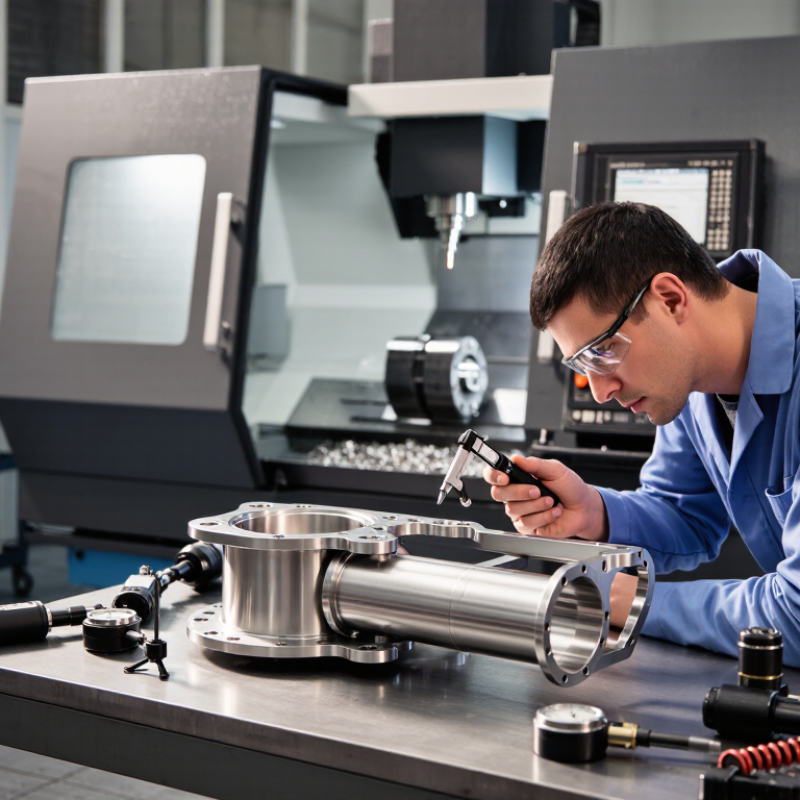
Choosing a reliable Cnc Machining Metal supplier in 2026 requires more than comparing prices. It demands evidence, technical questions, and careful observation. A polished website proves very little. Ask to see recent inspection reports, material certificates, machine lists, and sample components. A supplier producing stainless steel brackets should explain its tolerances, surface finish controls, and measurement process clearly. Vague answers signal risk.

Mike Lynch, author of CNC Programming Principles and Applications, offers a useful manufacturing principle: “The machine does not make the part; the process does.” This idea should guide every supplier evaluation. Review the company’s experience with your alloy, geometry, tolerance range, and annual volume. Check whether its operators use calibrated CMM equipment, micrometers, and documented first-article inspections. Confirm how it handles tool wear, dimensional drift, and nonconforming parts. These details affect real production results.

Communication matters too. Can the supplier respond quickly when a drawing changes? Will it identify an unrealistic tolerance before machining begins? Ask for a clear timeline, packaging plan, and corrective-action procedure. Visit the facility if possible. Look at the chips, coolant condition, inspection area, and production records. Small signs can reveal large weaknesses.

No supplier is perfect. I have seen impressive samples hide inconsistent batch control. That is uncomfortable, but useful. A strong decision balances capability, transparency, cost, and accountability. The cheapest quote may become expensive after rework, delays, or rejected parts. In 2026, the best Cnc Machining Metal partner will not merely promise precision. It will demonstrate how precision is achieved, measured, and sustained.

How to Choose a CNC Machining Metal Supplier in 2026?

Define Your CNC Machining Requirements and Material Specifications

Before comparing CNC metal suppliers in 2026, write a measurable requirement sheet. State quantity, geometry, critical dimensions, tolerance bands, surface roughness, datums, threads, edge breaks, and inspection methods. A vague “tight tolerance” invites costly interpretation. ISO 286-1 can structure dimensional fits, but functional tolerances should follow design risk, not habit.

I have seen a 0.02 mm tolerance placed on a noncritical face. It raised cost without improving performance.

Specify the alloy by grade and condition, not color or trade shorthand. Include temper, hardness range, heat-treatment condition, grain direction, and required certificates. The International Aluminium Institute reports that recycling aluminium uses roughly 5% of the energy required for primary production. That makes recycled content worth discussing, but strength, machinability, and traceability still control the decision. World Steel Association data recorded about 1.89 billion tonnes of crude steel production in 2023, so “steel” alone is far too broad.

Ask suppliers to confirm machine envelope, tooling strategy, minimum wall thickness, burr control, and inspection equipment. Request a first-article plan, material certificates, and sample measurement records. The International Energy Agency’s 2024 Global Critical Minerals Outlook warns that refining remains concentrated for several key materials. Availability can change faster than drawings do. Build an approved substitute only after engineering review. Do not assume a cheaper alloy is equivalent.

One overlooked datum can distort an entire batch.

Assess Supplier Expertise, Equipment, and Production Capabilities

Choosing a CNC machining metal supplier in 2026 requires more than comparing hourly rates. Assess its engineering experience with your material, tolerance, surface finish, and part geometry. Ask for anonymized case evidence, inspection records, and examples of corrective actions. A supplier that explains failure risks clearly usually understands production reality.

Equipment matters. Review machine age, axis configuration, spindle capacity, probing systems, and calibration intervals. The International Federation of Robotics reported 4.28 million industrial robots operating worldwide in 2023, showing how automation is reshaping factory capability. Yet automation alone proves little. An advanced machine can still produce inconsistent parts without disciplined process control, skilled programmers, and qualified operators.

Check production capability on the shop floor. Ask how the supplier handles first-article inspection, in-process measurement, tool wear, batch traceability, and capacity planning. The ISO Survey 2023 recorded 1,265,216 ISO 9001 certificates worldwide, but certification is not a guarantee of machining quality. Treat it as supporting evidence. Request a sample inspection report with actual dimensions, equipment identification, and measurement uncertainty. Also confirm material certificates and subcontracting controls. Small details matter.

Do not overlook communication. Can the team review a troublesome drawing before quoting? Can it explain why a tolerance may increase cost? I would test this with one pilot order, not a large release. My own assessment can be imperfect, especially when polished documentation hides weak floor control. Visit the facility when possible. Listen to the machines. Check the parts.

Compare Quality Control Systems, Certifications, and Inspection Standards

When comparing CNC metal suppliers in 2026, inspect the quality system before admiring the machine list. The ISO Survey of Certifications 2022 recorded 1,265,216 ISO 9001 certificates worldwide. However, certification alone does not prove stable machining performance. Ask for controlled drawings, revision history, material certificates, lot traceability, and nonconformance records. For tight parts, request CMM reports with datums, tolerances, equipment identification, and calibration status. A report without measurement conditions is incomplete evidence.

Tips: Request a sample inspection pack before placing a large order. Compare its results with your drawing, not only its format. Small gaps matter. Confirm whether the supplier follows ASME Y14.5 for GD&T or another agreed standard. Check whether inspection equipment is calibrated through a traceable laboratory. “Calibrated” is not enough. Ask how measurement uncertainty and Gage R&R results are handled. These details are often missed.

Use ISO 9001 as a baseline, then examine actual process control. Look for first article inspection, in-process checks, capability studies, and corrective-action closure times. Cp and Cpk values can reveal whether a process is centered, but only when the sampling method is credible. Review scrap trends and recurring defects. Numbers expose habits. No system is flawless. A supplier that admits limitations may be more reliable than one presenting perfect paperwork. I would still approve a pilot batch before routine production.

Evaluate Pricing, Lead Times, Communication, and Supply Chain Reliability

How to Choose a CNC Machining Metal Supplier in 2026?

Price is important, but it rarely tells the whole story. Request itemized quotes for material, machining, finishing, inspection, packaging, and shipping. Compare identical drawings and tolerances. A low quote may hide longer setup times or weaker quality controls. Ask whether the supplier can explain cost changes clearly. That conversation reveals practical expertise.

Lead time should include programming, material purchasing, production, inspection, and dispatch. Ask for a written schedule with milestone dates. Confirm available machine capacity before placing a large order. A small trial batch can expose delays early. It may feel inefficient. It is often cheaper than missing a product launch.

Communication needs measurable habits. Set one technical contact and agree on response times. Request inspection reports, material certificates, and progress photos when appropriate. Reliable suppliers also explain disruptions instead of hiding them. Review their backup plans for raw materials, tooling, power interruptions, and transport delays. Check whether critical components rely on one source. That is a quiet risk. Historical delivery records, corrective-action reports, and realistic promises offer stronger evidence than polished sales language. Still, no supplier is perfect; even a capable workshop may underestimate a complex tolerance or unusual alloy. Leave room for review, clarification, and honest adjustment.

How to Choose a CNC Machining Metal Supplier in 2026? - Evaluate Pricing, Lead Times, Communication, and Supply Chain Reliability

Evaluation Dimension Measurable Metric Suggested Weight Strong Performance Acceptable Performance Risk Signal
Pricing and Commercial Transparency
Pricing Comparable unit price 10% Within 95%–105% of the median price from at least three comparable quotations. Within 106%–115% of the median when supported by better tolerances, inspection, materials, or finishing. More than 115% of the median without a documented technical or service advantage.
Pricing Quote completeness 5% Clearly lists material, machining, finishing, inspection, packaging, tooling, shipping terms, and taxes or duties where applicable. Most cost elements are listed, but one or two items require clarification before purchase. Frequent hidden charges, vague assumptions, or a price that changes substantially after order placement.
Pricing Cost stability 5% Price validity of at least 30 days and documented rules for material or foreign-exchange adjustments. Price validity of 15–29 days with reasonable adjustment conditions. No price-validity period or unilateral price changes after technical approval.
Lead Time and Production Capacity
Lead Time Prototype lead time 7% Approximately 5–10 business days for standard CNC parts after drawing and material approval. Approximately 11–15 business days, with a clear production schedule. More than 15 business days without a capacity, material, or process explanation.
Lead Time Production lead time 8% Approximately 10–20 business days for repeat production, depending on quantity, tolerance, and finishing. Approximately 21–30 business days with confirmed capacity and milestone dates. More than 30 business days or an estimate that excludes inspection, finishing, or packaging.
Lead Time Capacity and peak-load planning 5% Provides machine availability, planned capacity, backup processes, and a written plan for demand surges. Can confirm current capacity but has limited visibility into future loading. Cannot identify the assigned equipment, production window, or contingency plan.
Communication and Engineering Support
Communication Initial response time 3% Responds within one business day with a named contact and clear next steps. Responds within two business days with basic feasibility feedback. Response takes more than two business days or repeatedly requires follow-up.
Communication Technical review and DFM feedback 5% Provides practical feedback on tolerances, datums, tool access, wall thickness, material condition, and finishing. Identifies obvious manufacturing issues but offers limited design alternatives. Accepts drawings without review or raises preventable manufacturability problems after production begins.
Communication Engineering change response 2% Confirms the impact on price, schedule, tooling, and quality within one to two business days. Provides an update within three business days. Change requests are handled informally or without documented revision control.
Supply Chain Reliability and Quality Control
Supply Chain Reliability On-time delivery history 8% At least 95% on-time delivery over the previous 12 months, measured against confirmed dates. 90%–94% on-time delivery with corrective actions for late orders. Below 90%, no delivery records, or repeated unreported schedule changes.
Supply Chain Reliability Material traceability 5% Provides heat or lot numbers, material certificates, specification references, and chain-of-custody records when required. Provides certificates on request but has limited lot-level documentation. Material origin, grade, condition, or certification cannot be verified.
Supply Chain Reliability Backup sourcing and capacity continuity 5% Maintains qualified backup sources for critical materials, finishing, inspection, and key production processes. Has some alternatives but requires additional approval or qualification time. Depends on one unqualified source for critical materials or outsourced processes.
Supply Chain Reliability Nonconformance and corrective action 5% Documents root cause, containment, corrective action, and effectiveness verification within an agreed timeframe. Resolves issues but provides limited formal documentation. Blames drawings or material suppliers without evidence and does not prevent recurrence.
Supply Chain Reliability Inspection and quality records 5% Supports first-article, in-process, final, dimensional, surface-finish, and material inspections according to the purchase order. Performs final inspection and supplies basic dimensional records. Inspection scope is undefined or records are unavailable after shipment.
Overall Decision Framework
Scoring Weighted supplier score 100% 85–100 points: suitable for strategic or repeat sourcing after normal qualification. 70–84 points: suitable for controlled sourcing with additional monitoring or a pilot order. Below 70 points: use caution; require corrective actions, stronger contractual controls, or another supplier.
Validation Pilot-order recommendation Start with a representative prototype or small batch and verify dimensions, finish, packaging, documents, and delivery. Use a limited purchase order with inspection checkpoints and payment milestones. Avoid full production commitment before capability, quality, and delivery performance are demonstrated.
Scoring note: Score each metric from 1 to 5, multiply the score by the assigned weight, and compare suppliers using the same drawing revision, material specification, quantity, tolerance class, surface finish, inspection scope, and delivery terms. Benchmark ranges vary by part complexity, material, quantity, certification requirements, and destination.

Verify Prototypes, Production Samples, and Long-Term Supplier Fit

How to Choose a CNC Machining Metal Supplier in 2026?

Verify Prototypes, Production Samples, and Long-Term Supplier Fit

A prototype proves geometry, not supplier reliability. Request the inspection report, material certificate, and revision-controlled drawing. Check critical dimensions with a CMM report, not only a supplier’s verbal assurance. For a 6061 aluminum bracket, inspect hole position, flatness, burrs, and surface finish under consistent lighting. Ask for the actual machining program or process notes when appropriate. A polished sample can still hide unstable fixturing.

Production samples reveal more. Approve parts from the intended machine, tooling, material lot, and finishing route. Compare three to five pieces, then review variation across the batch. The 2023 ISO Survey recorded more than 1.2 million ISO 9001 certificates worldwide, but certification alone does not guarantee capable CNC production. Audit corrective-action records, calibration dates, first-article reports, and traceability practices. Small evidence matters.

Long-term fit requires a practical trial. Measure response times, engineering questions, packaging quality, and delivery accuracy over several orders. Deloitte’s 2024 Smart Manufacturing survey found that 86% of manufacturers expect smart manufacturing to become a major competitiveness factor within five years. Ask whether the supplier can share live production data, not impressive slides. Capacity claims may change during peak demand. I would also test a difficult feature, then review the supplier’s reaction to a failed dimension. That uncomfortable conversation often reveals more than a perfect sample. Supplier selection is not a one-day quote exercise.