



How to Choose a Plastic Making Machine in 2026
In 2026, choosing a plastic making machine is less about buying the biggest model and more about matching equipment to real production needs. The right choice depends on the product, material, target output, available floor space, and operator experience. A machine designed for injection molding may suit rigid parts, while extrusion or blow molding may better fit continuous profiles or hollow containers. The process matters.
Start with the part itself. Note its dimensions, wall thickness, tolerances, and expected production volume. Then check whether the machine can handle the selected resin and mold, including the required clamping force, screw size, and cycle time. A glossy brochure cannot confirm that a sample part will meet your specifications. Request a trial run using your material, and inspect the results closely.
Purchase price is only one piece of the decision. Compare energy use, installation needs, mold costs, maintenance access, spare-parts availability, and local technical support. Ask suppliers for documented performance figures and references from similar applications. If possible, observe a machine running; listen for unusual vibration and note how easily operators reach service points. Small details matter. A low-cost machine can become expensive when downtime or scrap rises. Yet no spreadsheet captures every production headache, and forecasts are never perfect. This guide explains how to compare machine types, assess suppliers, and plan for long-term operating costs before committing to a purchase.
Define the Product and Production Requirements
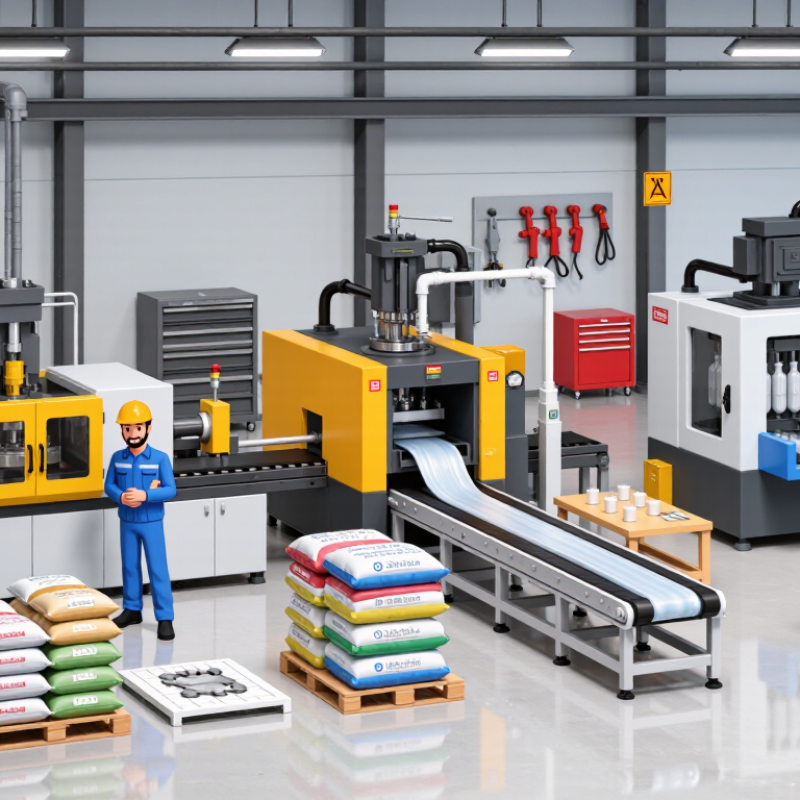
Before comparing machines, turn the product into a measurable specification. Record the resin type, including recycled content, plus part dimensions, weight, wall thickness, tolerances, and surface finish. A 250 ml container and a thick-walled fitting may both be plastic parts, yet need different clamp force, shot capacity, cooling, and tooling. Be precise.
Set output targets using realistic demand, not an optimistic sales forecast. Calculate good parts per hour, shifts, planned downtime, scrap allowance, and seasonal peaks. PlasticsEurope’s Plastics – the Fast Facts 2023 estimates global plastics production at 400.3 million tonnes in 2022. That signals a broad market, not a reason to oversize one production line. Match usable shot capacity and cycle time to the part, with room for process variation. Check factory power, floor space, material drying, operator skills, and downstream equipment. Small details matter.
Tips: Bring a sample part, resin datasheet, target cycle time, and annual volume to supplier discussions. Ask for a documented trial using your material. If requirements remain uncertain, write down your assumptions and revisit them after pilot runs. They may be wrong.
How to Choose a Plastic Making Machine in 2026 - Define the Product and Production Requirements
| Product / Application | Typical Material | Suitable Process | Production Requirement to Define | Machine Selection Focus |
|---|---|---|---|---|
| Thin-wall food container | Polypropylene (PP) | Injection molding | Part weight, wall thickness, cavities, target cycle time, food-contact requirements | Clamping force, injection speed, plasticizing capacity, mold compatibility, automation |
| Bottle or narrow-neck container | PET; HDPE for some bottle types | Injection stretch blow molding (PET); extrusion blow molding (many HDPE bottles) | Bottle volume, neck finish, weight, hourly output, material and color requirements | Process-specific tooling, mold stations, output range, drying and material handling needs |
| Large hollow tank or drum | High-density polyethylene (HDPE) | Extrusion blow molding | Maximum part dimensions, weight, wall-thickness distribution, annual volume, leak-test needs | Clamping force, platen size, accumulator or continuous extrusion capacity, parison control |
| Pipe or profile | PVC, PE, or PP, depending on end use | Extrusion | Diameter or cross-section, wall thickness, line speed, length, applicable product standards | Screw design, output rate, die and calibration sizing, cooling, haul-off and cutting equipment |
| Plastic sheet or film | PE, PP, PET, or PS, depending on sheet or film specification | Flat-die sheet extrusion or blown-film extrusion | Width, thickness range, roll size, output per hour, layer structure, optical or barrier properties | Die width, screw output, cooling and winding capacity, thickness control, layer capability if required |
| Custom technical component | Material selected for mechanical, thermal, chemical, and regulatory needs | Usually injection molding; confirm against part geometry and material | Part dimensions, tolerances, projected area, weight, annual demand, inserts and finish requirements | Mold size, shot capacity, clamping force, repeatability, temperature control and material-specific processing |
Before comparing machines, document the part drawing or sample, resin grade, required output, acceptable scrap rate, working hours, available utilities, floor space, and applicable product standards. Confirm final capacity and specifications with a process and tooling assessment.
Related Posts
-
How to Choose the Best Plastic Machine for Your Business?
-
Top 10 Benefits of Using a Plastic Making Machine for Your Business?
-
Best Recycling Machinery for Efficient Waste Management Solutions?
-
Top Heavy Construction Equipment to Boost Your Global Business?
-
How to Choose the Best Plastic Recycling Machine for Your Needs?
-
Top 10 Best Construction Machines You Need to Buy Now?