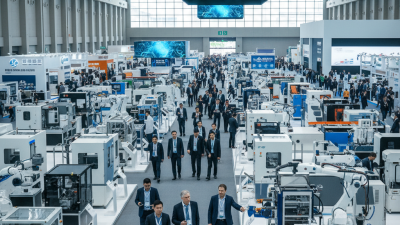

Choosing China’s top industrial machinery suppliers requires more than comparing prices or browsing polished websites. A credible supplier must prove its capabilities through factory evidence, technical records, and consistent communication. The right choice depends on your production goals, material requirements, safety expectations, and service needs.
During supplier evaluations, inspect more than the showroom. Ask for recent factory videos, equipment lists, quality-control procedures, and customer references. A CNC machine may look impressive, but its real value depends on calibration, operator skill, maintenance, and output consistency. Request drawings, tolerance data, testing reports, and a clear production schedule. Verify certifications independently where possible. A document alone proves little.
Small details often reveal reliability. Can the supplier explain spare-parts availability for five years? Does the quotation identify motor brands, control systems, installation duties, and warranty limits? Are response times recorded, or merely promised? A sample run can expose vibration, noise, uneven finishing, or software problems before a large order is placed. It costs time. It may prevent a costly mistake.
No evaluation is perfect. A factory visit can show only one production line on one day. References may be carefully selected. Even experienced buyers can overlook after-sales support when negotiating a lower price. Therefore, use a written scorecard and involve technical, purchasing, and maintenance teams. Compare evidence, not confidence. With careful verification, documented requirements, and realistic expectations, you can identify a China-based industrial machinery partner that is capable, transparent, and dependable over the long term.
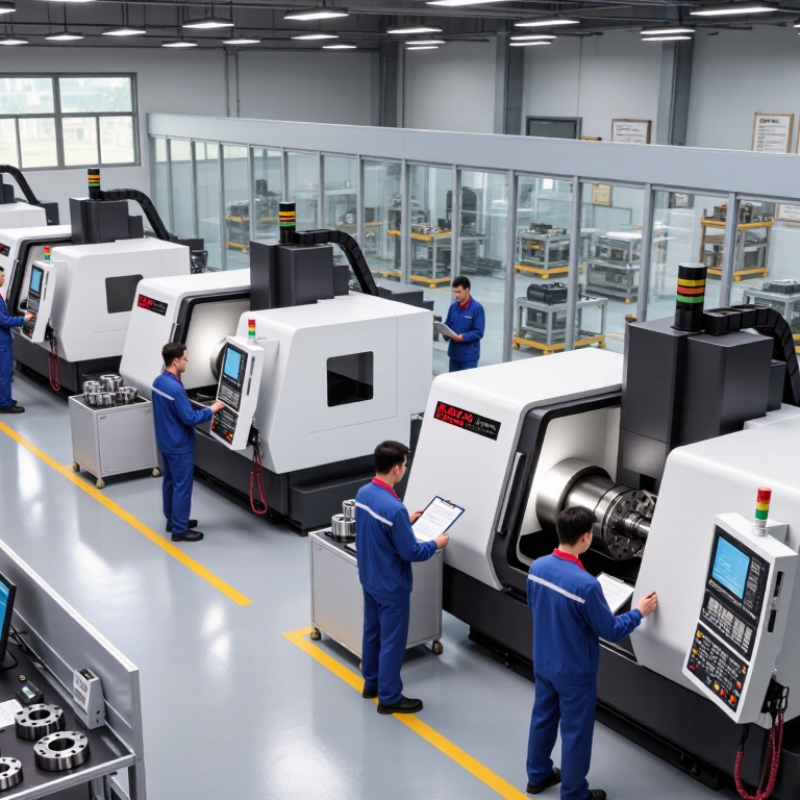
Choosing a supplier starts with a precise machinery brief, not a broad product category. Record the material, output target, operating hours, dimensions, power supply, and acceptable tolerance. Include photos of the production area and a simple process flow. These details expose hidden constraints early. Ask whether the machine must support future expansion. In my experience, unclear capacity estimates create expensive delays. One buyer may request a cutting machine, while the real need is stable micron-level accuracy. Define success with measurable figures.
Supplier selection should follow the same discipline. Request technical drawings, performance data, installation requirements, and maintenance schedules. Review the supplier’s production experience with similar machinery, not just its online claims. Ask for verifiable customer references and recent factory inspection evidence. Check quality controls, operator training, spare-part availability, warranty terms, and response times. A practical evaluation should include sample testing or a documented acceptance test. Compare total ownership cost, including installation, energy use, tooling, and downtime. My own checklists are never perfect. Recheck them with production and maintenance teams.
Tips: Create a scoring sheet before contacting suppliers. Give each criterion a clear weight. Require written answers for every technical assumption. Test sample material under realistic conditions. Keep one alternative specification available, because the original design may change after testing. Be cautious when a quotation looks unusually cheap. Ask what it excludes. Verify certificates and safety documents through reliable records, rather than accepting scanned files without review.
Identifying suitable industrial machinery suppliers in China requires more than comparing prices. China produced about 31.6% of global manufacturing value added in 2022, according to UNIDO’s International Yearbook of Industrial Statistics 2024. The market is broad. Your shortlist should match the machine’s application, material, output, and required tolerances. Ask whether the supplier has delivered the same machine class before. Request process videos, technical drawings, and recent performance records.
Industry scale also shows strong technical capacity. The International Federation of Robotics reported 276,288 industrial robot installations in China during 2023, representing about 51% of global installations. However, a polished factory tour can still mislead me. Review calibration records, incoming-material controls, weld inspection results, and final testing procedures. An ISO 9001 certificate supports process control, but it does not prove accuracy, durability, or service quality. Ask for traceable serial numbers and acceptance-test data.
Commercial fit matters as much as engineering. Confirm spare-parts availability, remote diagnostics, installation support, and response times in writing. Compare total ownership cost, including energy use, tooling, training, and maintenance. I once treated a low quotation as strong evidence of value. That was too optimistic. A paid sample run or pilot order can reveal communication gaps and unstable quality. Check references from similar production environments, while remembering that no checklist is perfect.
Choosing a top industrial machinery supplier requires more than comparing prices. Verify the legal company name, operating address, business licenses, and export records. Request recent ISO 9001 certificates, audit reports, and calibration records. The ISO Survey 2023 reported more than one million ISO 9001 certificates worldwide, but certification alone cannot prove consistent production quality.
Walk through the factory, even by live video. Check machining areas, assembly lines, testing stations, maintenance logs, and finished-machine storage. Ask for monthly output, current orders, lead times, and bottleneck data. Compare these figures with your required capacity. The United Nations Industrial Development Organization emphasizes that industrial competitiveness depends on productivity, process control, and technological capability, not equipment quantity alone. Numbers need evidence.
Inspect one machine before signing a large contract. Review material certificates, inspection plans, nonconformance records, and final performance tests. Ask whether corrective actions are documented and repeated problems are tracked. A supplier that hides defects is risky. A supplier that explains them may be more reliable. This is often overlooked. Third-party inspection can strengthen confidence, especially for customized machinery. Still, no audit is perfect; production conditions can change after approval. Include milestone inspections, acceptance criteria, spare-parts commitments, and traceable quality records in the contract. Reliable sourcing is built through verification, not confident promises.
| Verification Category | Key Evaluation Dimension | Suggested Verification Benchmark | Documents or Evidence to Request | Risk Level if Not Verified |
|---|---|---|---|---|
| Supplier Qualification | Legal registration and operating status | The supplier should have a valid business registration, a clearly defined manufacturing scope, and an operating address that matches the supplied documentation. | Business license copy, registered address, manufacturing address, ownership information, and recent company profile. | High |
| Supplier Qualification | Relevant industrial machinery experience | At least 3 years of demonstrable experience in the relevant machinery category is a practical screening benchmark. Confirm that the supplier has completed projects with similar technical requirements. | Product development records, anonymized project references, installation records, application photographs, and technical case studies. | Medium |
| Production Capacity | Factory ownership and production control | Confirm whether critical processes are performed in-house and identify which operations are outsourced, such as casting, heat treatment, machining, or surface finishing. | Factory video or audit report, production-flow chart, equipment list, subcontractor list, and process-control records. | High |
| Production Capacity | Machining and assembly capability | The factory should have equipment suitable for the required tolerances, dimensions, materials, and production volume. Capacity should be evaluated against the buyer’s forecast rather than a generic maximum output. | Equipment register, machine specifications, calibration records, monthly capacity plan, production schedule, and sample inspection reports. | High |
| Production Capacity | Lead-time reliability | Review delivery performance for the previous 6–12 months. A supplier should provide a documented production schedule and identify capacity limits during peak periods. | Anonymized order-delivery statistics, production planning records, standard lead-time table, and documented corrective actions for late deliveries. | Medium |
| Quality System | Quality management system | An ISO 9001-certified quality management system is a useful baseline, but certification should be verified and supported by evidence that procedures are actively implemented. | Valid certificate, certification scope, latest audit result, quality manual, internal audit records, and management-review records. | High |
| Quality System | Incoming material inspection | Materials and purchased components should be checked against defined specifications before entering production. Critical materials should be traceable to batch or heat numbers where applicable. | Incoming inspection procedures, material certificates, supplier approval records, sampling plans, and nonconforming-material reports. | High |
| Quality System | In-process and final inspection | Inspection points should cover dimensional accuracy, functional performance, safety-related items, appearance, packaging, and documentation before shipment. | Inspection and test plans, control plans, inspection checklists, measurement records, final inspection reports, and sample quality dossiers. | High |
| Quality System | Measurement and calibration control | Measuring equipment used for acceptance decisions should be identified, calibrated at defined intervals, and protected from use after calibration expiry. | Calibration certificates, equipment identification list, calibration schedule, out-of-tolerance procedure, and measurement-system records. | High |
| Technical Capability | Engineering and customization support | The supplier should be able to review drawings, specifications, materials, operating conditions, and acceptance criteria before quotation and production. | Engineering organization chart, design-review records, drawing revision process, bill-of-material controls, and sample technical clarification documents. | Medium |
| Technical Capability | Prototype and sample validation | For customized machinery, approval should be based on a documented sample, factory acceptance test, or functional validation before mass production. | Prototype approval form, factory acceptance test procedure, test results, approved drawings, and signed sample records. | High |
| Compliance | Product safety and market requirements | Compliance must be assessed against the destination market and machine type. Applicable requirements may include machinery safety, electrical safety, electromagnetic compatibility, pressure equipment, or environmental rules. | Compliance assessment, risk assessment, technical file index, declaration documents, test reports, safety labels, and user manual. | High |
| Supply Chain | Critical component and subcontractor control | Critical purchased parts should have defined specifications, approved suppliers, incoming inspection requirements, and change-control procedures. | Approved supplier list, component specifications, supplier audit records, change-notification procedure, and incoming inspection data. | Medium |
| Traceability | Part, batch, and serial-number traceability | Traceability should link key materials and components to production orders, inspection results, assembly records, and shipment documents. | Serial-number structure, production traveler, batch records, component traceability example, inspection history, and packing list. | Medium |
| After-Sales Service | Installation, training, spare parts, and warranty | The supplier should define installation responsibilities, operator training, spare-parts availability, response times, warranty coverage, and escalation procedures in writing. | Warranty terms, service-level commitments, spare-parts list, maintenance manual, training plan, service organization chart, and support workflow. | Project-Dependent |
| Commercial Control | Quotation transparency and contract terms | The quotation should clearly identify machine configuration, included accessories, excluded items, acceptance criteria, delivery terms, payment milestones, and change-order rules. | Detailed quotation, technical specification, commercial contract, inspection and acceptance clause, packing requirements, and payment schedule. | High |
| Final Verification | Independent factory audit and pre-shipment inspection | Conduct a documented factory audit and, for high-value or customized equipment, use pre-shipment inspection against approved drawings, test procedures, and contractual requirements. | Audit checklist, corrective-action report, inspection report, test videos, dimensional records, packing photographs, and release approval. | High |
How to Choose China Top Industrial Machinery Suppliers?
Compare Equipment Specifications, Pricing, and Commercial Terms
Choosing an industrial machinery supplier requires more than comparing catalog prices. Start with a clear technical brief. Include material type, production volume, operating hours, accuracy, and available floor space. Ask each supplier to quote against the same requirements.
Measure twice.
Check motor power, processing speed, tolerance, control system, and energy use. A machine rated for 500 units per hour may achieve less with thicker materials or frequent changeovers. Request test data from a product similar to yours. Review maintenance access, replacement parts, manuals, and operator training. Small details often affect daily output.
A low quotation can hide major costs. Ask for an itemized offer covering packaging, inland transport, installation, commissioning, tooling, training, taxes, and spare parts. Compare the five-year ownership cost, not only the purchase price. Payment milestones should connect to design approval, factory inspection, shipment, and acceptance testing. Clarify warranty coverage, technical response times, delivery delays, and the process for resolving defects.
Keep every condition in writing.
Supplier comparisons can remain imperfect when specifications use different testing methods. That is worth questioning. Request identical sample materials, measurable acceptance criteria, and dated performance records. Review factory quality procedures and inspect critical components before shipment when practical. A video call cannot replace every inspection. Still, it can reveal assembly quality, documentation habits, and whether the supplier answers technical questions precisely. Be cautious when promised output sounds unusually high. Real production rarely matches the best laboratory result.
A reliable supplier should welcome an independent factory audit. Do not rely on polished showrooms. Walk through the machining area, assembly line, testing zone, and finished-goods warehouse. Check whether equipment matches the quoted capacity. Review quality records, calibration certificates, worker training, and maintenance logs. Ask to see a recent production order, with sensitive details removed. A clean audit report can still miss weak process control. I have seen impressive factories struggle with basic traceability.
The contract should describe every important detail. Include materials, dimensions, tolerances, software functions, safety requirements, and acceptance standards. Define inspection points before shipment. Payment milestones should follow measurable progress, not promises. Delivery terms must state packaging, loading responsibility, shipping documents, and delay handling. Request factory acceptance testing with recorded results. Take photographs and keep signed inspection files. Small omissions become expensive arguments later.
After-sales service deserves the same attention as machine performance. Ask for response times, spare-parts availability, remote troubleshooting, and on-site support conditions. Confirm warranty coverage and its exclusions in plain language. Require manuals, wiring diagrams, maintenance schedules, and operator training. A supplier may offer quick online support, but your team could still wait weeks for a specialized part. That risk needs a practical solution. Test communication before signing by sending technical questions to the proposed service contact. Slow replies are useful evidence. Not every decision will be perfect, but documented checks make problems easier to manage.