

...

How to Choose the Best Full Body Traction Device?

Choosing the right Full Body Traction Device requires more than comparing prices, straps, or promised results. Lower back pain affects an estimated 619 million people worldwide, according to the World Health Organization’s 2023 report. The same source projects that cases may reach 843 million by 2050. These figures explain the growing interest in home-based support equipment. They do not prove that traction suits everyone.

Evidence remains mixed. The WHO guideline for chronic primary low back pain advises against routine traction, while NICE guidance also does not recommend traction for low back pain with or without sciatica. These recommendations deserve attention. A device may feel relieving for one person and uncomfortable for another. Short-term comfort is not the same as clinical improvement.

This guide examines practical and safety-focused selection criteria. Adjustable force matters. So does stable body support. A useful design should keep the spine positioned comfortably, without excessive pulling or pressure around the hips, ribs, or neck. Physical therapists commonly assess posture, symptom patterns, mobility, and medical history before recommending similar interventions. That experience should influence home-device decisions.

Check the manufacturer’s instructions carefully. Look for transparent load limits, material details, cleaning guidance, and independent testing. FDA registration, when applicable, does not automatically prove effectiveness. It mainly reflects regulatory status and device information. That distinction is easy to miss.

No device is perfect. Personal fit matters. People with fractures, severe osteoporosis, recent surgery, progressive weakness, or unexplained pain should seek professional advice before use. The best Full Body Traction Device is not necessarily the strongest model. It is the one that matches documented needs, allows controlled adjustment, and supports responsible use.
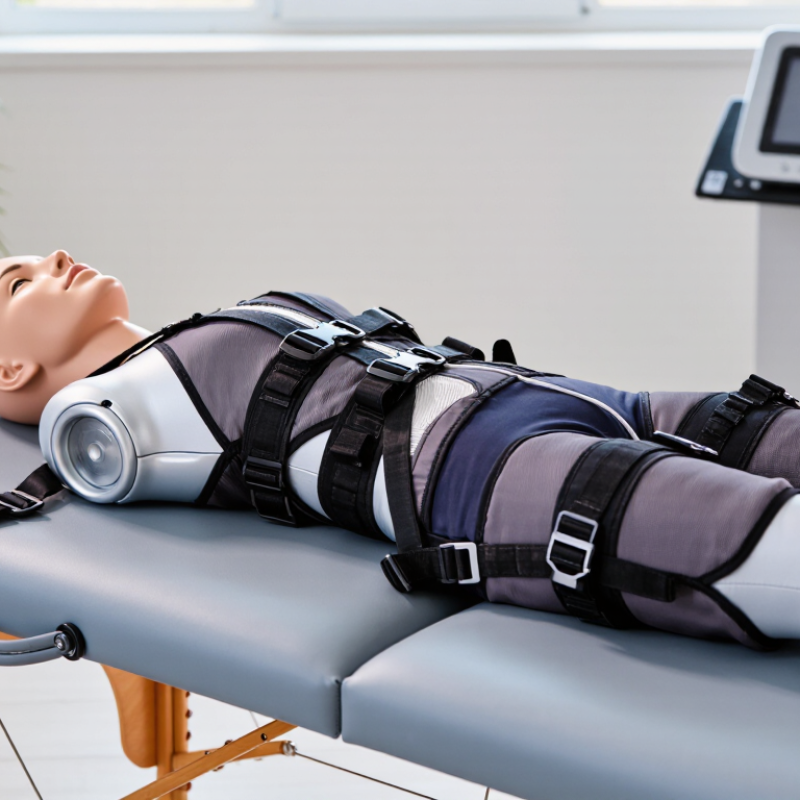
How to Choose the Best Full Body Traction Device?

What Is a Full Body Traction Device?

A full body traction device is equipment designed to apply a gentle, controlled pulling force along the spine and related joints. It usually combines a padded platform, adjustable supports, straps, or a motorized frame. The aim is to create space between spinal segments and reduce pressure temporarily. It does not “stretch everything” at once, despite the name.

In practical use, a person may lie flat while the device supports the head, pelvis, or legs. Some models provide steady traction, while others use short release-and-pull cycles. The sensation should feel firm, not sharp. A trained physiotherapist can adjust force, duration, and body position according to the user’s symptoms and medical history. That guidance matters because back pain can come from different causes, and traction may not suit everyone.

When choosing one, inspect the frame, padding, weight limit, adjustment range, and emergency release. Look for clear instructions and evidence-based safety guidance. A device that feels impressive in a showroom may become uncomfortable after ten minutes at home. I would test the support points carefully, especially around the neck and hips. Comfort is not the only measure, but ignoring it is a mistake. People with recent injuries, fractures, osteoporosis, nerve problems, or unexplained pain should seek qualified medical advice before using traction equipment.

How Full Body Traction Devices Work

How Full Body Traction Devices Work

Full body traction devices apply a controlled pulling force along the spine and major joints. The user lies, hangs, or rests in a supported position. Straps, pads, or a motor maintain gentle tension. This may create temporary space between spinal segments and reduce compressive loading. The effect varies widely.

A quiet pull.

In practice, the best devices allow gradual adjustment, stable support, and comfortable positioning. I would check whether the head, hips, and shoulders remain aligned during use. Excessive force can cause muscle guarding instead of relaxation. Slow breathing and short sessions often feel more manageable than aggressive stretching. However, comfort does not prove that traction is treating the underlying problem.

Clinical evidence supports traction for some people, but results remain inconsistent. A licensed healthcare professional should assess nerve symptoms, osteoporosis risk, recent injuries, and cardiovascular concerns before use. A reliable device should provide clear force limits, safety instructions, and washable contact surfaces. It should also allow an easy release if dizziness or sharp pain appears. Do not ignore numbness, weakness, or worsening pain. These signs need professional evaluation. Some marketing claims sound more certain than the research allows, and that deserves careful questioning.

Key Features to Compare Before Buying

How to Choose the Best Full Body Traction Device?

Key Features to Compare Before Buying

When comparing a full body traction device, start with fit, adjustability, and support. The frame should match your height without forcing your neck or hips. Look for padded contact points that stay comfortable during longer sessions. Adjustable straps matter because every body has different proportions. A device that feels stable on the first try may still become uncomfortable later.

Check how traction is controlled. Gradual tension is usually easier to manage than sudden pulling. Clear adjustment markings can help you repeat a comfortable setting. A quick-release feature is important if pressure feels wrong. The materials should resist bending, tearing, and unpleasant odors. Inspect hinges, buckles, and stitching closely. Small weaknesses often appear before major failures.

Reliable information matters as much as the hardware. Read the instructions carefully and check whether a qualified healthcare professional recommends its use for your situation. People with recent injuries, numbness, severe pain, or certain medical conditions may need professional guidance first. I once assumed stronger traction meant better results, but that was an unreliable assumption. Comfort, control, and consistent use are usually more practical measures. No device feels perfect. Your body’s response should guide each session, not marketing language.

How to Choose the Best Full Body Traction Device

Use this practical 100-point comparison framework before buying. Safety controls, adjustability, fit, comfort, and setup requirements should be assessed from the product specifications and user manual rather than from brand claims.

How to Choose the Right Device for Your Needs

Choosing the right full body traction device starts with your actual needs, not its appearance. Consider where discomfort occurs, how often you plan to use the device, and whether a clinician has recommended traction. A device for occasional back stretching may differ from one designed for supervised spinal decompression. Your height, body weight, mobility, and available floor space also matter. Measure carefully. A comfortable fit is essential.

Look for adjustable support, controlled traction force, and clear operating instructions. Padded contact points should support the body without creating sharp pressure around the hips, shoulders, or neck. Stable frames reduce unwanted movement. Check the weight limit and adjustment range before buying. Some devices feel impressive in a showroom but become awkward at home. That detail is easy to miss.

Safety should guide every comparison. People with osteoporosis, recent injuries, circulation problems, pregnancy, or unexplained pain should seek medical advice first. Stop if numbness, dizziness, weakness, or worsening pain appears. I used to think stronger traction meant better results, but that assumption is unreliable. Gentle, consistent sessions may be more suitable than aggressive pulling. Keep a simple usage record, including duration and symptoms. It can reveal whether the device helps or merely creates temporary relief. A qualified physiotherapist can assess your posture and recommend safer settings.

Safety Guidelines and Proper Usage Methods

Choosing a full body traction device should begin with safety, not stretching intensity. The World Health Organization reported that low back pain affected 619 million people globally in 2020. It also projects 843 million cases by 2050. These figures show the problem’s scale, but they do not prove traction suits everyone. A qualified clinician should screen for fractures, osteoporosis, spinal tumors, infection, severe nerve compression, pregnancy-related risks, and recent surgery. Devices with adjustable force, stable frames, visible locking mechanisms, and emergency-release controls deserve preference. A high weight rating is not proof of safety.

Start with the lowest comfortable setting. Keep the first session brief, often five to ten minutes, unless a clinician advises otherwise. Maintain neutral neck and hip alignment. Never force painful separation. Stop immediately if numbness, weakness, dizziness, unusual pain, or bladder and bowel changes appear. Seek prompt medical care for those symptoms. The NICE guideline NG59 advises against traction for routine low back pain, while a 2021 Journal of Orthopaedic & Sports Physical Therapy guideline found limited and inconsistent evidence for mechanical traction. That tension matters. I would not purchase a device based on testimonials alone. Check its instructions, maintenance history, user-fit range, and professional oversight. Some guidance is easy to overlook. Reassess after each session, and record pain, movement, and symptoms rather than relying on memory.

How to Choose the Best Full Body Traction Device? - Safety Guidelines and Proper Usage Methods
Evaluation Dimension What to Look For Practical Safety Standard Recommended Usage Method Warning Signs or Limitations
Traction Mechanism Controlled longitudinal stretching with adjustable force, stable body support, and a gradual release function. Preferred
Force should be increased gradually and should never cause sharp, radiating, or worsening pain.
Begin with the lowest comfortable setting. Maintain a neutral spine and avoid sudden pulling or bouncing movements. Devices with fixed, excessive, or poorly controlled force may increase muscle spasm or joint irritation.
Body Support and Fit Adjustable height, width, harnesses, leg supports, and padding that accommodate the user's body size. Preferred
The pelvis, trunk, neck, and limbs should remain supported without pressure on the throat, chest, or major blood vessels.
Adjust every contact point before starting. Check that straps are secure but do not restrict breathing or circulation. Loose straps can cause slipping; overly tight straps can cause numbness, skin injury, or breathing discomfort.
Force and Angle Adjustment Clearly marked settings, smooth adjustment, and a method for returning to a neutral position. Preferred
Settings should be changed only while the user is stable and able to stop the session quickly.
Increase only one variable at a time, such as force or angle. Record the setting that feels comfortable and symptom-free. Stop if symptoms travel farther down an arm or leg, become stronger, or are accompanied by weakness or loss of coordination.
Session Duration A timer, emergency-release control, and easy access to the stop mechanism. Start Conservatively
Short sessions are generally easier to evaluate than prolonged sessions.
For a new user, a clinician may recommend starting around 5–10 minutes, then adjusting frequency and duration according to symptoms and professional instructions. Do not extend a session because temporary relief occurs. Delayed soreness or increased pain means the program should be reassessed.
Emergency Stop and Supervision Large, accessible release controls and a design that allows the user to exit without assistance. Essential
First use should be supervised, especially when the device changes body angle or applies motorized force.
Keep the operating instructions nearby. Do not use the device while drowsy, intoxicated, or unable to communicate discomfort. Never continue a session after dizziness, faintness, breathing difficulty, new weakness, or loss of sensation.
Spinal and Joint Stability Stable frame, non-slip surfaces, secure locking points, and no excessive movement during loading. Preferred
The frame must remain stable throughout mounting, traction, and dismounting.
Place the device on a level surface. Mount and dismount slowly, using available handles or assistance. Do not use equipment that rocks, shifts, has damaged cables, or shows worn locking components.
Medical Screening Choose a device only after considering the cause of pain, current symptoms, medications, and overall health. Professional Review
Medical assessment is especially important for persistent, severe, or unexplained pain.
Ask a qualified healthcare professional to determine whether traction is appropriate and which body region should be treated. Traction may be unsuitable for suspected fracture, spinal instability, malignancy, infection, severe osteoporosis, or acute inflammatory conditions.
Neurological Symptoms A device should not be selected as a substitute for evaluation of nerve or spinal-cord symptoms. Stop and Seek Care
New or progressive neurological symptoms require prompt medical attention.
Stop immediately if there is increasing weakness, loss of balance, widespread numbness, or changes in bladder or bowel control. These symptoms may indicate a condition requiring urgent assessment rather than home traction.
Cardiovascular and Pressure-Related Conditions Consider how straps, body angle, inversion, and changes in blood pressure may affect the user. Professional Review
People with uncontrolled hypertension, significant heart disease, vascular disease, or glaucoma should obtain medical advice before use.
Use a horizontal or minimally angled position unless a clinician specifically approves another position. Dizziness, headache, chest discomfort, palpitations, or visual changes require immediate discontinuation.
Pregnancy and Post-Surgical Use Check whether the device applies abdominal pressure, changes body position, or loads a recently treated area. Do Not Self-Start
Obtain explicit clearance from the treating healthcare professional.
Follow the surgeon's or obstetric clinician's restrictions regarding timing, position, force, and duration. Recent spinal surgery, abdominal surgery, joint replacement, or pregnancy may require modified care or avoidance.
Comfort and Skin Protection Breathable padding, rounded edges, adjustable harnesses, and surfaces that do not pinch or abrade the skin. Preferred
Pressure should be distributed across broad, padded areas.
Wear comfortable clothing and inspect the skin after each session, particularly around the pelvis, shoulders, and ankles. Stop for bruising, persistent redness, skin breakdown, tingling, or coldness in the limbs.
Maintenance and Load Rating Clear weight limits, inspection instructions, replaceable wear parts, and secure fasteners. Required
Never exceed the stated user weight or operating limits.
Inspect belts, buckles, cables, hinges, bolts, and padding before each use. Keep moving parts clean and dry. Do not use equipment with cracks, frayed straps, damaged electrical parts, or missing safety labels.
Best Overall Selection A device that provides adjustable support, controlled force, quick release, stable construction, and a clear user manual. Best Choice
Safety, fit, and clinical suitability are more important than maximum force or the number of features.
Use the lowest effective setting, maintain a symptom diary, and review the program if symptoms worsen or fail to improve. A full-body design is not automatically safer or more effective than a targeted device selected for a specific condition.
Important safety note: This table is for general educational use and does not replace diagnosis or individualized medical advice. Stop traction immediately if symptoms worsen or if new neurological, cardiovascular, breathing, or visual symptoms occur.