

Choosing the right Oil Pressure Gauge can be a challenging task. According to industry expert John Miller, “A good oil pressure gauge is vital for engine health.” This statement underscores the significance of selecting the appropriate gauge for your needs. The oil pressure gauge serves as a critical tool to monitor oil flow and ensure your engine operates smoothly.
When considering an oil pressure gauge, many factors come into play. You need to understand the type of vehicle you own and if it requires mechanical or electrical gauges. Accuracy, ease of installation, and the scale of measurements are also crucial aspects. Often, people overlook the importance of compatibility. An ill-fitting gauge can lead to misleading readings, creating potential issues.
Take your time to research before making a decision. Not every gauge will suit your specific engine conditions. It's important to weigh the options carefully. A poorly chosen oil pressure gauge can cause more harm than good, leading you to question your choices. Ultimately, finding the right oil pressure gauge can save you from future headaches and ensure your engine stays in top condition.
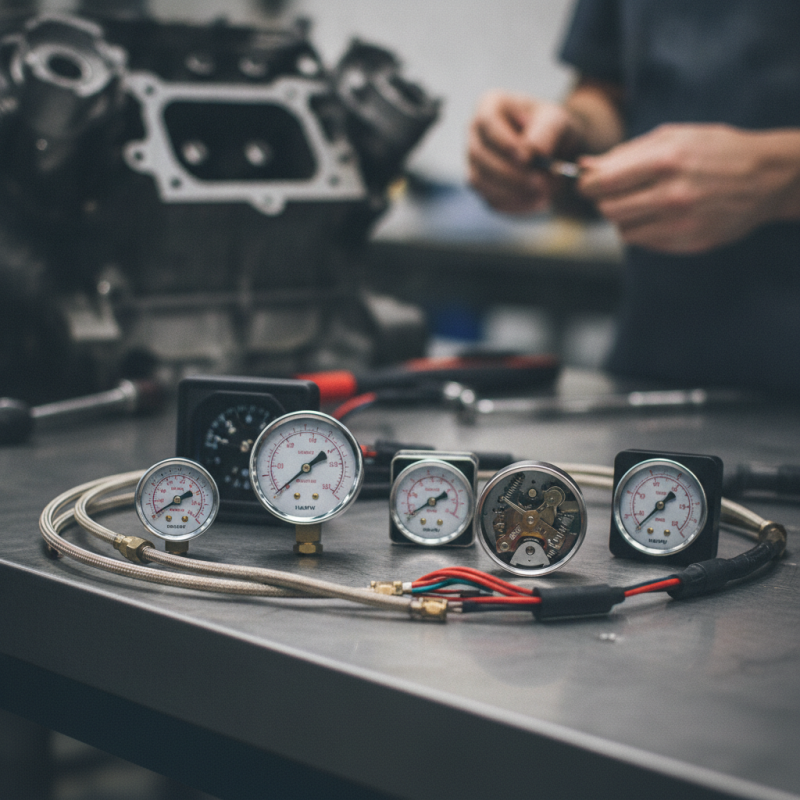
Oil pressure gauges play a vital role in monitoring the health of an engine. They provide real-time data about oil pressure, which is essential for lubrication and cooling. According to industry data, approximately 75% of engine wear occurs during start-up. Proper oil pressure can significantly impact engine longevity and performance.
When selecting an oil pressure gauge, consider its accuracy and response time. A gauge that reacts quickly to changes can prevent severe engine damage. A report from the Automotive Maintenance Council indicates that nearly 20% of engine failures are related to lubrication issues, emphasizing the need for reliable monitoring devices.
Tips: Regularly check your oil pressure gauge. A sudden drop might indicate a serious issue that requires immediate attention. Choose a gauge with a wide operating range to suit various engine conditions. Look for clear and easily readable displays to eliminate guesswork during monitoring.

This chart compares the oil pressure readings (in PSI) of various engine types under normal operating conditions.
When choosing an oil pressure gauge, understanding the difference between analog and digital options is crucial. Analog gauges utilize a needle that moves along a dial. They provide a quick visual reference of pressure levels. Many users find them straightforward and easy to read, especially in high-stress situations. The mechanical nature can also lend a traditional touch to the dashboard.
Digital gauges, on the other hand, display precise readings on an electronic screen. They often come with additional features, such as alarms for low pressure. This can be beneficial for performance analysis. However, some users may experience glare issues, making them hard to read in bright light. Maintenance can also be a consideration, as digital systems might fail without warning.
Both types have their pros and cons. Analog gauges may not provide an exact reading but allow fast assessments. Digital gauges can enhance accuracy but might complicate troubleshooting. Users should reflect on their individual needs. Ultimately, understanding these nuances is vital for making the right choice.
Choosing the right oil pressure gauge is crucial for ensuring engine longevity and performance. When evaluating gauges, consider features such as accuracy, range, and durability. According to industry reports, accuracy is vital. A gauge should ideally have a precision of ±1% full scale. This means if a gauge measures 100 psi, it should be within 1 psi of the actual pressure. Range is also important; choose a gauge that fits your engine's specifications. A gauge might range from 0-100 psi, but if your engine requires 20-80 psi, it may not provide useful data.
Material matters too. Most gauges are made from stainless steel or plastic. Stainless steel offers durability and corrosion resistance. This can be essential in harsh environments. A report by Engine Technology International notes that gauges should also have a backlight for nocturnal visibility. Visibility enhances reading accuracy during evening drives.
Tip: Always match the gauge to the engine type. Consider a mechanical gauge for simpler setups. Electronic gauges, while typically more expensive, may provide better readings over time. Another reflection: some gauges may have limited warranty periods. This can indicate potential quality issues. Assess customer feedback for insights on gauge reliability as well.
| Feature | Description | Importance |
|---|---|---|
| Accuracy | The ability of the gauge to provide true readings of oil pressure. | High; ensures reliable performance and safety. |
| Type | Mechanical or electronic types that differ in function and installation. | Moderate; depends on user preference and system compatibility. |
| Range | Pressure range the gauge can measure, typically in psi or bar. | High; should match the vehicle’s specifications. |
| Display | Analog or digital display options that affect readability. | Moderate; can impact user experience during operation. |
| Size | Physical dimensions of the gauge, important for fitting. | High; must fit in the installation space. |
| Ease of Installation | How user-friendly it is to install the gauge in the vehicle. | High; affects overall maintenance and setup time. |
| Durability | Resistance to wear and environmental factors. | High; ensures long-term reliability and use. |
When installing an oil pressure gauge, it's important to consider both the gauge type and placement. Analog and digital gauges each offer unique advantages. Data from the Society of Automotive Engineers indicates that analog gauges tend to provide quicker responses in real-time situations. Meanwhile, digital gauges often produce more accurate readings, especially in complex systems.
One significant installation consideration is the gauge location. Placing the gauge too far from the engine can lead to pressure drops. According to research from the Automotive Research Group, a distance greater than three feet can compromise accuracy. Always prioritize a direct route for the oil line to ensure reliable readings.
Tips: Ensure the gauge is easily visible while driving. It should not obstruct your view of the road. Regularly check connections to prevent leaks, which can lead to inaccurate measurements. A poorly calibrated gauge can cause misinterpretation of engine stress, leading to potential damage. Remember, installation can influence performance significantly. Take the time to do it right.
Choosing the right oil pressure gauge can be challenging. Many make common mistakes during their selection process. One significant error is not considering the gauge type. Digital gauges provide precision; however, they can be more complex. Analog gauges are straightforward but may lack accuracy over time. Understanding your needs is crucial.
Another frequent mistake is neglecting the unit of measurement. Oil pressure can be displayed in psi or bar. If you are more familiar with one unit, it’s wise to choose a gauge that uses that measurement. Using unfamiliar units might lead to misinterpretation. Also, not checking the gauge's compatibility with your vehicle's system is a common oversight.
Some people rush the purchasing decision. They overlook critical factors like mounting options and display readability. A gauge that cannot be easily read while driving can be a major safety risk. Take time to research and compare options. It may be tempting to choose the cheapest option, but quality matters. The right gauge ensures reliable readings and can prevent larger issues.
