

Choosing a Steel Sheet Pile Manufacturer is not simply a matter of comparing prices. The right supplier must understand soil conditions, water pressure, corrosion exposure, driving methods, and project schedules. A low quotation may hide thin sections, inconsistent tolerances, weak interlocks, or limited technical support. Those details become serious when piles meet dense gravel or withstand years of tidal movement.
Dr. Bengt H. Fellenius, a respected pile-foundation researcher, offers a useful principle: “The pile is not designed in isolation; it is designed as part of the soil–structure system.” This idea should guide every manufacturer review. Ask for mill certificates, section properties, welding procedures, coating specifications, and inspection records. Confirm whether the factory has produced comparable sections for ports, retaining walls, cofferdams, or deep excavations. Request evidence, not attractive promises.
A reliable Steel Sheet Pile Manufacturer should also explain production limits clearly. Can the facility supply the required length? Are corners, connectors, and fabricated piles available? How are dimensional defects handled? What happens if delivery slips?
Experience matters here.
Still, no checklist is perfect. A manufacturer with impressive equipment may lack local driving knowledge. Another may offer excellent steel but poor communication during urgent changes. Site visits, sample inspections, and conversations with previous clients can reveal those weaknesses. The strongest choice combines verified quality, responsive engineering, stable production, and realistic delivery commitments. That balance protects both the structure and the project budget.
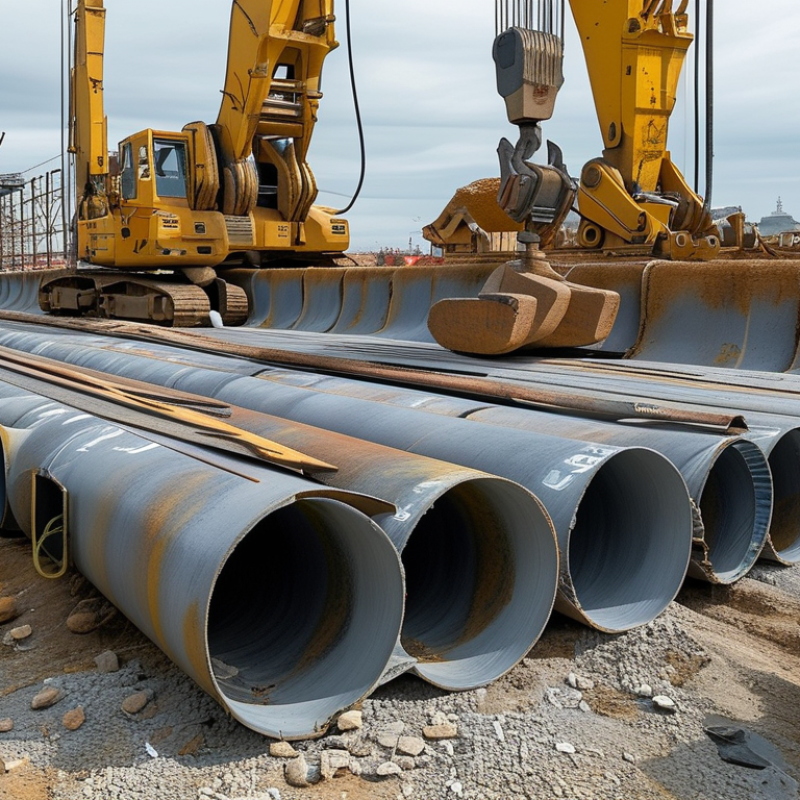
How to Choose a Steel Sheet Pile Manufacturer?
Define your project requirements before comparing steel sheet pile manufacturers. Record wall length, excavation depth, design loads, and the required water resistance. Specify pile width, thickness, section modulus, and connection type. These details help manufacturers prepare comparable quotations instead of vague estimates.
Study the site conditions carefully. Soil layers, groundwater levels, corrosion exposure, and nearby structures can change the pile design. Provide borehole logs, survey drawings, and installation access information when available. Consider whether the site permits vibration, impact driving, or pressing methods. A neat spreadsheet helps, but it can create false confidence. Ground conditions often vary more than expected.
Tips: Ask for mill certificates, dimensional inspection records, coating details, and structural calculations. Check production capacity, delivery tolerances, and technical support before placing an order. Request samples of previous quality documents. Small omissions matter.
Clarify the project schedule and replacement expectations. A temporary cofferdam may need different protection from a permanent retaining wall. Define the intended service life, maintenance access, and acceptable deflection. Include unloading space and storage limits, because damaged edges can complicate installation. Recheck every assumption with a qualified engineer. A lower price is not always a lower project cost.

Start by confirming the required steel grade, section performance, pile length, interlock system, corrosion environment, and delivery volume. The chart compares nominal minimum yield strengths for commonly specified steel sheet pile grades under EN 10248.
Higher yield strength can support more demanding structural requirements, but it does not replace design checks for section modulus, stiffness, driving conditions, corrosion allowance, and interlock compatibility. Ask each manufacturer to confirm certificates, tolerances, production length, and technical compliance.
How to Choose a Steel Sheet Pile Manufacturer?
Manufacturer experience should be measured through evidence, not confident promises. Review completed projects involving ports, retaining walls, foundations, or flood-control structures. Ask how long the company has produced steel sheet piles. Then inspect its technical records, quality procedures, and delivery history. Experienced teams usually understand soil pressure, pile interlocks, corrosion exposure, and installation limits. They should also explain these issues clearly. Vague answers are warning signs.
Production capability matters just as much. Check whether the factory controls steel sourcing, rolling, cutting, welding, and dimensional inspection. Request mill certificates, coating records, and recent test reports. A reliable manufacturer should show production capacity for your required sections, lengths, and monthly volume. Ask about equipment maintenance and backup arrangements. Machines can fail. Honest suppliers will discuss that risk instead of pretending production is perfect. Inspect sample piles for straightness, edge quality, and clean interlocks. Small defects can create major installation delays.
Tips: Request a factory audit, not only a digital brochure. Compare inspection records with the actual products. Ask for two or three project references. Confirm lead times in writing. Discuss how rejected piles are handled. A useful question is, “What could delay this order?” The answer may reveal more than a sales presentation. Also, avoid choosing only by price. A lower quotation can hide thinner sections, weak documentation, or limited technical support. My own preference is a manufacturer that admits previous mistakes and explains the corrective action. That response feels more trustworthy than perfect claims.
How to Choose a Steel Sheet Pile Manufacturer?
Verify Material Quality, Standards, and Testing Procedures
A reliable manufacturer should provide traceable material records for every batch of steel sheet piles. Check the heat number, chemical composition, thickness, yield strength, and tensile strength. These details should match the purchase specification, not merely a sales brochure. Paper is not steel. Request mill certificates and confirm that each certificate matches the markings stamped on the delivered piles.
Ask which standards govern production and inspection, such as ASTM, EN, or JIS requirements. The chosen standard must suit your project design and local engineering conditions. Confirm the current edition and permitted tolerances. A pile can meet strength requirements yet fail because its width, interlock shape, or thickness is inaccurate. Inspectors should measure straightness, dimensions, and interlock fit before installation.
Testing procedures deserve careful attention. Look for documented tensile, bend, chemical, and dimensional tests. For critical projects, independent laboratory verification can reduce uncertainty. Ultrasonic inspection may help identify internal flaws, but it should not replace visual and dimensional checks. Request sample reports, equipment calibration dates, and the qualifications of testing personnel. A polished report can still hide a weak sampling plan. Ask how failed tests are recorded and corrected. I would also compare delivered samples with the approved specification, because paperwork and steel sometimes drift apart during production.
Choosing a steel sheet pile manufacturer requires more than comparing a price per tonne. Start with product specifications: section modulus, pile width, thickness, steel grade, interlock strength, and allowable tolerances. A heavier section may reduce driving risks, but it can increase transport and handling costs. World Steel Association’s World Steel in Figures 2024 reported 1,849.7 million tonnes of crude steel production in 2023. Large output does not prove consistent sheet pile quality. Request mill certificates, test results, and samples from recent production lots.
Pricing needs a complete cost model. Compare the quoted steel weight, cutting charges, coating requirements, loading fees, inland transport, insurance, and port expenses. Ask whether the quotation follows the same delivery term. Otherwise, the numbers mislead. UNCTAD’s Review of Maritime Transport 2024 states that ships carry over 80% of global merchandise trade by volume, so freight timing can strongly affect project costs. A low factory price may become expensive after demurrage or storage.
Delivery service deserves equal attention. Check available stock, production lead time, inspection dates, packing methods, and replacement procedures for damaged interlocks. Ask for a realistic shipping schedule, not only an estimated dispatch date. From project experience, suppliers sometimes promise fast delivery before confirming rolling capacity. That is a warning sign. I would also compare communication speed during a technical change. It may seem minor, but delayed drawings can stop equipment and labor on site. Keep every specification and delivery promise in writing.
| Comparison Criteria | Manufacturer A Standard U-Profile | Manufacturer B Heavy U-Profile | Manufacturer C Z-Profile | Manufacturer D High-Strength Z-Profile |
|---|---|---|---|---|
| Typical profile application | Temporary retaining walls, cofferdams, light quay walls | Permanent retaining walls and deeper excavation support | High bending-moment retaining walls and marine structures | Heavy-duty permanent walls with reduced wall width |
| Profile type | Hot-rolled U-shaped sheet pile | Hot-rolled U-shaped sheet pile | Hot-rolled Z-shaped sheet pile | Hot-rolled Z-shaped sheet pile |
| Common steel grade | S355GP | S355GP or S390GP | S355GP | S390GP or equivalent high-strength grade |
| Minimum yield strength | 355 MPa | 355–390 MPa | 355 MPa | 390 MPa |
| Typical thickness range | 8–12 mm | 10–16 mm | 9–15 mm | 12–18 mm |
| Typical section modulus | 800–1,600 cm³/m | 1,200–2,400 cm³/m | 1,500–3,000 cm³/m | 2,000–3,500 cm³/m |
| Approximate mass | 55–85 kg/m² | 75–115 kg/m² | 70–110 kg/m² | 95–140 kg/m² |
| Available pile lengths | 6–18 m; longer lengths subject to production planning | 6–24 m | 6–30 m | 8–30 m |
| Interlock performance | Suitable for normal driving conditions; check interlock tolerances | Improved stiffness and durability for repeated driving | High structural efficiency with continuous interlocks | Designed for high load capacity and demanding driving conditions |
| Applicable standards | EN 10248; EN 10249 available by order | EN 10248; ASTM A572 alternatives available by order | EN 10248; project-specific inspection available | EN 10248; third-party inspection available |
| Indicative price range | USD 800–1,050 per metric ton | USD 850–1,150 per metric ton | USD 900–1,250 per metric ton | USD 1,000–1,400 per metric ton |
| Price basis | Indicative mill price; freight, taxes, and coating excluded | Indicative mill price; final price depends on grade and quantity | Indicative mill price; logistics quoted separately | Indicative mill price; inspection and special treatment may add cost |
| Minimum order quantity | Approximately 100 metric tons | Approximately 150 metric tons | Approximately 200 metric tons | Approximately 200 metric tons |
| Production lead time | 3–5 weeks for standard sections | 4–6 weeks | 5–8 weeks | 6–10 weeks |
| Typical sea freight transit | 15–35 days, depending on destination | 15–35 days, depending on destination | 15–40 days, depending on destination | 15–40 days, depending on destination |
| Quality documentation | Mill test certificate, dimensional report, packing list | Mill test certificate, dimensional report, inspection records | Mill test certificate, dimensional report, traceability records | Mill test certificate, traceability records, third-party inspection option |
| Optional services | Cutting, drilling, bundling, basic corrosion protection | Cutting, drilling, welding, lifting holes, coating | Cutting, drilling, corner piles, connectors, coating | Fabrication, connectors, cathodic protection compatibility review, coating |
| Best selection priority | Lowest initial cost for standard applications | Balanced strength and availability | High bending efficiency and reduced wall width | Maximum structural capacity for demanding projects |
Note: Price, production time, freight duration, and minimum order quantity are indicative industry ranges and should be confirmed against the required section, steel grade, quantity, destination, Incoterm, inspection requirements, and current raw-material market conditions.
How to Choose a Steel Sheet Pile Manufacturer?
Review Certifications, Customer Support, and Contract Terms
A reliable steel sheet pile manufacturer should provide current, verifiable certifications. The ISO Survey 2022 recorded more than 1.2 million ISO 9001 certificates worldwide. That figure shows adoption, not automatic competence. Request the certificate scope, issuing body, expiry date, and audited production location. Compare them with your required steel grade, dimensions, tolerances, and welding processes. The World Steel Association reported about 1.88 billion tonnes of crude steel production in 2023. With such a large supply chain, heat-number traceability matters. Ask for mill certificates, inspection records, and samples linked to each batch.
Customer support becomes critical when installation stops. Require a named technical contact, a written response time, and clear procedures for damaged or misaligned piles. Ask whether engineers can review site photographs and driving records. A missing test report may delay a crane, crew, and transport vehicle. That gets expensive quickly. Support promises should appear in the contract, not only in emails. Small detail, big effect.
Contract terms must define steel grade, length tolerance, coating requirements, inspection rights, delivery dates, packaging, and replacement responsibilities. Include payment milestones and the exact documents required before payment. Clarify Incoterms, delay remedies, rejection procedures, and applicable dispute rules. A low unit price can hide weak documentation or costly delays. I would still leave room for doubt: certificates can expire, and delivery promises can soften after signing. Paper is not performance.
