

...

How to Find a Reliable Stainless Steel Plate Manufacturer?

Choosing a reliable Stainless Steel Plate Manufacturer requires more than comparing prices. The supplier must prove consistent metallurgy, accurate dimensions, and dependable delivery. A polished sample is not enough. Ask for mill certificates, heat numbers, test results, and production records that match the actual plate.

The International Stainless Steel Forum reported global stainless crude steel production at approximately 58.4 million tonnes in 2023. That scale shows strong demand, but it also creates room for uneven quality. The World Steel Association’s sustainability research further highlights steel’s importance in long-life infrastructure and circular production. These reports support one practical lesson: documented performance matters more than attractive promises.

Tim Collins, Secretary General of worldstainless, has emphasized that “stainless steel is a sustainable material because it is durable and recyclable.” His point deserves a closer reading. Sustainability cannot excuse poor processing, uncertain grade identification, or weak after-sales support. A trustworthy Stainless Steel Plate Manufacturer should explain its melting source, ASTM or EN compliance, surface finish, thickness tolerance, and corrosion-testing method. Check the details.

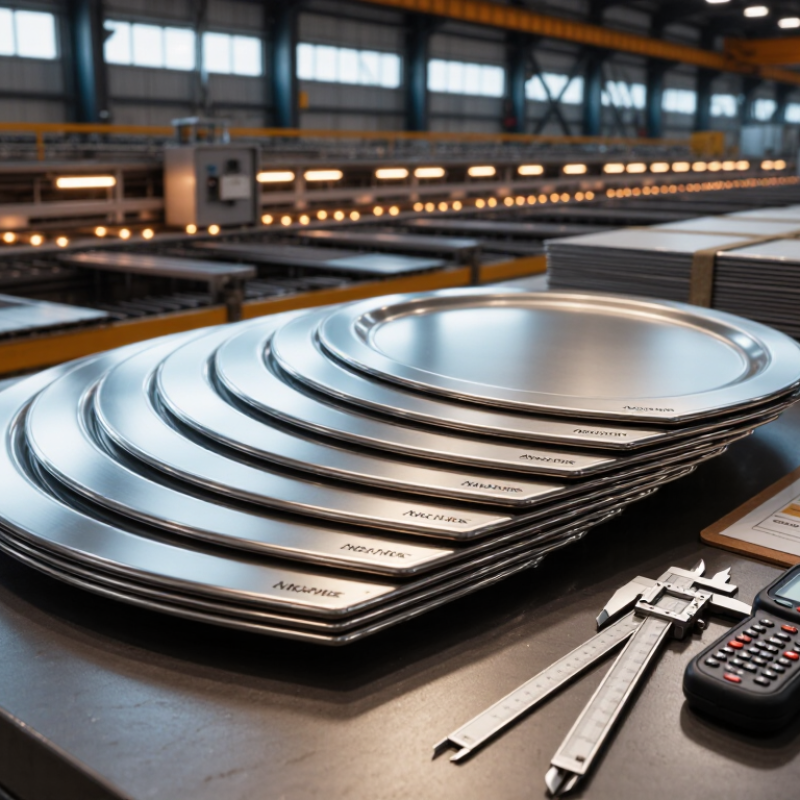
Look for visible evidence: laser-marked heat numbers, clean edges, flat sheets, sealed bundles, and readable inspection reports. Contact two or three previous customers, if possible. Ask whether delivery dates were realistic and whether rejected plates were handled fairly. No supplier is perfect. That is why a careful audit, independent testing, and a written quality agreement remain necessary before signing a purchase order.
How to Find a Reliable Stainless Steel Plate Manufacturer?

Define Your Stainless Steel Plate Requirements

Before comparing a stainless steel plate manufacturer, define the plate’s working conditions. A vague request creates expensive misunderstandings. Record the required length, width, thickness, quantity, and dimensional tolerance. Include the intended use, such as tanks, food equipment, structural panels, or marine components.

Choose the grade according to corrosion exposure, temperature, strength, and fabrication method. A plate for a coastal installation may need better chloride resistance than an indoor decorative panel. Specify the surface finish, including mill finish, brushed finish, or polished finish. Mention whether the plate will be welded, bent, laser-cut, or machined. Welding can affect corrosion resistance near the heat-affected zone. This detail is often missed.

State the inspection documents you need. These may include chemical composition reports, mechanical test results, thickness records, and material traceability documents. Clarify the applicable technical standard and acceptance criteria before requesting a quotation. Ask how the manufacturer controls flatness, surface defects, edge quality, and packing protection. Photos of sample plates can help, but photos cannot replace inspection data. I have seen buyers rely too heavily on attractive samples. That was a mistake. Request a trial order when tolerances are tight. Check whether the supplier can maintain the same finish across repeated batches. Confirm production capacity, cutting services, lead time, and export packaging. A reliable supplier should answer these questions with specific records, not broad promises.

Verify the Manufacturer’s Production Capabilities

A reliable stainless steel plate manufacturer must prove what its factory can actually produce. The ISSF Stainless Steel in Figures 2024 reported global stainless steel production of about 58.4 million tonnes in 2023. This scale makes capacity claims easy to exaggerate. Ask for the mill’s rolling range, furnace capacity, monthly output, and current utilization. Compare these figures with your order size and delivery schedule.

Inspect the production route, not only the showroom. Check melting, refining, hot rolling, cold rolling, heat treatment, leveling, cutting, and surface finishing. Confirm whether these operations occur in-house or through subcontractors. Review recent mill test certificates and match each heat number to plates, test samples, and production records. Testing should cover chemical composition, tensile strength, hardness, dimensions, and surface condition. Relevant ASTM, EN, or other agreed standards must appear clearly in the documentation.

Traceability matters.

The World Steel Association’s World Steel in Figures 2024 reported global crude steel production near 1.9 billion tonnes in 2023. Large output does not guarantee consistent plate quality. Request a controlled production sample, then measure thickness at several points with calibrated equipment. Visit the factory if possible, but remember that one audit can miss recurring problems. A supplier may pass inspection and still struggle during peak seasons. That uncomfortable gap deserves attention. Verify corrective-action records, equipment maintenance logs, and the manufacturer’s ability to repeat the same specification across multiple heats.

How to Find a Reliable Stainless Steel Plate Manufacturer? - Verify the Manufacturer’s Production Capabilities

Capability Area Measurable Data to Verify Relevant Standard or Reference Required Evidence Evaluation Result
Material Grade Coverage Ability to produce austenitic grades such as 304 and 316L, plus duplex grade 2205 when required. ASTM A240/A240M; EN 10088-2; applicable project specification. Grade list, technical datasheets, previous inspection certificates, and chemical composition records. Pass: Requested grades are listed and documented.
Thickness Range Confirm the actual production range in millimetres, including the minimum and maximum ordered thickness. ASTM A480/A480M or EN 10029, with the tolerance class stated in the purchase order. Rolling-mill capability sheet, sample dimensional reports, and calibrated thickness-gauge records. Pass: Ordered thickness falls within verified mill capability.
Plate Width and Length Maximum and minimum width and length, cutting accuracy, squareness, and edge condition. ASTM A480/A480M; EN 10029; approved dimensional drawing. Equipment list, cutting records, dimensional inspection reports, and photographs of finished plates. Pass: Dimensions and tolerances match the order.
Melting and Refining Availability of controlled melting, refining, casting, and heat-number identification. Material-specific product standard and the approved manufacturing procedure. Process flow chart, heat-number examples, furnace records, and mill test certificates. Pass: Each plate can be traced to a documented heat.
Heat Treatment Solution annealing or other specified treatment, furnace temperature control, cooling method, and batch records. ASTM A480/A480M, ASTM A240/A240M, or the relevant EN product standard. Furnace calibration certificates, temperature charts, heat-treatment procedure, and batch reports. Pass: Treatment records cover the supplied heat and lot.
Chemical Composition Carbon, chromium, nickel, molybdenum, manganese, silicon, nitrogen, and other grade-specific elements. Chemical limits defined by ASTM A240/A240M, EN 10088-2, or the contract specification. Heat analysis and product analysis on an EN 10204 3.1 or equivalent inspection certificate. Pass: All reported values comply with the specified grade.
Mechanical Properties Yield strength, tensile strength, elongation, and hardness where specified. ASTM A240/A240M, EN 10088-2, ASTM E8/E8M, and applicable hardness-test standards. Laboratory test reports showing specimen direction, test method, lot number, and measured results. Pass: Results meet the governing material standard.
Surface Finish Finish type such as hot-rolled 1D, cold-rolled 2B, or mechanically polished No. 4, including surface condition. ASTM A480/A480M and EN 10088-2 finish designations. Finish samples, surface inspection procedure, roughness records where required, and packing photographs. Pass: Finish designation and visual quality are approved.
Flatness and Shape Flatness deviation, edge wave, crown, camber, squareness, and out-of-plane distortion. ASTM A480/A480M or EN 10029 tolerance requirements. Straightedge or calibrated measuring-device records and inspection plan. Pass: Measurements remain within the agreed tolerance class.
Non-Destructive Testing Ultrasonic testing, dye penetrant testing, or other examination required by the application. ASTM A578/A578M, ASTM E165/E165M, EN 10160, or project-specific acceptance criteria. Written NDT procedure, operator qualification, equipment calibration, scan map, and final report. Pass: NDT scope and acceptance level are clearly defined.
Positive Material Identification Verification of alloy identity using handheld or laboratory analysis, especially for mixed-grade inventory. Purchase specification and documented PMI procedure; XRF is commonly used for alloy screening. PMI records linked to plate number and heat number, with instrument calibration evidence. Pass: Identification results agree with certificates and markings.
Traceability System Permanent or controlled marking from heat number to plate, test report, packing list, and shipment. EN 10204 inspection-document requirements and the customer’s traceability procedure. Sample material certificate, marking photograph, lot register, and packing-list cross-reference. Pass: Documentation can be followed from melting to delivery.
Testing Laboratory Availability of chemical, tensile, hardness, metallographic, and corrosion-related testing. ISO/IEC 17025 for competent testing laboratories where independent accreditation is required. Laboratory scope of accreditation, equipment calibration records, and representative test reports. Pass: Tests are performed by qualified internal or independent laboratories.
Quality Management Document control, nonconformance handling, corrective action, calibration, and internal audits. ISO 9001 certification and customer-specific quality requirements. Valid certificate, certification scope, quality manual excerpts, and sample corrective-action records. Pass: Certification scope covers stainless steel plate production or processing.
Production Consistency Comparison of results across multiple heats or production lots, not only one sample. Approved inspection and test plan; contractual sampling frequency. At least three representative historical certificates or an agreed pre-production sample review. Pass: Results show repeatable compliance across documented lots.
Final Inspection and Packing Quantity, dimensions, markings, protective film or paper, moisture protection, and loading method. Approved packing specification, shipping requirements, and export documentation rules. Final inspection report, packing checklist, weight records, and pre-shipment photographs. Pass: Finished goods are protected, identified, and shipment-ready.
Verification rule: Approve production capability only when the manufacturer can provide objective records covering the exact grade, thickness, dimensions, finish, testing requirements, and traceability conditions specified in the purchase order.

Check Material Quality and Industry Certifications

A reliable stainless steel plate manufacturer should prove material quality before discussing price or delivery. Ask for the exact steel grade, heat number, thickness tolerance, and manufacturing standard. A professional supplier can provide a mill test certificate for each batch. It should show chemical composition, tensile strength, yield strength, and elongation. Compare these values with the required standard, not with a sales brochure.

Inspect traceability carefully. The heat number on the plate should match the certificate and packing records. This small detail matters. Request sample photos showing the surface, edges, and identification marks. For critical projects, arrange independent testing for composition, hardness, or corrosion resistance. A clean surface can still hide incorrect chemistry. I once trusted appearance too quickly, and that was a poor decision.

Industry certifications also deserve close review. Check whether the manufacturer holds a current quality management certificate, such as ISO 9001, and whether its testing system follows relevant ASTM, EN, or equivalent standards. Verify the certificate number, scope, issuing body, and expiration date. Do not accept a generic logo without documentation. Audit reports, calibration records, and inspection procedures reveal more than a certificate alone. Ask how nonconforming plates are isolated and corrected. Their answer often shows whether quality control is real or merely written.

Evaluate Pricing, Lead Times, and Service Support

How to Find a Reliable Stainless Steel Plate Manufacturer?

A reliable manufacturer should make pricing easy to verify. Request a detailed quote showing grade, thickness, surface finish, quantity, packaging, and freight. A low price may exclude cutting, export packing, or testing fees. Compare the total delivered cost, not only the plate price. Ask for recent material certificates and traceability records. These documents help confirm chemical composition, mechanical properties, and batch identity. Small details matter.

Tips: Ask whether the quoted stock is available now. Confirm the minimum order quantity, payment terms, and quotation validity. Keep every condition in writing.

Lead times deserve careful attention. Request separate dates for production, inspection, packing, and shipment. A manufacturer with clear capacity information is easier to trust. Still, no forecast is perfect. Port delays, raw material shortages, or failed inspections can change schedules. Ask how the supplier communicates delays and what recovery options exist. A practical supplier should provide progress updates before the promised date becomes a problem.

Service support also reveals operational maturity. Test response speed with technical questions about tolerances, welding suitability, or surface defects. Check whether one contact can coordinate sales, quality documents, and logistics. During a claim, photographs alone may not be enough. Ask about inspection procedures, replacement handling, and response timelines. Some suppliers sound professional before payment, then become difficult afterward. That warning should not be ignored.

Compare Suppliers and Confirm a Reliable Partnership

Finding a reliable stainless steel plate manufacturer requires more than checking a low quotation. Compare suppliers through measurable evidence: mill certificates, heat numbers, inspection records, production capacity, and delivery performance. The International Stainless Steel Forum reported global stainless crude steel production at about 58.4 million tonnes in 2023. This scale shows strong competition, but it also makes supplier verification essential.

Request samples with the same grade, thickness, surface finish, and tolerance as your project. Confirm whether testing covers chemical composition, tensile strength, hardness, and ultrasonic inspection. Review certificates against recognized standards, such as ASTM or EN requirements. Ask how the manufacturer handles nonconforming plates. A clear replacement process matters. So does communication.

Tips: Compare three suppliers using one specification sheet. Check recent references from similar industries. Ask for a production schedule, packaging photos, and an inspection plan. Do not rely only on polished documents. A factory visit or independent inspection can reveal storage problems, mixed heat numbers, or weak traceability. These details are easy to miss. They can become expensive later.

The most reliable partnership develops through a written quality agreement. Define material grade, dimensions, test methods, payment milestones, delivery terms, and corrective-action timelines. The lowest price may not provide the lowest total cost. I have found that fast replies are useful, but consistent technical answers are more valuable. No supplier is perfect, and early questions may expose gaps on both sides. That honesty is worth testing before signing a long-term contract.

Use the applicable material standard and the supplier’s mill test certificate to verify that the delivered plate matches the specified grade. Positive material identification, chemical analysis, mechanical testing, dimensional inspection, and heat-number traceability should be confirmed before establishing a long-term partnership.