

A Glass Sorting Machine helps turn mixed glass into cleaner, more valuable cullet. On a recycling line, bottles and fragments move across a conveyor beneath cameras, lights, and sensors. The system reads their color and material signatures, then uses timed air jets to eject unwanted pieces. Green, amber, and clear glass can be separated. Ceramics, stones, and heat-resistant glass can be removed. The result depends on more than the machine: feed quality, belt speed, fragment size, and maintenance all matter.
The scale is significant. FEVE’s 2022 Glass Packaging Circularity Report reported that about 80% of glass packaging in Europe was collected for recycling. That figure describes collection, not the amount of perfectly sorted cullet. The distinction matters. A sensor can identify a fragment, but it cannot undo poor handling upstream. A few ceramic shards may contaminate a batch. Small details count.
Chemist and circular-design expert Michael Braungart is widely associated with the principle, “There is no such thing as waste.” In practice, a sorting line tests that idea against dusty glass, labels, and irregular fragments. It is useful technology, not magic. For plant operators, understanding each stage—from feeding and detection to ejection and quality checks—helps explain what a Glass Sorting Machine can achieve, and where its limits remain. One point deserves scrutiny: machine performance figures are difficult to compare unless the material, throughput, and purity targets are stated.
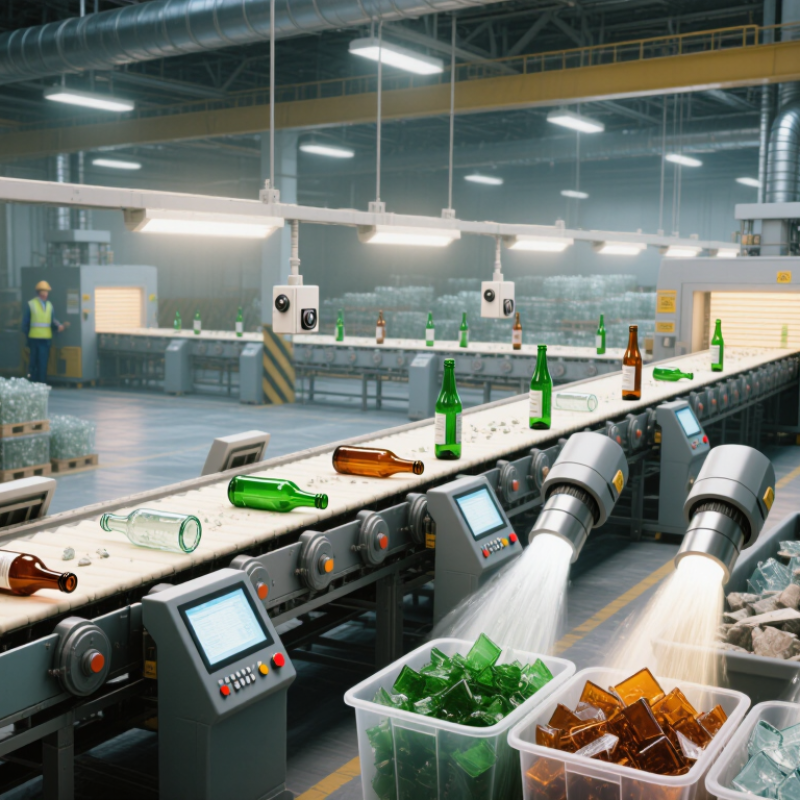
A glass sorting machine is an industrial system that separates glass pieces from a mixed stream, then groups them by material or color. A conveyor spreads the fragments into a shallow layer so sensors can inspect them. Depending on the setup, optical sensors identify color or unwanted materials, while timed air jets push selected pieces into separate bins. The details matter. A dark shard, ceramic chip, or paper label can affect the quality of the recovered glass.
These machines support recycling facilities, but they are not all configured alike. Some sort whole containers; others handle broken glass, often called cullet.
Eurostat reported that 74.9% of glass packaging waste in the European Union was recycled in 2022. The U.S. Environmental Protection Agency’s 2018 national materials report estimated a 25% recycling rate for glass containers. These figures describe recycling outcomes, not the accuracy of any sorting machine.
On a working line, operators may adjust belt speed, sensor settings, and air pressure to suit changing material. A quick look at the output can be misleading: a pile may appear clean while still containing fine ceramic or metal pieces. Glass is unforgiving. Routine sampling helps reveal what visual checks miss, though even careful settings cannot remove every contaminant.

Glass sorting machines separate container glass by color and composition. They commonly process clear, green, and amber bottles and jars, while removing materials that melt differently. Some systems can distinguish flat or specialty glass, but facilities often keep these streams separate. A broken blue bottle looks harmless. Yet mixed colors can reduce the value of a clear-glass batch.
Optical sensors, magnets, and air jets help remove ceramics, stones, porcelain, metal caps, and paper. Ceramics and heat-resistant cookware are especially troublesome because they behave differently from container glass during melting. Small fragments can survive processing and cause defects. The U.S. Environmental Protection Agency reported that 1.13 million tons of glass were recycled in 2018, equal to a 31.3% recycling rate (Advancing Sustainable Materials Management: 2018 Fact Sheet). Sorting quality matters. Even a small contaminant can spoil a batch.
Tip: Keep drinking glasses, mirrors, window panes, and ceramics out of bottle-glass bins unless local guidance allows them. They look similar, but their composition can differ. A quick hand inspection can catch items sensors may miss; it is not perfect, but it helps.
A glass sorting machine uses several parts to inspect and separate material as it moves along a conveyor. At the inlet, a vibrating feeder spreads broken glass into a thin, steady layer. This matters: thick piles can hide pieces from the sensors. Even feeding is harder than it looks. A camera or optical sensor scans each fragment for features such as color, brightness, or shape. Some systems also use sensors suited to detecting non-glass contaminants. The control unit processes these signals and decides which pieces need removal. Short calibration checks help keep readings consistent as lighting and material conditions change.
At the sorting point, compressed-air nozzles fire brief pulses to push selected pieces into a separate chute. The timing must match the glass’s speed and position; a small delay can send a good piece the wrong way. Separate chutes collect accepted glass and rejected material. A control panel lets operators adjust settings and monitor alarms, while guards and dust covers protect moving parts and sensors. Dust buildup or uneven feed can still reduce accuracy, so routine cleaning and sample checks matter. A useful detail to remember: the machine’s performance depends not only on its sensors, but also on how evenly the glass reaches them.
What Is a Glass Sorting Machine and How Does It Work?
How Glass Moves Through the Sorting Process
Glass arrives on a conveyor after collection and basic preparation. Workers or upstream equipment may remove bulky objects before the material reaches the sorter. A steady, even layer helps the machine inspect individual pieces. Too much material at once can hide glass or confuse sensors.
The conveyor spreads glass fragments beneath cameras and optical sensors. These systems assess features such as color, shape, and light transmission. Depending on the setup, air jets then push selected pieces into separate chutes. Clear, green, and amber glass can be directed apart, while ceramics, stones, and other mismatched materials may be rejected. The action happens quickly. But speed is not the whole story. Dust, labels, moisture, and overlapping pieces can affect detection, so operators monitor the feed and adjust settings when needed.
Sorted glass moves into separate bins or onto further processing lines. Some facilities use additional inspection stages to catch pieces missed earlier. The exact sequence varies with the incoming material and the required quality. A machine can improve consistency, but it does not make every decision perfectly. Periodic checks of rejected material can reveal whether useful glass is being lost. Small adjustments may help; sometimes the feed itself needs attention.
How glass moves through a typical sorting process
The bars show the order of typical process stages, not measured time, capacity, or efficiency. Equipment and stage order vary by facility. Sorted glass cullet is sent for reuse, while detected contaminants are removed or diverted.
After a glass sorting machine separates containers by color and removes obvious contaminants, each stream needs careful handling. Chutes direct clear, green, and amber glass into separate bunkers or collection bays. Operators check for ceramics, stones, metal, and pieces of the wrong color. Even advanced sensors can miss some material, so inspection continues. A small amount of contamination may affect a furnace batch. It is not perfect. Labels, caps, and residue can still travel with the glass.
When a bunker reaches capacity, a loader transfers the glass into a covered truck or dedicated container. Keeping colors apart helps processors match material to production needs. The load is weighed and recorded, then delivered to a glass processor. There, it may be cleaned, crushed into cullet, and blended into new batches. Cullet can melt at a lower temperature than raw ingredients, though savings depend on the furnace and mixture. Collection schedules matter: long storage can expose glass to rain, dust, or accidental mixing. At the receiving site, staff sample loads and redirect material that misses quality limits. This check is practical, not glamorous, and sorting plants still learn from misplaced fragments. The route from bunker to furnace depends on many small decisions.
| Stage | What Happens | Common Equipment or Method | Result and Reuse Route |
|---|---|---|---|
| 1. Receiving and inspection | Collected glass containers and other accepted glass items are delivered to a sorting or recycling facility. Loads may be checked for unsuitable materials. | Receiving area, conveyor, and manual inspection | The incoming material is prepared for processing. Accepted materials vary by facility and local collection program. |
| 2. Opening and screening | Bags are opened where applicable, and material is spread into a more even layer. Screens can separate items by size and remove some small debris. | Bag opener, vibrating screen, or trommel screen | A more consistent feed helps later sorting equipment identify and separate materials. |
| 3. Metal removal | Metal objects mixed with the glass are separated before or during glass processing. | Magnetic separator for ferrous metals; eddy-current separator for many non-ferrous metals | Recovered metals can be sent to metal recycling. Removing them helps reduce contamination in the glass stream. |
| 4. Glass separation | Glass is separated from other materials, and unwanted pieces such as ceramics, stones, and porcelain may be rejected. | Optical sorting using cameras and sensors, often paired with air jets; some facilities also use manual quality checks | Cleaner glass cullet is produced. Ceramics, stones, and porcelain are difficult to melt with container glass and are generally treated as contaminants. |
| 5. Color sorting | Where required, glass is sorted by color so that different color streams can be managed separately. | Optical color sensors and automated ejectors | Common streams include clear, green, and amber glass. The streams collected depend on the facility and the needs of the receiving glass manufacturer. |
| 6. Cullet preparation and quality check | Sorted glass may be crushed into cullet and checked for remaining non-glass material and unsuitable glass types. | Glass crusher, screening equipment, and quality-control checks | Prepared cullet can be supplied as a raw material. Specifications vary according to the intended end use. |
| 7. Collection and transport for reuse | Each accepted glass stream is gathered and stored separately before being moved to a glass-processing plant or another approved user. | Conveyors, storage bays, roll-off containers, or bulk transport vehicles | At a glass plant, suitable cullet can be combined with raw materials and melted to make new glass products, including containers. |
| Key purpose of the machine | A glass sorting machine identifies and separates glass by material type, color, or quality, helping reduce unwanted material in the recovered glass. | Often part of a larger recycling line rather than a standalone system | Effective sorting supports the collection of reusable glass cullet; actual recovery depends on input material, equipment, and quality requirements. |
