

...

How to Choose a Modular Container in 2026?

Choosing a Modular Container in 2026 starts with a clear question: what must the space do every day? A site office needs different insulation, windows, power, and access than a secure storage unit. Measure the available ground, delivery route, and doorway before comparing layouts. A container that looks spacious on a drawing may feel tight once desks, shelving, or equipment are inside. Small details matter.

Next, compare the construction and the supplier’s documentation. Ask for dimensions, materials, insulation details, load information, and plans for lifting and installation. Check how doors, joints, and roof edges are finished; these areas can affect weather protection and upkeep. Consider local climate, expected use, future relocation, and the services the unit will need. Get important specifications in writing, and have qualified professionals review site or structural questions when appropriate.

Price is only one part of the decision. Include delivery, foundations, connections, maintenance, and any modifications in your budget. Ask what is included, what is optional, and how replacement parts or support are handled. Compare equivalent specifications rather than headline prices alone. That takes time.

There is no universally best unit. Even careful plans can overlook a narrow turning area or a cable route. Use this guide to weigh practical requirements, check claims, and choose a Modular Container that fits its real site—not just the product photograph.
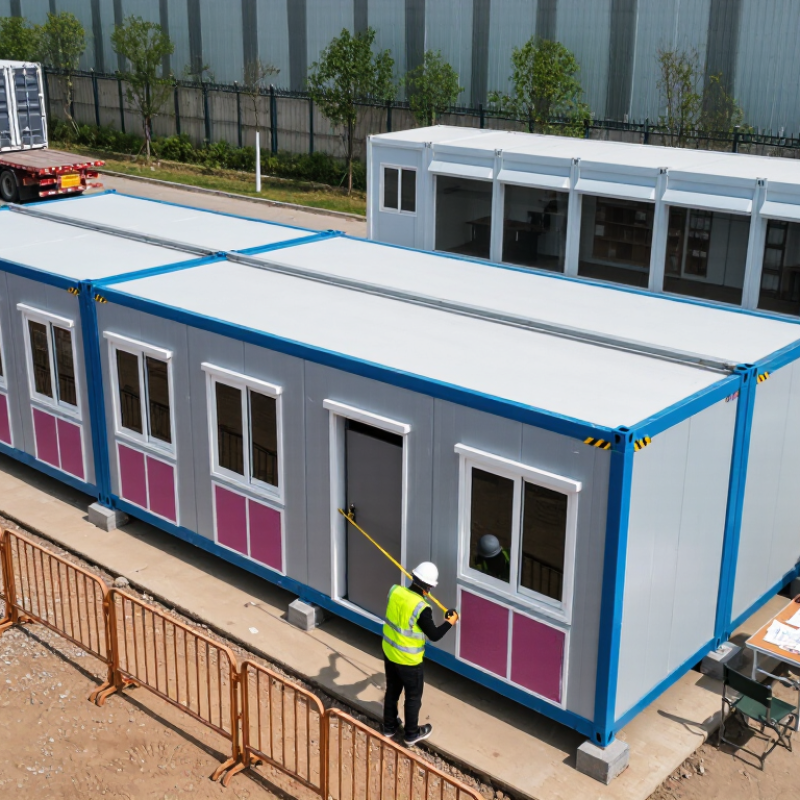
How to Choose a Modular Container in 2026?

Define the Intended Use, Occupancy, and Site Conditions

How to Choose a Modular Container in 2026? Define the Intended Use, Occupancy, and Site Conditions

Start with the job the container must do: provide a quiet office, a temporary classroom, or secure equipment storage. Each use affects insulation, ventilation, windows, power, and interior finishes. Estimate peak occupancy, not just the usual headcount. A room that feels comfortable for four workers may become cramped when eight people gather around a table. The Modular Building Institute’s 2024 annual report estimated North America’s modular construction market at $20.3 billion in 2023, reflecting broad use across project types. That scale does not make every unit suitable for every site. A specification still needs to match the actual work.

Tips: Measure access routes before ordering. Record gate width, turning space, overhead wires, and delivery-truck clearance. Check the ground after rain, too. Soft soil can complicate leveling and support. Note slope, drainage, wind exposure, and utility connection points, then share the measurements with the supplier. Confirm local occupancy and accessibility requirements with qualified professionals; conditions vary by location. One detail is easy to miss: future use. A storage unit may later become a staffed workspace, so plan for safe exits, fresh air, lighting, and enough electrical capacity. Plans change. Leave room for that. A site sketch and a realistic headcount often reveal problems that a product checklist misses.

Compare ISO 668 Sizes: 20 ft = 6.058 m; 40 ft = 12.192 m

How to Choose a Modular Container in 2026?

ISO 668 gives standard external lengths of 6.058 m for a 20 ft container and 12.192 m for a 40 ft container. These are not interior floor lengths. Wall thickness, corner fittings, and door framing reduce usable space. Measure the actual unit and compare its drawings before planning desks, shelving, or service runs. A tape measure across the bare floor can prevent a costly layout change.

The 20 ft format is easier to place on a tight site. It can suit a small office or a single-room workspace. A 40 ft unit offers nearly twice the length, but needs more access and a longer level pad. Check truck turning space, crane reach, and overhead obstructions. The extra metres are not useful if delivery cannot reach the foundation.

ISO dimensions matter beyond transport. UNCTAD’s Review of Maritime Transport 2024 reports that more than 80% of world merchandise trade by volume moves by sea, making standard container dimensions central to global freight. Still, a modular building is not just freight. Confirm door clearance, insulation thickness, and local site measurements; I would recheck these before ordering, since drawings can make a cramped corner look generous.

How to Choose a Modular Container in 2026?

Compare ISO 668 standard container lengths: 20 ft = 6.058 m; 40 ft = 12.192 m.

The 40-foot container is approximately twice the length of the 20-foot container. Choose based on the cargo’s required floor space, while also checking the container’s internal dimensions and local transport limits.

Verify Structural Performance Against ISO 1496 Test Requirements

How to Choose a Modular Container in 2026?

Before comparing finishes or layouts, check whether the unit’s intended use fits ISO 1496-1. This standard sets test requirements for series 1 freight containers, including stacking, lifting, restraint, wall strength, roof strength, and floor strength. A modular unit may not fall within that scope automatically. Ask the supplier to identify the applicable standard and explain any differences.

Request test reports for the exact design and configuration you plan to buy. Look for the test load, method, measured deflection, acceptance criteria, and model identification. A report for a similar unit is not the same as evidence for yours. Paper is not proof. Check whether later changes—such as doors, windows, or cut-outs—alter the tested structure. Small gaps matter. In practice, paperwork can look complete while leaving this detail unclear.

The scale of container transport makes structural evidence worth careful review. UNCTAD’s Review of Maritime Transport 2024 reports that global container port throughput reached 858.9 million TEU in 2023, up 2.4% from 2022. That figure describes port activity, not modular-building failures, but it shows how widely container structures are handled. Ask for the full test record, not only a certificate page, and have a qualified engineer review unusual modifications or site-specific loads. I would not treat an ISO reference alone as a guarantee.

Check CSC Safety Approval and ISO 1161 Corner-Fitting Compatibility

How to Choose a Modular Container in 2026?

A modular container may look ready to ship, but appearance proves little. Check its CSC safety approval plate and confirm that its inspection status is current. The plate should be legible, securely attached, and consistent with the container’s identification records. Requirements can differ by intended use and route, so verify details with a qualified inspector or carrier. A faded plate deserves a closer look.

Tips: Inspect all eight corner fittings. ISO 1161 compatibility matters when using standard twistlocks, lifting gear, or stacking equipment. Compare fitting dimensions and condition with the equipment specifications; do not rely on a seller’s verbal assurance. Look for cracks, heavy corrosion, distortion, or repairs near the corners. Small defects can cause big handling problems.

CSC approval and corner-fitting compatibility answer different questions. One concerns safety approval for transport; the other concerns whether handling interfaces fit the equipment. Confirm both before purchase, and keep copies of inspection records and technical drawings. If the unit will remain on site, its transport approval may not settle every installation or use requirement. I would still ask for an independent check. It can feel cautious, perhaps even inconvenient, but a short inspection is better than discovering a mismatch at the loading point.

How to Choose a Modular Container in 2026? — Check CSC Safety Approval and ISO 1161 Corner-Fitting Compatibility
Selection Dimension What to Check Acceptance Criteria Why It Matters Buyer Action
Intended use and route Determine whether the unit will travel internationally as a freight container, move only within a site, or serve as a fixed modular building. Confirm scope CSC approval is relevant to freight containers within the Convention’s scope; it is not a general building-quality certificate. Different applications involve different transport, structural, building, and local regulatory requirements. Ask the supplier to identify the unit’s intended classification and list the approvals required for the planned route and use.
CSC safety approval Inspect the Container Safety Convention (CSC) safety approval plate and confirm that it is permanently affixed and legible. Verify plate The approval details should correspond to the specific container and be consistent with its records. The CSC plate provides safety-related information for an approved container; a sales description alone is not proof of approval. Request clear photographs of the plate and check the approval details with the relevant approval or inspection authority when needed.
Plate information Check the container identification, approval reference, date of manufacture, maximum operating gross mass, and applicable stacking and racking test information. Values and identification should be readable and consistent with the container’s documentation. Applicable plate particulars depend on the container and approval. These details help establish identity and the approved operating limits; they must not be assumed from appearance or external dimensions. Compare the plate with the inspection records and the supplier’s specification. Do not exceed marked limits.
Inspection status Check the container’s examination status under an applicable periodic examination scheme, such as an approved continuous examination programme (ACEP), or a periodic examination system. Check current status Confirm that the relevant inspection or examination is in date for the planned operation. CSC approval does not mean that a container remains in safe condition indefinitely; damage and maintenance affect continued use. Request current examination evidence and inspect for damage, corrosion, unauthorised repairs, and defects before loading or lifting.
ISO 1161 corner fittings Confirm that the corner fittings are specified as compatible with ISO 1161 and that the fittings on the unit match the intended handling and securing equipment. Verify interface Check the fitting type, position, condition, and dimensional compatibility—not only a statement that the unit is “ISO compatible.” ISO 1161 specifies requirements for freight-container corner and intermediate fittings. Compatibility supports connection to suitable equipment but does not certify the whole container. Ask for the fitting specification or inspection evidence. Have a competent person confirm compatibility with the actual twistlocks, lifting devices, or support system.
Handling and lifting method Identify how the module will be lifted, stacked, secured, and supported, including the equipment and contact points involved. No assumed lift Use only a method and equipment suitable for the unit’s design, condition, and marked limits. Corner-fitting compatibility alone does not establish that every lifting arrangement or loading condition is safe. Obtain the manufacturer’s handling instructions and confirm the lifting plan with a qualified lifting or transport professional.
Dimensions and interchangeability Compare the unit’s external dimensions and corner-fitting locations with the receiving vehicle, vessel, rack, foundation, or adjacent modules. Check the applicable container size/type specification and the actual interface dimensions; do not rely on nominal size alone. ISO 1161 concerns fittings, while container series dimensions and ratings are addressed by other standards, including ISO 668. Request a dimensioned drawing and verify clearances, support points, connection spacing, and access at the installation site.
Mass and payload Review maximum gross mass, tare mass, payload, and any stacking or racking limits shown on the plate or in approved documentation. Use marked ratings Confirm that the proposed cargo and handling loads stay within the applicable approved limits. Ratings vary by individual container; a rating from another unit or a generic product sheet cannot safely substitute for the unit’s own data. Calculate loaded mass and load distribution, and confirm compatibility with vehicle, lifting equipment, and site support capacities.
Identity and documentation Match the container identification number on the unit to the CSC plate, inspection records, drawings, and any supplied certificates. Records match Resolve missing, inconsistent, altered, or unreadable identification before purchase or dispatch. Traceable records help verify that approvals and inspection evidence apply to the actual unit being evaluated. Make legible photographs, the inspection history, relevant drawings, and written confirmation of the unit’s condition part of the purchase file.
Final purchase decision Evaluate approval, inspection condition, fitting compatibility, operating limits, documentation, and suitability for the intended application together. Proceed only when verified Treat missing evidence, damaged fittings, invalid inspection status, or mismatched records as issues requiring resolution. No single plate, standard, or fitting feature proves that a modular container is suitable for every route or use. Record the checks and obtain independent technical or regulatory advice where the application, jurisdiction, or load case requires it.

Standards note: ISO 1161 specifies freight-container corner and intermediate fittings; ISO 668 addresses series 1 freight-container classification, dimensions, and ratings. Confirm the applicable editions, approval requirements, and local rules for the specific container and operation.

Assess Insulation, Utilities, Fire Safety, and Local Building Codes

A modular container can look finished while hiding weak insulation. Check the full wall, roof, and floor assembly, not just the insulation label. Steel framing conducts heat, so thermal bridges and condensation deserve attention. Ask for documented U-values, vapor-control details, and ventilation rates. Small details matter. The U.S. Energy Information Administration’s 2018 Commercial Buildings Energy Consumption Survey estimated that space heating accounted for about 32% of commercial-building energy use. That makes air leakage and insulation choices practical cost questions, not cosmetic ones.

Map utilities before choosing a layout. Confirm electrical capacity, water supply, drainage, and heating or cooling loads against the intended occupancy. A sink added later can mean cutting through structural components. I would ask for drawings showing service routes and access panels; they are easy to overlook. For fire safety, request tested assembly details, suitable fire stopping, alarms, exits, and clear documentation for any rated walls. NFPA’s 2023 U.S. Fire Loss report counted about 1.39 million fires nationwide. That figure is not specific to modular buildings, but it reinforces the value of verified fire protection.

Local approval can change the whole specification. Ask the building department about zoning, occupancy classification, foundation design, wind and snow loads, energy rules, accessibility, and permits before ordering. Requirements vary by location. A unit approved elsewhere may still need changes for local codes. Be cautious of vague promises that a container is “code compliant”; ask which code edition and which inspections apply. I would check this twice. Mistakes here are expensive.