

...

What Are Science Education Kits and How Do They Work?

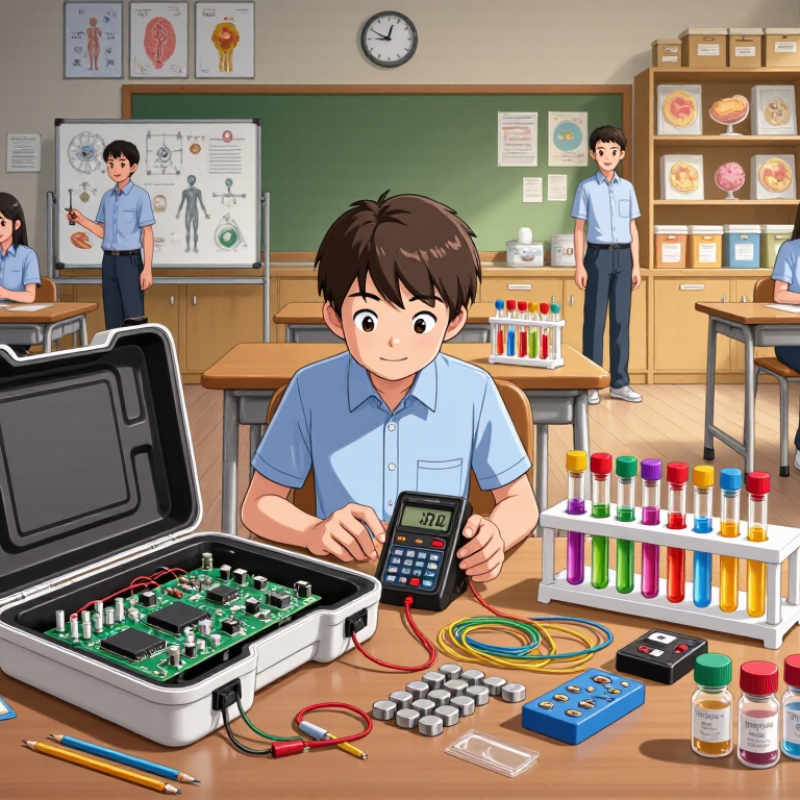
Science Education Kits turn abstract ideas into activities learners can see, touch, and measure. A typical kit may include a small circuit board, test tubes, magnets, sensors, or prepared samples. Each component supports a question, not merely a colorful demonstration. Students might connect wires, record a voltage reading, and compare results across several trials. That physical process helps connect textbook concepts with observable evidence.

Science Education Kits work through guided investigation. An instruction booklet usually presents a goal, materials list, safety advice, and testing steps. Learners make a prediction, change one variable, and document what happens. Teachers can then discuss patterns, errors, and alternative explanations. Well-designed kits reflect established science education practices, including hands-on learning and evidence-based reasoning. They also encourage careful habits, such as labeling samples and checking measurements twice.

Not every kit works perfectly. Some instructions may feel too simple, while certain materials can produce inconsistent results. That limitation matters. Real scientific work includes failed trials, unclear data, and revised questions. A responsible teacher should inspect the equipment, adapt the activity to students’ ages, and explain where the model differs from real research. The strongest Science Education Kits do more than provide answers. They create a safe starting point for curiosity, practical skill, and honest reflection. Small discoveries count. A learner who notices a faulty connection may gain more than one who follows every step without thinking. This article will examine what these kits contain, how their learning process operates, and how families or educators can judge their quality.

What Are Science Education Kits and How Do They Work?

Definition and Core Purpose of Science Education Kits

Science education kits are organized sets of materials designed to help learners investigate scientific ideas through guided activities. They may include simple tools, models, measuring devices, samples, instructions, and recording sheets. Their core purpose is not merely to provide answers. It is to turn abstract concepts into observable experiences.

A learner can measure water, compare soil textures, or build a basic circuit with carefully selected materials. These actions connect evidence with explanation. Teachers use kits to support inquiry, develop accurate observation, and make scientific vocabulary more meaningful. A well-designed kit also reduces preparation time while keeping activities focused and safe. Clear instructions matter, but they should not remove every opportunity for questioning.

A kit is not a magic box. Its value depends on age suitability, material quality, and thoughtful teaching. In practice, some activities may produce unexpected results because measurements are inconsistent or instructions are unclear. That imperfection can become useful. Learners can discuss possible errors, repeat a test, and improve their method. However, educators should check each activity before use, especially when heat, electricity, glass, or small components are involved. Reliable kits encourage evidence-based thinking, but they cannot replace professional judgment or real classroom observation.

Main Components and Learning Materials in a Science Kit

Science education kits combine instructions, tools, materials, and recording sheets for guided investigation. A typical kit may include measuring cups, droppers, thermometers, magnets, seeds, prepared samples, and protective equipment. Each item supports a clear learning goal. The guide usually presents a question, a prediction, a testing procedure, and spaces for observations. Students do more than follow steps. They measure changes, compare results, and explain possible causes.

A well-designed kit uses reliable materials and age-appropriate instructions. For example, a plant-growth activity may provide identical containers, soil, seeds, a ruler, and a simple data table. Students can track height over several days and notice differences in light or water. Small errors matter. Unequal watering can change the outcome. Some instructions also simplify real science too much. Teachers should encourage students to question the procedure, repeat measurements, and discuss unexpected results. This builds practical scientific judgment.

Tips: Check every component before the activity. Read the safety guidance carefully. Let students handle tools responsibly, but supervise measurements. Ask them to write observations before offering explanations. A short reflection can reveal confusion. Replace damaged materials, label samples clearly, and keep raw data. The best kit supports curiosity, not perfect answers.

How Science Education Kits Support Hands-On Learning

What Are Science Education Kits and How Do They Work?

Science education kits combine materials, instructions, and questions for guided investigation. Students measure, build, observe, and revise ideas.

Their value lies in action. A learner can test water flow with a small channel, record changes, and explain the result. This process makes abstract concepts visible. It also gives teachers evidence of student thinking, not merely correct answers.

Research supports this approach. A 2014 meta-analysis in Proceedings of the National Academy of Sciences reviewed 225 studies. It found that active learning improved examination performance by about 6%. Traditional lecture classes also showed higher failure rates, by roughly 1.5 times. The National Academies’ 2018 report, How People Learn II, similarly links meaningful practice with stronger understanding. These findings are persuasive, but kits are not magic. Poor instructions can turn exploration into copying. Some activities also simplify real science too much.

Tips: Choose kits with open questions, safe materials, and measurable outcomes. Ask students to predict before touching the equipment. Require a short evidence log with sketches, numbers, and one mistake. That mistake may reveal more than a perfect result. Teachers should check whether every learner handles materials, explains observations, and connects evidence to a claim. A kit should support discussion, not replace it.

What Are Science Education Kits and How Do They Work? - How Science Education Kits Support Hands-On Learning

Kit Type Main Science Concepts Typical Hands-On Materials Example Investigation Typical Activity Time Recommended Learner Group Skills Developed Safety Considerations
Physical Science Force, motion, energy, magnetism, and simple machines Magnets, ramps, wheels, pulleys, masses, measuring tools, and connecting materials Change the ramp angle and compare how far an object travels 30–60 minutes 2–4 learners Measuring Data comparison Model building Use sturdy equipment; supervise small parts and moving objects
Earth and Environmental Science Weather, water, soil, erosion, ecosystems, and resource use Soil samples, trays, water containers, thermometers, collection cups, and observation charts Model rainfall runoff and observe how slope and ground cover affect erosion 30–75 minutes 2–4 learners Observation Cause and effect Recording evidence Wash hands after handling soil; avoid unknown environmental samples
Life Science Plant structures, habitats, adaptation, classification, and basic ecology Hand lenses, plant samples, nonliving models, sorting cards, and observation sheets Classify specimens by observable characteristics and explain the grouping rule 25–50 minutes 2–4 learners Classification Pattern recognition Scientific communication Use safe, identified specimens; do not eat or taste materials
Chemistry and Matter Properties of matter, mixtures, solutions, density, and reversible changes Measuring spoons, cups, water, safe household substances, droppers, and balance scales Compare which materials dissolve, settle, float, or separate in water 30–60 minutes 2–3 learners Prediction Controlled testing Measurement Use only labeled, nonhazardous materials; wear eye protection when appropriate
Engineering and Design Design constraints, structures, materials, testing, and optimization Craft sticks, paper, string, connectors, weights, rulers, and design-planning sheets Design, build, test, and improve a structure that supports a specified load 45–90 minutes 3–5 learners Problem solving Iteration Teamwork Inspect structures before testing; keep hands clear of collapsing models
Electricity and Circuits Closed circuits, conductors, insulators, switches, and energy transfer Low-voltage batteries, insulated wires, bulbs or buzzers, switches, and test objects Build a complete circuit and test which objects allow current to pass 30–60 minutes 2–3 learners System modeling Troubleshooting Evidence-based reasoning Use low-voltage components only; never connect materials to household electricity
Data and Measurement Variables, units, averages, patterns, and interpretation of results Rulers, balances, timers, thermometers, measuring containers, and data tables Measure repeated trials and compare results using a table or simple graph 25–60 minutes 2–4 learners Quantitative reasoning Graphing Accuracy Handle glass or liquid-filled instruments carefully; clean spills promptly
Science education kits typically combine materials, instructions, and recording tools so learners can investigate a question, collect evidence, and connect observations to scientific ideas.

Common Types of Kits Across Scientific Subjects

Science education kits turn abstract ideas into guided investigations. They usually include tools, samples, instructions, and questions for recording evidence. A student might measure water temperature, build a simple circuit, or examine prepared plant cells. The process is practical: predict, test, observe, and revise. The box matters less than the question.

Physics kits often use magnets, pulleys, light sources, and motion sensors. They help learners connect force, energy, and measurement. Chemistry kits may contain safe, classroom-approved materials for testing pH, reactions, or separation. Biology kits commonly include slides, models, seed samples, and basic microscopes. Earth and space kits use rocks, soil, maps, weather tools, or solar system models. Environmental science kits can compare water clarity, temperature, and local habitats. Coding and engineering kits add sensors, motors, or building components. Different subjects. Similar habits.

A well-designed kit sets a clear goal but leaves room for judgment. Learners should record actual results, including messy data and failed trials. Teachers can check measurements, explain safety, and connect findings to accepted scientific knowledge. In my experience, the most useful kits allow repeated testing with small changes. One limitation remains: printed instructions can make inquiry feel mechanical. Students may follow steps without asking why. A stronger lesson pauses for predictions and invites students to redesign part of the test. Mistakes become evidence, not embarrassment. Good kits support learning; they cannot replace careful teaching.

Factors for Choosing and Using a Science Education Kit

What Are Science Education Kits and How Do They Work?

Factors for Choosing and Using a Science Education Kit

A science education kit combines materials, instructions, and questions for guided investigation. Students may measure temperature, observe plant growth, or build a simple circuit. The kit works best when learners predict, test, record, and explain their results. A strong design connects each activity with a clear scientific idea, rather than offering colorful objects without purpose. Check the learner’s age, prior knowledge, and learning goal before choosing one. Materials should be labeled, durable, and easy to replace. Instructions also need clear safety guidance and realistic time estimates.

Tips: Read the full guide first. Test the activity yourself. Confirm every item is included. Use safe, ordinary materials when possible. Keep a notebook nearby. Ask learners why results changed, not only whether they were correct. Adult supervision remains important, especially with heat, electricity, glass, or small parts.

In classroom use, I have found that simple measurement tools often create richer discussion than crowded activity boxes. A ruler, timer, and recording sheet can reveal careful thinking. Repeated trials matter because one result may be affected by a tilted surface or an inaccurate reading. Some instructions feel too definite, though. Real experiments can produce cloudy water, uneven growth, or unexpected measurements. That uncertainty is useful, but only when learners discuss possible causes. Teachers should review the kit against reliable science sources and local school safety procedures. A kit is not a substitute for professional judgment.