7 Tips for Buying a Cast Iron Butterfly Valve
A Cast Iron Butterfly Valve can look simple on a catalog page: a round body, a central disc, and a compact hand lever. The real choice depends on what flows through the line, the system pressure, temperature, and how often the valve will operate. A mismatch may show up later as a stubborn handle, leakage, or a costly replacement. Small details matter.
Valve-selection specialist Alex Morgan offers a practical reminder: “Match the valve to the service, not just the pipe size.” That principle guides these seven buying tips. They focus on verifiable details: pressure rating, seat and disc materials, connection style, operating method, and supplier documentation. Check the product data against your actual operating conditions. A familiar brand name alone is not enough.
There are trade-offs. A lower purchase price can be appealing, yet it may not reflect service life or maintenance needs. Even a well-specified valve can disappoint if installation or operating conditions differ from the design assumptions. Keep the process details nearby: fluid type, line size, temperature range, pressure, and available space around the handle or actuator. Then ask the supplier to confirm suitability in writing. This guide is a starting point, not a substitute for reviewing the system. Some buyers overlook that.
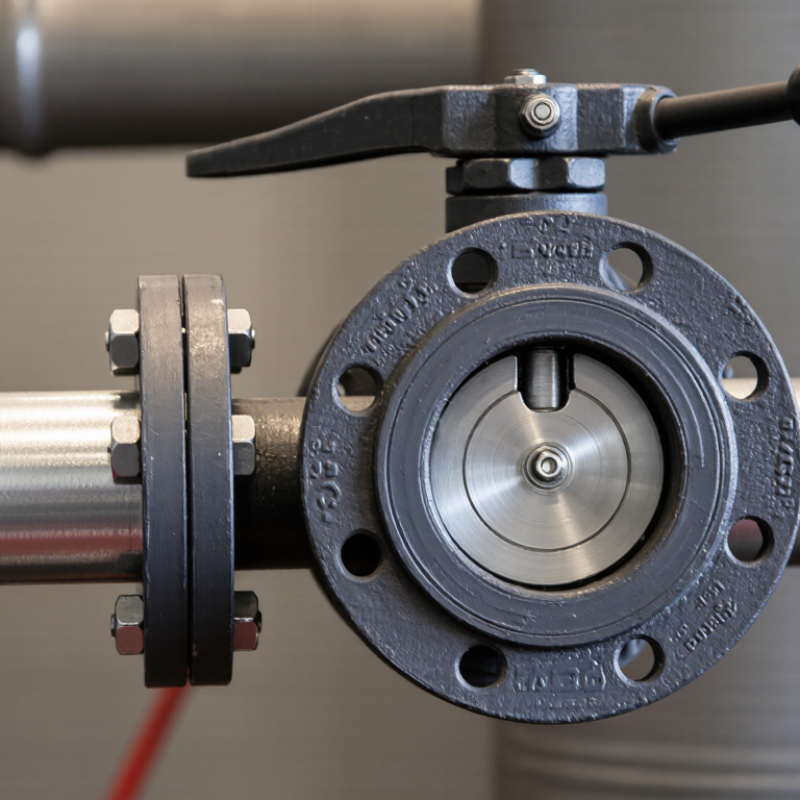
Understanding Cast Iron Butterfly Valves and Their Applications
7 Tips for Buying a Cast Iron Butterfly Valve
Cast iron butterfly valves are common in water distribution, building services, and some low-pressure industrial lines. Their compact body can fit between flanges where a bulky gate valve may not. The disc turns a quarter-turn to open or restrict flow. Simple to operate. But suitability depends on the actual service, not just pipe size.
Start with the fluid, pressure, temperature, and expected operating cycles. Water is not always harmless; dissolved minerals or treatment chemicals may affect the body, disc, or seat. Check the valve’s pressure-temperature rating and flange drilling against the system documents. A mismatch can cause leaks or delay installation. Check the medium. For abrasive slurry, high temperatures, or demanding throttling, another valve type or lining may be more appropriate. Ask for material details, not just a broad “cast iron” description.
Look at the seat material, disc coating, stem arrangement, and whether manual or actuated operation is needed. In a cramped plant room, handle clearance can matter as much as nominal diameter. Confirm face-to-face dimensions before ordering; small differences can become awkward at the pipe joint. Also consider access for inspection and replacement. A low purchase price does not show how a valve will behave after years of cycling. Generic selection charts are only a starting point, and relying on them alone for unusual fluids or critical lines deserves a second thought.
Defining Valve Size, Pressure Rating, and Connection Type
Choosing a cast iron butterfly valve starts with the pipe, not the catalog. Match the valve’s nominal size to the pipe size and confirm the actual inside diameter and available space. A valve that fits the line can still restrict flow if its disc or seat configuration does not suit the system. Check the manufacturer’s dimensional drawing before ordering; a few millimeters can matter during installation.
Tip: Write down the pipe size, maximum operating pressure, temperature, and fluid before comparing valves. The pressure rating must cover expected operating conditions, including brief pressure surges. Temperature can affect the seat and other components, so verify their limits too. Do not treat the body rating as the rating of the complete assembly.
Connection type affects both fit and maintenance. Wafer-style valves sit between flanges; lug-style designs use threaded inserts and may allow end-of-line service when specifically rated for it. Flanged connections require matching flange dimensions and bolt patterns. Check the project specification, gasket requirements, and room for the handle or actuator. It is easy to overlook clearance. Then installation becomes harder than expected. A final drawing review is useful, even when the size appears obvious.
Evaluating Materials, Seals, and Operating Conditions
A cast iron butterfly valve should match the fluid, pressure, and temperature—not just the pipe size. Gray iron is common in stable, lower-impact service, while ductile iron offers greater resistance to mechanical shock. Check the body and disc specifications together; one strong component does not make the whole assembly suitable. A nameplate helps.
The seat material matters because it contacts the fluid and forms the shutoff seal. EPDM is often used for water service, while NBR may suit certain oil applications; neither choice is universal. Confirm compatibility against the fluid’s exact composition, concentration, and temperature. PTFE can offer broad chemical resistance, but its suitability still depends on pressure and service details. Small differences matter.
Operating conditions can change a sensible selection. Note the normal and peak pressure, temperature swings, flow direction, and how often the valve will cycle. Slurry or suspended particles may wear the seat, while frequent operation can affect actuator sizing and torque. This is easy to overlook. Ask for the pressure-temperature limits and leakage expectations for the complete valve, not the body alone. If the service data is incomplete, pause and verify it rather than guessing.
Checking Standards, Certifications, and Manufacturer Quality
A cast iron butterfly valve should come with more than a polished datasheet. Check that its material grade is stated clearly, such as ASTM A126 Class B, and that the certificate matches the actual casting and order. For water service, confirm the valve meets the relevant edition of AWWA C504; for other applications, check the applicable product standard and pressure class. Ask for documented pressure and leakage test results, not just a general claim of “factory tested.” ISO 5208 provides recognized pressure-testing and leakage-rate criteria for industrial valves. Details matter. A certificate alone is not proof that every unit was inspected.
Manufacturer quality also shows in traceability: casting identification, inspection records, coating details, and clear instructions for installation and maintenance. The NACE International IMPACT study estimated corrosion costs at US$2.5 trillion worldwide, or about 3.4% of global GDP. That broad figure is not specific to butterfly valves, but it underscores why material selection and corrosion protection deserve scrutiny. Ask how the manufacturer controls casting defects and verifies coatings, especially around the disc edge, shaft, and body seat. A neat document pack can still leave gaps. Check that test records identify the valve, and verify that the selected elastomer and coating suit the fluid, temperature, and operating conditions. When a supplier cannot explain those choices plainly, pause and ask again.
Comparing Total Cost, Maintenance Needs, and Supplier Support
A cast iron butterfly valve may have a modest purchase price, but the invoice is only part of its cost. Compare the valve, actuator, installation, and expected maintenance over its service life. Check that the body rating, disc, and seat materials suit the fluid, pressure, temperature, and pipe connection. A low-cost seat that wears quickly can mean more downtime and replacement labor. Ask for a written datasheet. It matters.
Maintenance needs vary with the application. In a clean water line, routine checks may be simple; abrasive or chemically demanding service can wear internal parts faster. Ask how the seat and disc are inspected, whether parts can be replaced without removing the valve, and what tools are needed. I have seen buyers overlook access space, then discover that a nearby wall makes service awkward. That detail is easy to miss.
Supplier support also affects total cost. Before ordering, confirm lead times for replacement seats, discs, and actuators, and ask whether installation guidance and technical documents are available. A responsive supplier should clarify operating limits rather than promise a valve will work in every condition. Compare warranty terms and support response expectations in writing. Keep the quote, datasheet, and maintenance instructions together; they help future technicians identify the correct parts. One caveat: projected service life is an estimate, not a guarantee.
7 Tips for Buying a Cast Iron Butterfly Valve
Compare total cost, maintenance needs, and supplier support—not just the initial purchase price.
How to read the chart: The scores are an illustrative buyer-priority framework, not market statistics or ratings of specific suppliers. Adjust them to reflect your application and operating conditions.
- Compare the total cost of ownership, including installation and replacement parts.
- Check the valve’s pressure, temperature, and media compatibility for your system.
- Review the expected inspection and maintenance requirements.
- Confirm the seat and disc materials suit the service conditions.
- Verify applicable standards, test documentation, and traceability.
- Ask about spare-parts availability and typical delivery times.
- Evaluate technical assistance, warranty terms, and after-sales support.