

...

10 Tips for Buying the Right Plastic Gear

Plastic Gears are no longer niche components. They turn quietly inside printers, pumps, appliances, and compact automotive mechanisms. Yet choosing one by tooth count alone is risky. Material, load, speed, temperature, lubrication, and moisture can all change how a gear performs over time.

PlasticsEurope’s 2023 report estimated global plastics production at 400.3 million tonnes in 2022. That figure describes the wider materials landscape, not the plastic-gear market. Still, it highlights the scale of material choice—and why a datasheet deserves careful reading. Richard L. DeRosa, author of the technical reference Plastic Gears, emphasizes evaluating gear material and design against the real operating conditions. The principle is simple. The application is not.

A gear that runs smoothly during a brief bench test may behave differently after hours beside a warm motor. Tooth wear, shaft alignment, impact loads, and lubricant compatibility deserve attention before purchase. So does the supplier’s evidence: request operating limits, dimensional tolerances, and test conditions, rather than relying on a broad “high-strength” claim. Small details matter. And sometimes the data will not answer every question; a prototype test may reveal what a catalog cannot. These 10 tips for buying the right Plastic Gear will help turn those checks into a practical shortlist, without pretending that one material or design suits every machine.
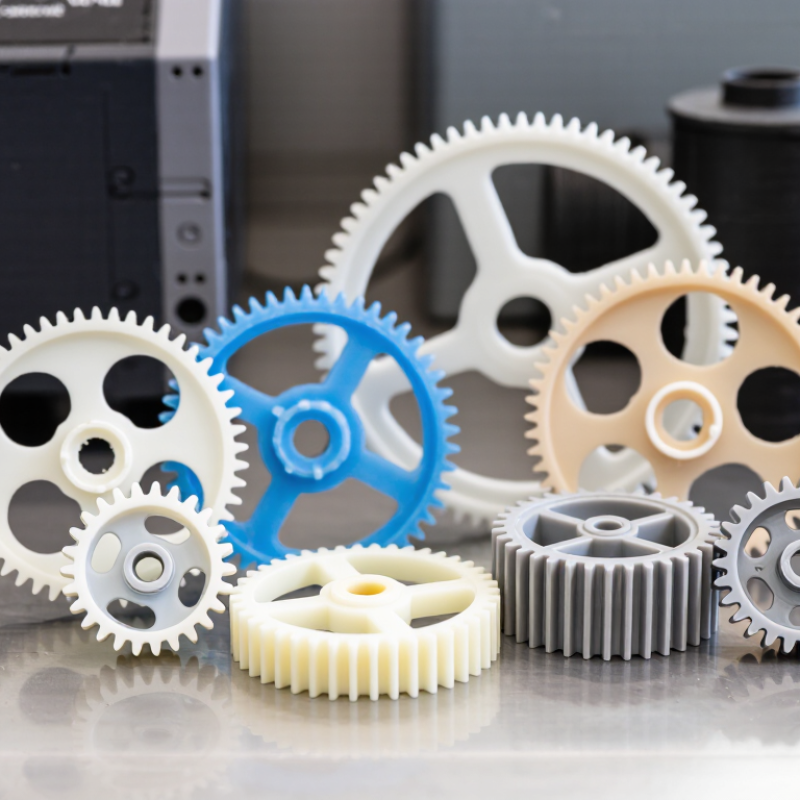
10 Tips for Buying the Right Plastic Gear

Define the Gear’s Application, Operating Conditions, and Performance Needs

Before comparing plastic gears, define what the gear must do in the actual assembly. Is it driving a small pump, moving a printer carriage, or transmitting motion inside a compact enclosure? Record the required torque, speed, direction changes, and expected operating hours. A gear that turns slowly for brief cycles faces different demands from one running continuously. Be specific. “Light duty” is not a useful load value.

Then document the operating conditions around the gear. Note temperature at the gear itself, not just room temperature, and include moisture, dust, cleaning fluids, or lubricant exposure. A warm housing can soften some plastics; trapped grit can wear tooth flanks faster than expected. Also define acceptable noise, backlash, and positioning accuracy. These needs may conflict: tighter engagement can reduce play but increase friction. Check the mating gear and shaft alignment, too. In practice, a promising material choice can still fail when a shaft flexes under load. That detail is easy to miss. If conditions are uncertain, measure them or test a representative assembly through realistic start-stop cycles before finalizing the design.

Compare Plastic Types, Strengths, and Environmental Limits

10 Tips for Buying the Right Plastic Gear

Plastic gears do not share one set of limits. Acetal often suits quiet, low-friction drives; nylon can absorb impact, but moisture may change its dimensions. PEEK handles higher temperatures than many commodity plastics, though the exact limit depends on grade, load, and lubrication. Check the supplier’s technical data for tooth strength, wear, and operating temperature. Tensile strength alone is not enough. A gear tooth sees repeated contact, not a simple pull. Test the actual shaft fit and backlash, too. Small errors matter.

The environmental trade-off deserves equal attention. PlasticsEurope reported global plastics production of 413.8 million tonnes in 2023, a scale that makes material choice consequential. The OECD’s Global Plastics Outlook projects annual plastic waste could reach 1,014 million tonnes by 2060 under current policies. Those figures do not predict one gear’s footprint, but they argue against choosing a material without considering service life and disposal. Mixed-material assemblies can complicate recycling. So can grease and wear debris. Ask whether the gear can be replaced separately, and whether recycled resin is suitable for the required load. One honest caveat: recycled content does not guarantee lower impact in every application. A gear that fails early may need replacement sooner. Check the data, then test under your real conditions.

Check Gear Geometry, Compatibility, and Load Capacity

Match geometry before comparing prices. For involute spur gears, verify module, pressure angle, tooth count, and center distance. For example, 24- and 48-tooth gears with a 1.5 mm module need a nominal 54 mm center distance. Check backlash and shaft alignment, too; a small mismatch can create noisy contact and uneven tooth wear. The VDI 2736 technical guideline provides calculation methods for thermoplastic gears, including operating conditions that affect capacity.

Then match the gear to the real load, not just the motor’s advertised rating. Tangential tooth force is approximately twice the torque divided by pitch diameter: 0.5 N·m on a 36 mm pitch diameter produces about 28 N. This is only a starting point. The VDI 2736 framework accounts for factors such as temperature and operating duration, which matter because plastics can soften or creep under sustained load. ASTM D638 tensile-test data can help compare materials, but tensile strength alone does not prove gear-tooth endurance. Ask for material test data at relevant temperatures and duty cycles. I have seen selections look sound on paper, then run hot in a cramped housing. That detail is easy to miss.

Assess Manufacturing Quality, Tolerances, and Supplier Expertise

A plastic gear can look clean and still fail early if its teeth, bore, or hub are poorly formed. Inspect sample parts under bright light. Look for flash, sink marks, uneven tooth edges, and cracks around the bore. These details can point to tooling or process variation, though one sample cannot tell the whole story. Ask how the supplier checks material batches and molding consistency. Request inspection records, not just verbal assurances.

Tip: Confirm tolerances against operating needs, not a generic catalog figure. Measure bore diameter and runout on several pieces, then compare the results with your shaft and load conditions. Tight tolerances may raise cost without improving performance. That trade-off is easy to miss. Ask whether dimensions are checked at a controlled temperature, since plastics can change size with heat and moisture. A drawing review can catch unclear measurement points before production.

Tip: Discuss the supplier’s experience with similar gear shapes, materials, and service conditions. Ask how they have addressed noise, wear, or tooth deformation, and what testing supported those changes. A useful supplier will explain limits as well as strengths. If answers stay vague, pause. Verify lead times, sample approval steps, and defect reporting procedures. Even careful bench measurements may miss alignment problems in the actual assembly.

Validate Samples, Service Life, and Total Ownership Cost

A sample should face the conditions it will meet in service, not just spin freely on a bench. Test the intended load, speed, temperature, humidity, and lubrication; record noise, backlash, tooth wear, and shaft fit. A few hours of smooth running prove little. Ask the supplier for the test method and raw measurements, then repeat critical checks on more than one sample. Plastic gears can change with moisture and heat. Small details matter.

Estimate service life from duty cycles, not a single pass-or-fail test. The U.S. Department of Energy’s Operations & Maintenance Best Practices guide reports predictive maintenance savings of 8–12% over preventive maintenance and 30–40% over reactive maintenance; these are broad facility benchmarks, not gear-specific guarantees. Include inspection labor, replacement parts, installation time, and production losses in your ownership-cost model. Siemens’ 2024 True Cost of Downtime report estimates unplanned downtime costs the world’s largest companies about 11% of annual revenue. Your plant’s exposure may be far lower, but even a short stoppage can outweigh a cheaper gear. I still leave room for doubt: accelerated tests may not reproduce real dust, misalignment, or operator habits. Record those assumptions beside the cost estimate.

10 Tips for Buying the Right Plastic Gear — Validate Samples, Service Life, and Total Ownership Cost
Tip What to Evaluate How to Validate It Evidence to Request or Record
1. Define the operating conditions Load, speed, duty cycle, shock loading, operating temperature, and expected run time all affect gear performance. Document normal and peak conditions, including starts, stops, reversals, and periods of continuous operation. A written duty profile with load, rotational speed, operating hours, and temperature range.
2. Choose material for the environment Plastic materials differ in strength, stiffness, wear behavior, moisture response, chemical resistance, and temperature capability. Check the material’s technical data for the actual temperature, humidity, fluids, and cleaning agents in the application. Material grade, technical data, and compatibility information for the intended environment.
3. Confirm the gear geometry and mating parts Tooth form, module or diametral pitch, pressure angle, tooth count, center distance, and mating-gear material must be compatible. Compare drawings and inspect the proposed gear pair together; check mesh, backlash, alignment, and mounting space. Dimensioned drawings and a documented fit check using the actual mating gear or an approved equivalent.
4. Check tolerances and production variation Dimensional consistency, runout, bore size, and tooth accuracy can affect noise, backlash, and assembly. Measure samples with suitable inspection tools and verify critical dimensions against the drawing and tolerance limits. Inspection results for critical dimensions and an agreed sampling or acceptance plan.
5. Test production-representative samples A sample is useful only when its material, process, geometry, and finish represent the intended production part. Run samples in the intended assembly under representative load, speed, temperature, and lubrication conditions. Sample identification, test setup, operating conditions, observations, and pass/fail criteria agreed in advance.
6. Validate service life with a relevant test Gear life depends on the complete application, including load cycles, temperature, lubrication, alignment, and contamination. Use endurance testing that reflects the duty profile; inspect for tooth wear, deformation, cracking, and changes in noise or backlash. Test duration or cycle count, test conditions, inspection findings, and the defined end-of-life criterion.
7. Assess wear, noise, and heat together Wear, sound, and temperature can reveal problems such as poor meshing, excessive friction, misalignment, or inadequate lubrication. Record these indicators during testing and compare them with the application’s functional and user requirements. Baseline and test readings, inspection notes, and any corrective actions taken.
8. Verify lubrication and maintenance needs Some plastic gears can operate without added lubrication in suitable conditions; others may require lubrication compatible with the material and surroundings. Confirm lubrication requirements with the gear design and material data, then test the selected lubricant where applicable. Approved lubrication method, service interval if needed, and material-compatibility confirmation.
9. Review quality controls and supply consistency Changes in material, tooling, or process can affect dimensions and performance between production lots. Ask how material and critical dimensions are controlled, how nonconforming parts are handled, and how changes are communicated. Applicable inspection records, lot traceability, change-notification practices, and a clear defect-resolution process.
10. Compare total ownership cost, not just unit price Total cost can include tooling, validation, assembly, lubrication, inspection, downtime, replacement labor, and disposal. Compare options over the same expected operating period using realistic service, replacement, and maintenance assumptions. A cost comparison that states assumptions and includes purchase, operating, maintenance, and replacement costs.

Article Source: