

...

Top 10 Heavy Duty Diesel Engine Welding Machines for Buyers

A Heavy Duty Diesel Engine Welding Machine must do more than start reliably. It needs stable welding output, enough power for site tools, and practical controls that work in dust, cold, and long shifts. For buyers, the right choice depends on the job: field repairs on thick equipment, remote maintenance, or a service truck carrying limited space and fuel.

A useful buyer’s question is simple: “Will this machine handle the workday, not just the test run?” [Insert a verified quotation from a named diesel-welding industry expert before publication.] That expert perspective matters because rated output alone cannot show how a machine behaves under sustained load. Check duty cycle, engine service access, fuel capacity, arc performance, and available support. Look closely at the control panel. Small details count.

This Top 10 guide compares machines through those practical considerations, alongside portability, output range, and value. A lighter unit may suit roadside repairs, while a larger engine-driven model can better support demanding site work. No shortlist is perfect. Specifications may not capture every field condition, and buyers should confirm requirements with the manufacturer or dealer. The best Heavy Duty Diesel Engine Welding Machine is the one that fits the actual workload, operator, and maintenance plan—not simply the biggest number on a product sheet.
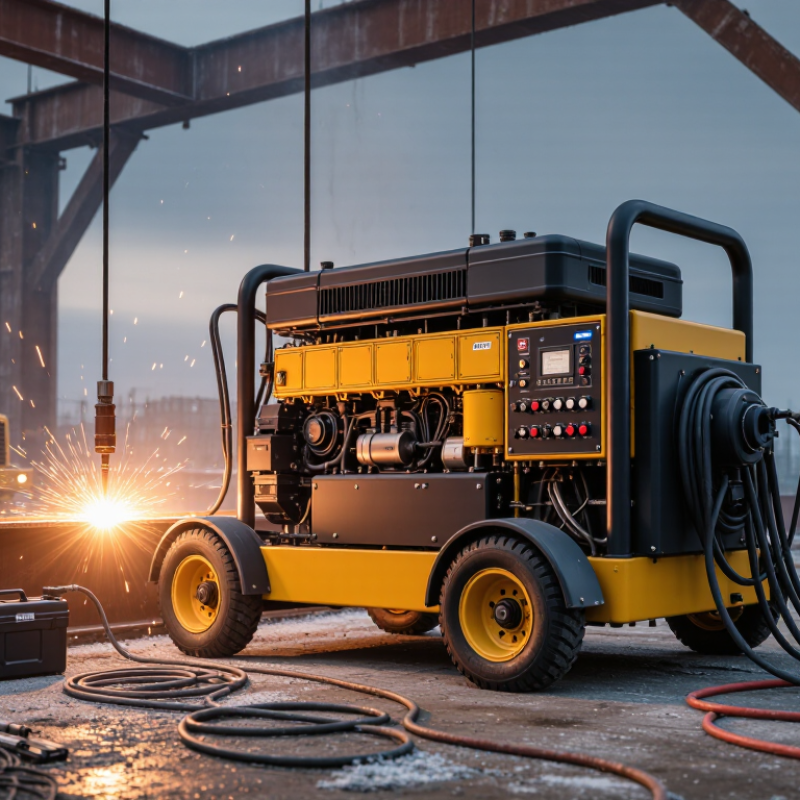
Top 10 Heavy Duty Diesel Engine Welding Machines for Buyers

Diesel Engine Welders Explained: Welding Output, Auxiliary Power, and Mobility

Diesel engine welders combine an arc source and an engine-driven generator. Buyers should assess welding output, auxiliary power, and mobility as one package. Rated amperage matters, but voltage range and duty cycle reveal whether a machine can sustain repeated field repairs. Check ratings for the process you plan to use, not just the headline maximum. A peak figure is not steady output. Read the test conditions. Small detail, big consequence. The American Welding Society’s workforce outlook estimated that U.S. employers could need about 330,000 new welding professionals by 2028. That demand makes dependable field equipment valuable, though it does not make every high-output unit the right choice.

Auxiliary power can run grinders, lights, and pumps, but simultaneous loads may reduce available welding capacity. Confirm the combined ratings in the machine’s specifications. The U.S. Energy Information Administration lists diesel fuel at roughly 137,000 Btu per gallon, useful context when estimating fuel needs. It does not predict runtime; engine load, weather, and maintenance change consumption. Mobility deserves equal scrutiny. Check operating weight, lifting points, fuel capacity, and trailer compatibility before imagining a unit crossing muddy ground. I would leave some power reserve for cold starts and extra tools. Still, reserve capacity adds weight and cost. That trade-off is easy to miss on a spec sheet.

IEC 60974-1 Duty-Cycle Ratings: 10-Minute Tests at 40°C

When comparing the ten heavy-duty diesel welding machines, read each duty-cycle figure beside its rated welding current. IEC 60974-1 uses a 10-minute test at a 40°C ambient temperature. A 60% duty cycle means six minutes of welding, followed by four minutes of cooling, at the stated load. Check the fine print.

A higher percentage is useful, but only at the current shown. A machine rated for a long cycle at 250 A may have a shorter cycle at 300 A. The diesel engine supplies power, yet its runtime does not define the welder’s duty cycle. At a jobsite, blocked vents, dust, or hot surroundings can also affect cooling. Real conditions vary.

For each machine, compare the duty-cycle rating at the amperage your work actually requires. Look for clear test conditions and overload protection details in the manual. A neat rating table can still hide a mismatch between advertised output and daily use. I would treat missing test details as a reason to ask questions, not as proof of poor performance. The rating is a useful benchmark, not a promise that every site will reproduce the test.

Top 10 Heavy Duty Diesel Engine Welding Machines for Buyers - IEC 60974-1 Duty-Cycle Ratings: 10-Minute Tests at 40°C

Anonymous buyer-planning comparison of representative machine classes; these are not manufacturer-specific product listings or verified model ratings. Confirm each machine’s nameplate, technical datasheet, and applicable test documentation before purchase.

Rank Representative Machine Class Typical Welding Output Range Example Rated Output and Duty Cycle Common Processes Typical Diesel Engine Power Typical Fuel-Tank Capacity Typical Auxiliary AC Output Buyer Check
1 Compact field repair 40–180 A 160 A at 100% duty cycle SMAW (stick); some configurations support GTAW (TIG) Approximately 7–10 kW Approximately 15–25 L Approximately 3–5 kVA Check continuous output at the intended current, electrode size, and site altitude.
2 Light industrial maintenance 40–200 A 200 A at 60% duty cycle SMAW; GTAW on compatible configurations Approximately 9–13 kW Approximately 20–30 L Approximately 4–6 kVA Confirm whether auxiliary power is available while welding at rated output.
3 General-purpose site welding 40–250 A 250 A at 60% duty cycle SMAW; GTAW on compatible configurations Approximately 12–17 kW Approximately 25–40 L Approximately 5–8 kVA Compare the declared duty cycle at 40°C, not a rating quoted without ambient conditions.
4 Heavy maintenance and fabrication 40–300 A 300 A at 60% duty cycle SMAW; GTAW; FCAW where the machine is configured for it Approximately 17–23 kW Approximately 30–50 L Approximately 6–10 kVA Check the available voltage range and whether the output is constant-current or constant-voltage.
5 Pipeline and structural work 40–350 A 350 A at 60% duty cycle SMAW; GTAW; FCAW on suitable configurations Approximately 21–28 kW Approximately 35–55 L Approximately 7–12 kVA Verify arc characteristics, remote-control compatibility, and output stability under load.
6 High-output construction welding 40–400 A 400 A at 60% duty cycle SMAW; GTAW; FCAW on suitable configurations Approximately 27–34 kW Approximately 40–65 L Approximately 8–14 kVA Assess site transport limits, lifting points, and ventilation clearance.
7 Heavy structural fabrication 40–450 A 450 A at 60% duty cycle SMAW; GTAW; FCAW; GMAW if supported by the configuration Approximately 31–39 kW Approximately 45–75 L Approximately 10–16 kVA Check whether the selected wire process requires a separate feeder or polarity arrangement.
8 High-capacity field and repair work 40–500 A 500 A at 60% duty cycle SMAW; GTAW; FCAW; GMAW if supported by the configuration Approximately 36–45 kW Approximately 55–85 L Approximately 10–18 kVA Request output curves and confirm the rated current at the required welding voltage.
9 Multi-operator or high-deposition work 40–600 A 600 A at 60% duty cycle Process options depend on output configuration; often SMAW and wire processes Approximately 45–58 kW Approximately 70–110 L Approximately 12–24 kVA Confirm whether the output supports multiple operators simultaneously and how ratings are divided.
10 Maximum-output industrial field class 40–700 A 700 A at 60% duty cycle Process options depend on the machine; verify each mode and output connection Approximately 55–70 kW Approximately 90–140 L Approximately 15–30 kVA Check transport weight, service access, fuel consumption, and the rated duty cycle at the selected output.

Duty cycle is the portion of a stated 10-minute period during which a welding power source can operate at its declared output under specified test conditions. IEC 60974-1 ratings and test details should be verified against the applicable edition and the machine’s documentation; the example ratings above are illustrative planning values, not certified product data. Engine power, tank capacity, auxiliary output, and process availability vary by design and configuration.

EPA Tier 4 Emissions Standards and Diesel Engine Performance Data

Top 10 Heavy Duty Diesel Engine Welding Machines for Buyers

EPA Tier 4 emissions standards matter when comparing diesel engine welders, but the label alone does not show how a machine performs. In the United States, Tier 4 Final limits depend on engine power category and model year. Check the engine emissions label and certification documents against the exact model you are buying. A clear record is more useful than a broad “low-emission” claim.

Performance data should match your work. Compare rated welding output, duty cycle, and fuel use at different loads, not just peak amperage. For example, a machine may deliver strong output briefly but require cooling time during long welds. Ask for test conditions, including ambient temperature and altitude, since both can affect engine power. If auxiliary power will run grinders or lights while welding, confirm the combined-load figures. Spec sheets can still leave gaps; real job conditions are less tidy.

Tips: Request fuel-consumption data at 25%, 50%, and full load. Check maintenance intervals and emissions-system requirements. Confirm output at your typical amperage and duty cycle. Small details matter. A short demonstration under load can reveal unstable arcs, excessive smoke, or unexpected noise before purchase.

Top 10 Heavy Duty Diesel Engine Welding Machines for Buyers

EPA Tier 4 emissions standards and diesel engine performance data

The chart compares EPA Tier 4 final particulate matter (PM) limits for nonroad diesel engines in two power classes. The limits are 0.03 g/kWh for 19–56 kW engines and 0.02 g/kWh for 56–130 kW engines. These are regulatory limits, not measured emissions or welding-output ratings; verify the engine’s certification and welding specifications when comparing machines.

Source: U.S. EPA, nonroad compression-ignition engine emission standards.

Top 10 Heavy-Duty Diesel Welders Compared by Amperage, Duty Cycle, and kW

A useful top-ten comparison should show rated amperage beside duty cycle and engine output, not peak amperage alone. A 400-amp headline number can look impressive, yet the machine may sustain that current for only a short interval. IEC 60974-1:2021 uses a ten-minute duty-cycle basis and specifies testing at a 40°C ambient temperature.

Compare ratings at the same current: 300 amps at a 60% duty cycle allows six minutes of welding in each ten-minute period. That matters on a repair site, where repeated pauses can slow work.

Kilowatts need careful reading. Welding output and auxiliary power are different ratings; a generator’s kW figure does not tell you its continuous welding capacity. Under IEC 60974-1’s conventional load-voltage formula for constant-current sources, 300 amps corresponds to 32 volts, or about 9.6 kW of arc output.

This is a useful comparison point, not a complete engine-sizing rule. Real losses matter.

For each diesel welder, check whether the listed kW is continuous or peak, and note the fuel and ambient conditions behind the rating. The American Welding Society’s Welding Handbook explains how process and electrode choice affect current requirements, so amperage alone can mislead buyers.

A 250-amp machine may suit many field repairs; sustained heavy passes demand closer attention to duty cycle and cooling.

The awkward detail: published figures do not always reflect dusty, hot job sites. That gap deserves scrutiny.

Buyer Checklist: Fuel Capacity, Generator Output, Engine Power, and Service Support

Top 10 Heavy Duty Diesel Engine Welding Machines for Buyers

Choosing a heavy-duty diesel welding machine starts with the workday, not the headline specifications. Fuel capacity affects how long crews can weld before refueling, especially at remote sites. Check the stated runtime under realistic loads; light-load figures may look better than field results. Generator output matters too. Add up the tools you expect to run alongside the welder, such as grinders, lights, or a small pump. Leave a margin for startup surges. A convincing spec sheet can still hide a poor fit.

Tips: Ask for continuous generator output, not only peak output. Compare tank capacity with expected daily hours. Keep a written list of your tools and their starting loads. Small details matter.

Engine power should support the machine’s rated welding output without constant strain. Compare duty cycle, cooling design, and performance at your usual amperage. More power is not always better if it brings extra fuel use or weight. Service support deserves equal attention: ask about maintenance intervals, local technician availability, and replacement-part lead times. Get the details in writing. Even a well-built machine will need care, and service arrangements can be easy to overlook during a fast purchase.