

...

Top 10 Standard BS Instrumentation Cable Suppliers Worldwide?

Industrial facilities rarely fail because a cable looks inadequate. They fail when signal integrity, shielding, temperature limits, or documentation are overlooked. This guide examines the Top 10 Standard Bs Instrumentation Cable Suppliers Worldwide, focusing on measurable performance rather than marketing claims.

Demand is expanding across process automation, energy, transportation, and manufacturing. Grand View Research and MarketsandMarkets both identify industrial automation and infrastructure investment as major drivers of the global industrial cable market. Their market definitions differ, however. That matters. Reported values should guide research, not replace technical verification.

A suitable Standard Bs Instrumentation Cable must match the project’s voltage rating, conductor class, insulation, screen design, drain wire, and installation environment. Buyers should also check fire performance, oil resistance, electromagnetic compatibility, and operating temperature. Small details matter. A crowded control cabinet can expose weak screening quickly.

British specifications require careful interpretation. Many projects reference BS 5308 terminology, while current procurement may require BS EN 50288 or related IEC standards. The British Standards Institution and IEC publications remain essential references for confirming applicable requirements. Supplier experience is equally important. Factory testing, batch traceability, third-party certifications, and clear datasheets provide stronger evidence than broad claims.

This ranking considers manufacturing capability, export experience, product consistency, customization, testing practice, and technical support. It is not a perfect verdict. Supplier performance can vary by region, project scale, and distributor. Some companies publish excellent documentation but provide limited field support. Others deserve closer review than their online visibility suggests. That uncertainty is worth acknowledging before placing a cable order.
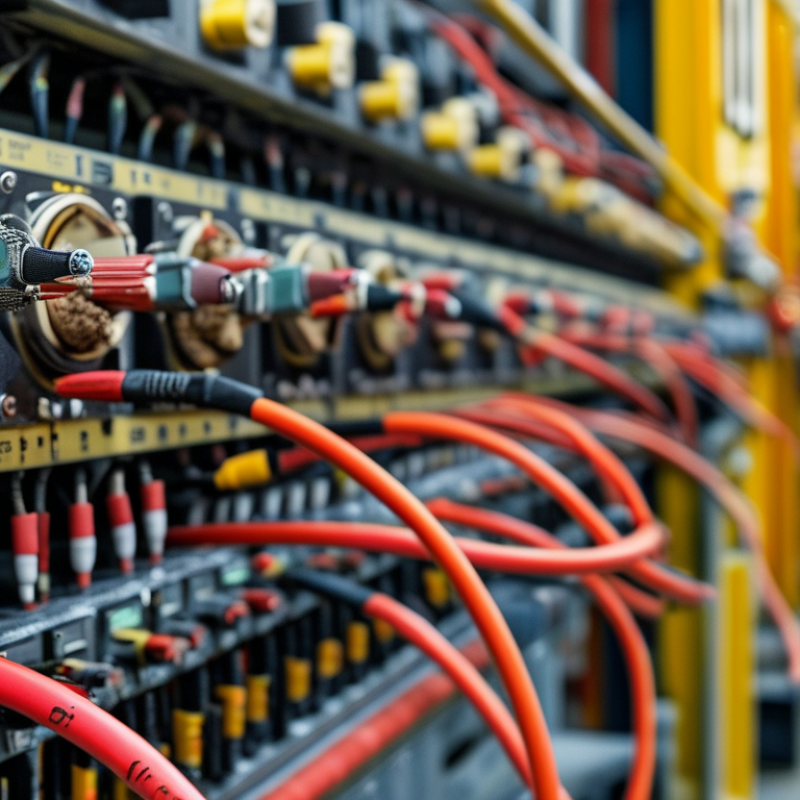
Top 10 Standard BS Instrumentation Cable Suppliers Worldwide?

BS Instrumentation Cables: Definition, Uses, and Scope

BS Instrumentation Cables: Definition, Uses, and Scope

BS instrumentation cables are low-voltage signal cables for accurate measurement and control. They connect sensors, transmitters, control panels, and distributed control systems. Typical designs use stranded copper conductors, polymer insulation, twisted pairs, screens, drain wires, and protective sheaths. Some projects require armouring for mechanical protection.

The term “BS cable” needs careful checking. Older specifications often reference BS 5308, while newer procurement documents may use BS EN 50288 or project-specific requirements. Cable selection depends on voltage, temperature, electromagnetic interference, fire performance, moisture, and installation conditions. In refineries, paired cables carry pressure signals through crowded cable trays. In water plants, screened cables help protect readings from motor noise.

Demand is expanding with industrial automation and energy infrastructure. The International Energy Agency’s World Energy Investment 2024 report estimated global energy investment would exceed 3 trillion dollars, with clean-energy spending above 2 trillion dollars. These projects need reliable monitoring networks. MarketsandMarkets has also identified process automation and industrial control as major drivers for instrumentation cable demand. However, published market estimates vary widely. That difference deserves scrutiny.

For a top-ten supplier assessment, buyers should verify third-party testing, batch traceability, conductor resistance, screen coverage, and flame-performance evidence. A datasheet alone is not enough. Installation records matter. So does field experience.

Key British Standards Governing Instrumentation Cables

When comparing standard BS instrumentation cable suppliers worldwide, buyers should examine compliance evidence, not only catalog descriptions. British Standards help define conductor quality, insulation behavior, fire performance, and testing consistency.

BS EN 50288-1 provides general requirements for multi-element metallic cables. The relevant cable design may fall under BS EN 50288-7 for analog and digital transmission systems. These documents address conductor size, insulation, screening, and electrical performance. BS EN 60228 also matters because conductor class affects resistance, flexibility, and termination reliability. Small details matter.

Older specifications may reference BS 5308. Do not assume automatic equivalence. Confirm its project status, edition, and acceptance with the engineer. Fire behavior requires separate checks. BS EN 60332 covers flame propagation, while BS EN 60754 addresses halogen acid gas and corrosivity. BS EN 61034 evaluates smoke density in defined test conditions. A low-smoke cable can still perform poorly if installation bends, gland selection, or shielding practices are ignored.

Experienced procurement teams request complete test reports, traceable batch records, and declared manufacturing tolerances. They also check whether screening coverage suits the plant environment, especially near variable-frequency drives and high-current equipment. BS EN 50575 may become relevant where cables form part of construction works and reaction-to-fire classification is required. Requirements vary by market. That part is easy to overlook. Supplier claims should be compared against the exact cable construction, not a similar product family. No standard removes the need for engineering judgment.

Key British Standards Governing Instrumentation Cables

The chart shows the publication year of selected BS and BS EN standards commonly used when specifying instrumentation and control cables. These references cover cable construction, conductor requirements, flame propagation, halogen acid gas, smoke density, and fire-performance classification.

Publication years identify the cited standard editions and do not indicate supplier rankings. Always verify the current status and amendments of each standard before procurement or design approval.

Criteria for Ranking Global Instrumentation Cable Suppliers

Ranking global standard BS instrumentation cable suppliers requires more than comparing catalog prices. A credible assessment begins with documented compliance against relevant BS and BS EN requirements. Test reports should identify cable construction, conductor resistance, insulation performance, screening effectiveness, and fire behavior. Evidence matters. Certificates must be current, traceable, and linked to actual production batches.

Technical experience deserves substantial weight. Reviewers should examine factory inspection records, sample testing methods, calibration controls, and engineers’ responses to unusual installation conditions. A supplier serving offshore platforms may need stronger moisture, mechanical, and electromagnetic protection than one supplying a controlled indoor plant. Clear drawings and accurate datasheets also reveal professional discipline. Vague answers should reduce confidence.

Delivery reliability can decide a project. Ranking criteria should include lead times, production capacity, quality consistency, packaging, and after-sales support across regions. Independent audits and verified project references are more useful than promotional claims. However, numbers can mislead. A large export volume does not guarantee every batch performs equally, while a smaller manufacturer may offer better technical attention. Public certificates can also lag behind factory changes, so physical samples and recent records deserve renewed checks. A balanced ranking should therefore combine compliance, testing, field experience, supply resilience, and transparent communication rather than popularity alone.

Profiles of the Top 10 BS Instrumentation Cable Suppliers

Top 10 Standard BS Instrumentation Cable Suppliers Worldwide?

A reliable worldwide shortlist should examine more than catalogue size. The strongest suppliers usually demonstrate BS-compliant design, traceable materials, and controlled production records. One profile may specialize in fire-resistant cables. Another may focus on low-capacitance pairs for accurate signal transmission. A third may offer armored designs for industrial plants. Some suppliers provide custom conductor sizes, while others maintain broad stock for urgent projects. Several are experienced in petrochemical environments, where shielding quality and moisture protection matter. Others serve rail, power, water treatment, or building automation projects. Their technical teams should explain conductor resistance, insulation type, screen coverage, drain-wire construction, and operating temperature clearly.

The remaining supplier profiles often differ through testing depth and delivery strength. Some operate modern laboratories with continuity, insulation, capacitance, and flame tests. Others rely on external testing, which may require closer document checks. International distributors can provide fast regional delivery, but their technical support may be limited. Direct manufacturers often offer better customization, although lead times can increase. Export experience, batch identification, packing quality, and responsive complaint handling also reveal practical reliability. No supplier is perfect. Even experienced teams can miss a project-specific detail.

Tips: Request current datasheets, test certificates, and a sample drum label. Confirm the exact BS reference, voltage rating, screen construction, and outer sheath material. Compare quoted delivery dates with proven production capacity. A factory visit or video audit can expose storage problems, though it cannot replace independent testing. Procurement teams should record every clarification before approving the cable.

Global Markets and Applications for BS Instrumentation Cables

BS instrumentation cables support accurate signal transfer in refineries, power stations, water plants, and manufacturing sites. Their screened construction helps reduce interference near motors, converters, and heavy switchgear. Demand remains strong across Europe, the Middle East, Asia, and industrial regions in Africa. Each market applies different expectations for fire performance, temperature range, sheath material, and documentation. Project engineers should verify the current BS specification before ordering, because older references may no longer match project requirements.

A credible worldwide supplier should provide conductor traceability, routine test reports, and clear construction data. Cable designs commonly include twisted pairs, individual screens, collective screens, or drain wires. In a control room, these details affect noise levels and troubleshooting time. Offshore platforms often prioritize low-smoke materials and moisture resistance. Water treatment facilities may need improved chemical protection. Long cable routes also require careful voltage-drop and capacitance checks.

Supplier comparison is not only about price. Delivery stability matters when shutdown windows are short. Technical support matters more when cable schedules contain mixed signal types. No cable is perfect. A thicker sheath may improve durability but increase installation effort. Engineers should challenge familiar specifications and confirm compatibility with glands, trays, termination kits, and local installation practices. Some procurement decisions still rely on incomplete datasheets. That is a weakness worth correcting. Reliable suppliers explain limitations instead of promising universal performance.

Top 10 Standard BS Instrumentation Cable Suppliers Worldwide? - Global Markets and Applications for BS Instrumentation Cables

Market Rank Anonymous Supplier Profile Primary Supply Region Typical BS Instrumentation Cable Construction Common Standards and Tests Main Applications Typical End-User Sector
01 Large-scale industrial cable manufacturer with international project certification Western Europe and the United Kingdom Multi-pair or multi-triad copper cable with individual and overall screens, drain wire, and low-capacitance insulation BS 5308 product references, BS EN 50288 series, IEC 60228, IEC 60332 flame-retardance testing Analog 4–20 mA loops, digital control signals, distributed control systems, and process measurement Chemical processing, pharmaceuticals, utilities, and general industrial automation
02 Specialist process-industry cable supplier offering extensive pair, triad, and screening combinations Northern Europe Individually screened pairs or triads with collective aluminium/polyester foil or copper-wire braid screening BS EN 50288-7, IEC 60228 conductor requirements, insulation resistance and capacitance testing Low-level instrumentation, temperature transmitters, pressure transmitters, and control-room marshalling Oil refining, gas processing, offshore platforms, and LNG facilities
03 High-volume manufacturer focused on customized industrial cable schedules and rapid production East Asia PVC or LSZH insulated twisted pairs, individually shielded and overall shielded, with numbered cores BS 5308-type designs, IEC 60332-1-2, IEC 60754, IEC 61034 where LSZH performance is specified Factory automation, PLC I/O, motor monitoring, building-management systems, and panel wiring Manufacturing, electronics, data centers, and commercial infrastructure
04 Energy-project supplier specializing in armored cables for fixed outdoor and industrial installations Middle East and South Asia Screened instrumentation pairs or triads with galvanized steel wire armour and a robust outer sheath BS 5308-type requirements, IEC 60228, IEC 60332, mechanical and sheath integrity tests Long outdoor cable runs, tank farms, substations, compressor stations, and plant interconnections Power generation, oil and gas, petrochemicals, and water treatment
05 Marine and offshore cable supplier with enhanced flame, smoke, and oil-resistance options Scandinavia and the North Sea region Halogen-free screened pairs or triads with low-smoke, oil-resistant, and flame-retardant sheathing IEC 60332, IEC 60754, IEC 61034, and project-specific marine or offshore approval requirements Offshore instrumentation, marine control systems, emergency shutdown circuits, and platform monitoring Offshore wind, shipping, offshore oil and gas, and marine engineering
06 Regional manufacturer serving infrastructure projects with flexible low-voltage instrumentation products North America Shielded twisted-pair and multi-pair cables, commonly supplied in PVC, PE, or low-smoke halogen-free versions BS-oriented designs combined with applicable IEC, UL, or project installation requirements Process analyzers, instrumentation junction boxes, control panels, and utility monitoring Refineries, municipal utilities, food processing, and industrial facilities
07 Custom cable producer supporting hazardous-area and high-interference environments Central and Eastern Europe Individually screened circuits, overall screen, optional armour, and conductor insulation selected for low signal interference BS EN 50288, IEC 60079 installation considerations, IEC 60228, and EMC-related project specifications Intrinsically safe circuits, gas detection, fire-and-gas systems, and electrical substation control Chemical plants, mining, energy infrastructure, and heavy industry
08 Value-focused supplier offering standard sizes, short lead times, and private-label project production Southeast Asia PVC-insulated multi-core or multi-pair cable with aluminium foil screening and numbered cores BS 5308-type configurations, IEC 60332 flame testing, conductor continuity, voltage, and dimensional checks General process control, HVAC controls, instrumentation panels, and equipment skids Commercial buildings, water systems, manufacturing, and OEM equipment
09 Specialty supplier for high-temperature, chemical-resistant, and demanding plant environments Southern Europe and the Mediterranean region Instrument pairs or triads using enhanced insulation and sheath compounds for heat, oil, or chemical exposure BS EN 50288, IEC 60228, IEC 60332, oil-resistance, temperature, and environmental-aging tests Heated process units, chemical dosing, rotating-equipment monitoring, and outdoor instrumentation Petrochemicals, cement, steel, power generation, and industrial processing
10 Project-oriented distributor and converter supplying cut lengths, drums, and engineered cable assemblies Africa, Latin America, and emerging industrial markets Standard screened pairs, triads, and multi-core constructions selected according to installation conditions and project specifications BS 5308-type designs, BS EN 50288, IEC 60228, IEC 60332, and customer inspection plans Plant expansion, remote instrumentation, water-treatment controls, and packaged process systems Mining, renewable energy, utilities, oil and gas, and infrastructure development
Selection note: BS 5308 is widely referenced for instrumentation cable designs, while current projects may specify BS EN 50288, IEC requirements, fire-performance tests, hazardous-area practices, or local approval rules. Final selection should be verified against the project specification, installation environment, voltage level, screening requirement, and certification schedule.