

...

What Are the Top Custom Tractor Trailer Types in 2026?

In 2026, the right custom tractor trailer starts with the load, route, and working conditions—not a trend list. Custom Tractor Trailers can include flatbeds for steel or lumber, dry vans for protected freight, refrigerated trailers for temperature-sensitive goods, lowboys for tall machinery, and tankers designed for compatible bulk liquids. Each type solves a different transport problem. A refrigerated unit, for example, depends on insulation, airflow, and reliable temperature monitoring. Small details matter.

Customization can shape deck height, axle configuration, interior fittings, tie-down points, and door placement. These choices affect loading time, handling, and access to job sites. A lowboy may suit an excavator, while a flatbed may be more practical for varied construction materials. There is no universal “top” model. Payload needs, road conditions, tractor compatibility, and service access should guide the comparison. Some buyers focus on purchase price and overlook maintenance or loading requirements. That deserves a second look.

This guide introduces leading trailer categories and the features buyers commonly compare in 2026. It also explains where custom specifications may help—and where a standard configuration may be simpler. Confirm dimensions, ratings, and equipment compatibility with the manufacturer before ordering. Real operating needs are more useful than a glossy brochure.
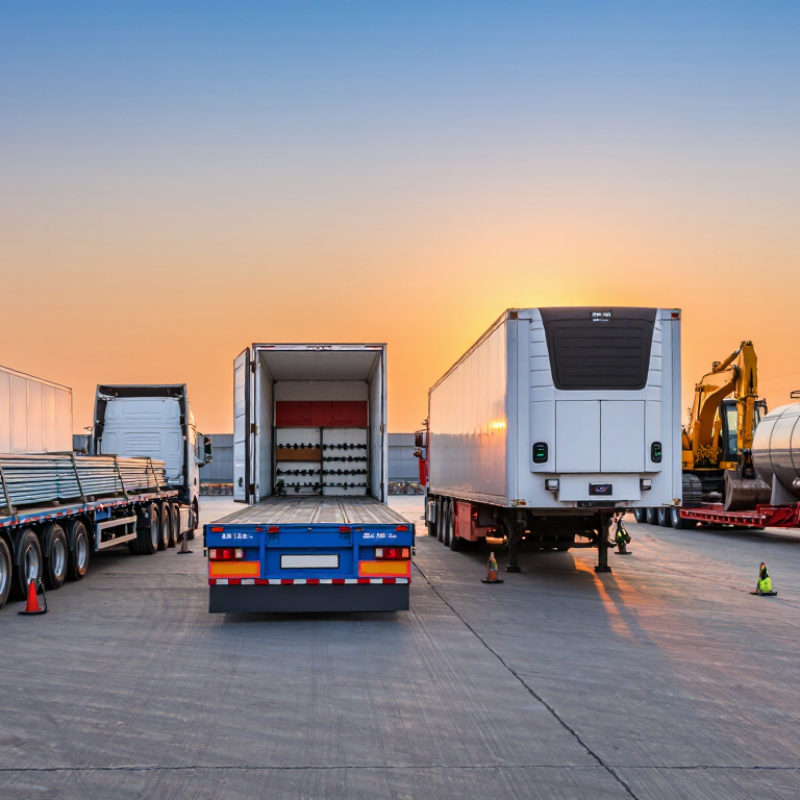
What Are the Top Custom Tractor Trailer Types in 2026?

How Custom Tractor Trailers Are Classified by Load and Function

What Are the Top Custom Tractor Trailer Types in 2026?

How Custom Tractor Trailers Are Classified by Load and Function

Custom tractor trailers are best classified by what they carry and how the cargo must be loaded. Flatbeds suit lumber, steel, and oversized equipment that can be lifted from above or reached from the sides. Enclosed vans protect boxed goods from weather and road debris. Refrigerated trailers maintain controlled temperatures for food and other sensitive freight. Tank trailers carry liquids or gases, while lowboys place heavy machinery closer to the road. Each type solves a different transport problem.

Function matters as much as cargo. A removable gooseneck trailer can make loading tall equipment easier; a curtain-sided trailer offers side access while shielding freight. Capacity, axle layout, deck height, and loading equipment all affect the choice. Measure the heaviest item, not just the full load. Also consider loading docks, turns, and the route’s surface. A specification can look complete on paper and still overlook how crews will unload it. That detail deserves another check.

Tips: Share cargo dimensions, weight distribution, loading method, and delivery conditions when requesting a custom design. Ask how tie-down points, ramps, or temperature controls match the actual load. Small mismatches matter. Recheck your assumptions before ordering.

Which Types Carry General and Temperature-Sensitive Freight?

What Are the Top Custom Tractor Trailer Types in 2026?

Dry vans remain the flexible choice for boxed goods, furniture, and packaged supplies. They protect freight from rain and road debris, while custom shelving, logistic tracks, or liftgates can suit specific loading needs. The American Trucking Associations’ 2024 American Trucking Trends report says trucks carried 11.27 billion tons of U.S. freight in 2022, or 72.7% of domestic freight tonnage. That scale helps explain why general-purpose vans matter. But one configuration rarely fits every route.

Temperature-sensitive freight needs a different setup. Refrigerated trailers use an insulated body and powered cooling unit; adjustable bulkheads can separate cargo zones. Insulated trailers may suit loads that need temperature buffering but not active cooling. The Global Cold Chain Alliance’s 2024 Global Cold Chain Capacity Report estimated worldwide refrigerated warehouse capacity at 719 million cubic meters in 2023, up 6% from 2020. That is a warehouse measure, not a reefer-trailer count. Still, it signals substantial cold-chain infrastructure.

Details matter. A trailer’s usable temperature range, airflow, door-opening frequency, and cargo layout all affect performance. A reefer may struggle if pallets block return-air paths, even when its unit is functioning. Dry vans can carry many non-temperature-controlled loads, while flatbeds suit oversized materials that require open loading. Be specific. Before customizing, match the trailer to the freight, loading equipment, and actual route conditions; “temperature-sensitive” alone is not a complete specification.

Top Custom Tractor-Trailer Types for General and Temperature-Sensitive Freight (2026)

Common freight suitability by trailer type

“Common fit” indicates a typical use, not a guarantee: dry vans and curtain-siders commonly carry general freight, while refrigerated trailers are designed for temperature-controlled loads. Flatbeds commonly carry general freight but do not provide temperature control. Actual suitability depends on cargo, equipment specifications, and applicable regulations.

Which Types Transport Liquids, Bulk Materials, and Vehicles?

Liquid tank trailers are built around how a load moves, not just how much it holds. Baffles can reduce surge when liquid shifts during braking, while compartments allow separate deliveries. Material compatibility matters too: a tank’s lining, valves, and cleanout access should suit the cargo. Insulation may help maintain temperature, but it adds weight and cost. Details matter.

Dry bulk calls for a different setup. Pneumatic tank trailers use pressurized air to move powders through hoses into storage silos. They need suitable discharge fittings and careful attention to moisture, which can cause some materials to clump. For gravel or sand, an end-dump trailer may unload faster at a prepared site. Not always. Uneven ground can make dumping less stable, so the route and unloading area deserve attention before choosing a configuration.

Vehicles typically travel on car-carrier trailers, flatbeds, step decks, or lowboys. The right deck height and ramp arrangement depend on vehicle dimensions, ground clearance, and loading access. Tie-down points should match the securement method, with enough room to position each vehicle without blocking access. A custom layout can improve loading, but extra capacity is not automatically better; added structure may reduce usable payload. Measurements from actual vehicles are more useful than estimates.

What Are the Top Custom Tractor Trailer Types in 2026? Which Types Transport Liquids, Bulk Materials, and Vehicles?

Trailer Type Typical Cargo How It Carries the Load Common Customization Options Typical Capacity or Configuration Key Selection Consideration
Liquid Tank Trailer Fuel, chemicals, food-grade liquids, and other compatible liquids A sealed cylindrical tank contains the liquid; internal compartments can limit surge and allow separate loads. Tank material and lining, number of compartments, insulation, heating system, pumps, hoses, and cleaning access Many road tankers hold roughly 5,000–11,000 US gallons, depending on tank design, axle configuration, cargo density, and legal weight limits. Confirm chemical or food compatibility, required cleaning standards, temperature needs, and applicable hazardous-material rules.
Dry Bulk Pneumatic Trailer Cement, flour, plastic pellets, and other dry, flowable powders or granules Compressed air helps move material from the tank through discharge pipes into storage equipment. Tank compartments, pressure and discharge equipment, piping layout, filters, and access platforms Capacity is commonly specified by tank volume; payload depends substantially on material density and legal weight limits. Choose the discharge system and tank layout for the material’s flow characteristics and delivery setup.
Hopper-Bottom Trailer Grain, seed, fertilizer, and other dry bulk commodities Sloped hoppers direct cargo toward bottom gates for gravity unloading. Hopper size, gate type, weather-resistant covers, ladder and walkway arrangements, and compartment layout Often configured with multiple hoppers; usable volume and payload vary by trailer dimensions, commodity, and axle limits. Consider loading access, unloading equipment, moisture protection, and whether separate compartments are needed.
End-Dump Trailer Sand, gravel, soil, demolition debris, and other loose materials A hydraulic hoist raises the trailer body so the material discharges from the rear. Body material and thickness, hoist specifications, tailgate style, liners, and tarp system Available in different body volumes and axle configurations; the safe payload depends on material density and local weight limits. Check ground stability and overhead clearance before dumping; some sites are unsuitable for a raised trailer.
Walking-Floor Trailer Wood chips, waste, agricultural products, and other loose or palletized cargo Moving floor slats advance cargo for unloading without tipping the trailer. Floor system, slat material, sidewall height, rear-door design, and cargo-securing features Capacity varies by body length, height, and cargo density; it can handle loads that are difficult to unload by tipping. Useful where overhead tipping is restricted or where controlled unloading is required.
Vehicle-Transport Trailer Cars, vans, and light trucks Vehicles are secured on fixed or adjustable decks, often on multiple levels. Deck arrangement, ramps, hydraulic loading equipment, tie-down points, and protective surfaces Many multi-level road car carriers are configured for approximately 7–9 passenger vehicles, depending on vehicle size and trailer design. Match deck spacing and overall dimensions to the vehicles; secure each vehicle according to applicable regulations.
Flatbed Trailer Steel, lumber, machinery, construction materials, and oversized cargo An open, level deck allows loading from the sides, rear, or overhead. Deck length, stake pockets, toolboxes, ramps, winches, and additional tie-down points Dimensions and payload vary by deck and axle configuration; cargo must remain within permitted weight and size limits. Plan for suitable load securement and weather protection when cargo is exposed.
Lowboy / Low-Bed Trailer Excavators, loaders, industrial machinery, and other tall heavy equipment A lowered deck reduces cargo height and can accommodate tall equipment within route-clearance limits. Deck length, removable gooseneck, ramps, axle count, and steering or suspension configuration Payload varies widely with the number of axles, trailer design, route permits, and jurisdictional limits. Verify total height, axle weights, permits, route clearances, and loading requirements before transport.

Note: Capacities and configurations are indicative, not guaranteed specifications. Actual payload depends on trailer design, cargo density, tractor and axle weights, road conditions, and applicable regulations. Custom equipment should be selected for the cargo, loading and unloading method, and operating routes.

Which Specialized Types Handle Oversized and Heavy Loads?

Lowboy trailers place the deck close to the road, making them useful for tall machinery and other loads with strict height limits. A removable gooseneck can simplify loading self-propelled equipment from the front. Clearance matters. The trade-off is that loading methods and ground conditions need careful review; a low deck does not solve every access problem.

For long, irregular cargo, an extendable flatbed can add deck length when needed. Multi-axle modular trailers suit exceptionally heavy loads because axle groups can be configured to spread weight across more points. That helps manage ground pressure, but more axles do not automatically make a route suitable. Bridges, turning space, pavement, and local weight limits still need checking.

A step-deck trailer offers a lower main deck than a standard flatbed and may work for tall loads that do not require a lowboy. For the heaviest equipment, planners may combine modular units with hydraulic steering to handle tight turns. Measure the load, not just its listed weight. Dimensions, center of gravity, loading angles, and tie-down positions all matter. It is easy to overfocus on trailer capacity; route surveys and securement details deserve equal attention. A qualified transport planner can verify the configuration against the load and route.

How to Choose the Right Custom Trailer Type in 2026

Choosing the right custom trailer begins with the load, not a popular configuration. Measure cargo length, width, height, weight, and loading points. A dry van suits enclosed freight; a refrigerated trailer needs enough insulation and cooling capacity for the required temperature. Flatbeds simplify side loading, while low-deck designs may help with tall equipment. Measure twice.

The American Trucking Associations’ 2024 American Trucking Trends report says trucks moved 11.46 billion tons of U.S. freight in 2022, or 72.6% of domestic freight tonnage. That scale underlines why trailer fit matters: a poor match can mean extra handling or unused capacity.

For operating costs, ATRI’s 2024 report put the average marginal cost of trucking at $2.270 per mile in 2023. Compare likely route costs, payload, fuel use, and maintenance—not just purchase price.

Check dock heights, turning space, road conditions, and how often loads vary. A specification sheet cannot reveal every loading-bay constraint. I would leave room for uncertainty: real routes and cargo change, and no single trailer handles every job well.