

In 2026, choosing a Floor Mat Carpet means balancing comfort, grip, cleaning, and the demands of the room. A soft mat may feel welcoming beneath bare feet, but it can hold moisture near a busy doorway. Dense, low-pile carpet mats are often easier to vacuum, while rubber-backed styles can help limit movement on smooth floors. Check the backing, though; some materials may not suit every floor finish.
For entryways, coir mats scrape away grit, but they can shed and feel rough underfoot. Washable mats offer a practical option for kitchens, pets, and muddy shoes, provided the care label matches your routine. Carpet tiles make damaged areas easier to replace, yet their edges need a secure, even fit. Anti-fatigue mats bring cushioning to standing work areas, although they are not a substitute for suitable footwear or safe work practices. Not every room agrees. The trade-off is easy to miss: a thicker mat can feel plush but may catch a door or create a raised edge. This guide compares popular floor mat carpet types by material, backing, durability, cleaning needs, and best-use setting. It also points out details worth checking before you buy, including size, edge finish, and manufacturer care instructions. Labels can mislead. A little skepticism helps: “non-slip” does not guarantee a mat will stay put on every surface. The right choice depends on your floor, your traffic, and how much upkeep you will realistically do.
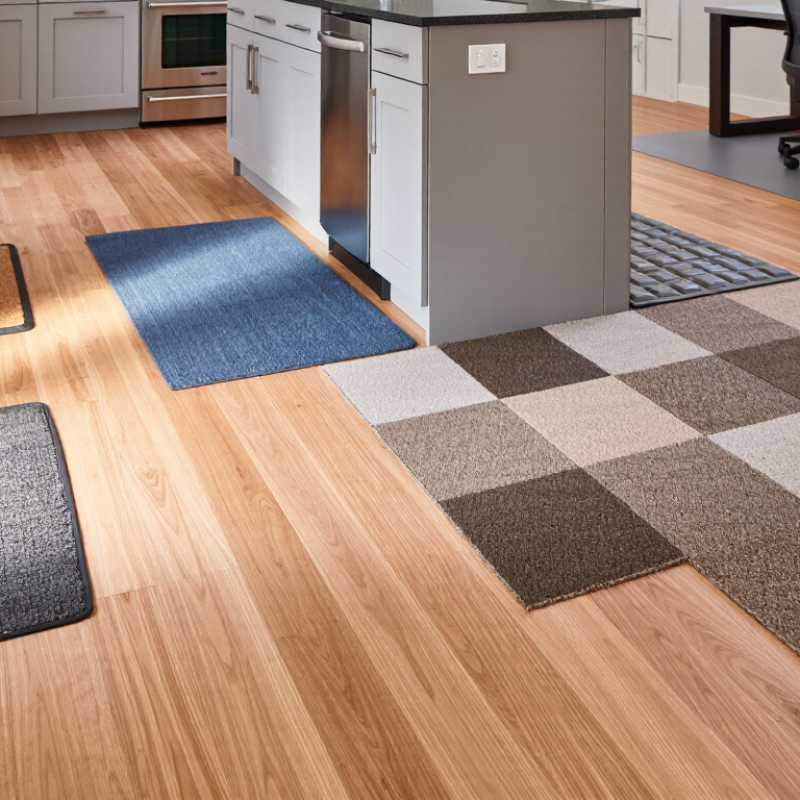
In 2026, floor mat carpets are best classified by construction, fiber, pile, and intended setting. Construction includes tufted, woven, and needle-punched mats. Common fibers include nylon, polypropylene, polyester, and wool. Pile may be looped, cut, or low-profile, while backing can be rubber or textile. These differences matter under wet boots: a dense, low-loop entrance mat handles grit differently from a plush bedside mat. Small distinction. Real impact.
Market reports provide context, not a buying taxonomy. Grand View Research valued the global carpet and rug market at $52.8 billion in 2023; Fortune Business Insights estimated $57.91 billion for the same year. Different scopes and methods help explain the gap, and neither figure represents floor-mat sales alone. When comparing mats, check test documentation as well as product labels. ASTM D2859 addresses carpet surface flammability; backing adhesion and slip resistance require separate evidence. A label alone is weak proof. Classification helps, but it is imperfect: hybrid mats can blur the categories.

Floor mats in 2026 vary by material, pile, and backing, so the best choice depends on where the mat will sit. Nylon handles frequent foot traffic and tends to recover well after compression. Polypropylene resists moisture and is often practical near entryways, though it may flatten sooner under heavy use. Wool feels warm and naturally resilient, but it needs more careful cleaning. There is no perfect material.
Construction changes how a mat performs. Cut pile feels soft underfoot, while loop pile creates a firmer surface that can hide everyday dirt. A low-profile woven mat is easier to place beneath a door, but may offer less cushioning. Tufted mats can feel plush; check that their backing grips the floor and does not shed. Small details matter.
Tips: Match the mat to the mess. For wet shoes, look for a moisture-tolerant surface and a stable, non-slip backing. For a hallway, choose a low pile and measure the door clearance before buying. Vacuum regularly, and follow the care label for washing. Even a durable mat can wear unevenly if it stays damp or gets dragged across rough flooring.
The right mat carpet depends on traffic, moisture, and how often you clean. For entryways, choose a dense, low-pile mat with a non-slip backing. It can catch grit before it reaches the hall. Coir sheds some fibers, though, so it may not suit every household. In living rooms, low-pile carpet tiles offer a softer landing and are easier to replace if one section stains. Bedrooms can use plush mats beside the bed, where bare feet meet the floor each morning. Small details matter.
Kitchens need a different balance. A washable, low-pile mat is easier to clean after splashes, while a cushioned surface can ease long periods of standing. Check that its backing stays secure on your floor. For garages or laundry areas, choose water-resistant, textured mats that tolerate damp shoes and frequent wiping. Avoid thick carpet where spills may linger. It is easy to mistake softness for practicality.
Tips: Measure the area before buying, and check the mat’s care instructions. Let damp mats dry fully to reduce trapped odors. Test the edge with your foot; a curled corner can become a trip hazard. I would also reconsider a choice after a week of real use. A mat that looks perfect in a photo may shift, collect crumbs, or feel awkward under a door.
Floor mats in 2026 still fall into a few practical groups: rubber-backed fabric, microfiber, coir, and molded rubber. Performance depends less on a product label than on the floor, foot traffic, and moisture it faces. A mat beside a wet entry needs different qualities from one under a desk. Small detail, big difference.
Grip & absorption
Grip starts underneath. Textured rubber or thermoplastic backing can help a mat stay put on clean, dry tile, while dust or a damp floor may reduce traction. Check the corners after vacuuming; curled edges can become a trip hazard. Absorption depends on the pile and fibers. Microfiber and cotton blends can catch drips, but saturated mats need time to dry. Coir scrapes grit well, though it feels rough under bare feet. No mat does everything.
Durability & care
Durability comes from sturdy backing, dense construction, and matching the mat to its use. A low-pile washable mat often suits kitchens because crumbs are easier to remove. Coir may shed, and rubber can deteriorate with harsh cleaners or prolonged sunlight. Follow care instructions, vacuum or shake the mat regularly, and dry its underside before putting it back. I would not judge one after a single dry day. Wet-weather use tells more, though that test is easy to overlook.
Choosing a floor mat carpet starts with the spot it needs to serve. An entryway faces grit, wet shoes, and frequent traffic, so a low-pile synthetic mat or coir surface can help catch debris. For a kitchen, choose a washable, absorbent option that lies flat near the sink. Soft microfiber feels comfortable, but it may need more frequent washing.
Check the floor and the door clearance before buying. A thick mat can snag under a door, while a loose one may shift on smooth tile. Measure the space, including the path people actually walk. Measure twice. Rubber backing can improve grip, but confirm it suits your flooring; some finishes may react to certain backing materials. When unsure, check the floor maker’s care guidance.
Match the mat’s texture and color to the room, but let maintenance guide the final choice. Dark, patterned surfaces can disguise everyday marks; pale mats show them quickly. That matters. Look for a removable or washable design if muddy shoes, pets, or spills are common. Check care labels and dry mats fully before putting them back, since damp fibers can develop odors. A mat that looks perfect in a photo may still be awkward to clean. Test the size and placement against your daily routine.
