

...

What Are the Top Galvanized Tube Types from China?

Choosing the right Galvanized Tube from China requires more than comparing prices. Buyers must examine coating quality, steel grade, dimensions, weld consistency, and factory experience. A bright surface can look impressive, yet appearance alone cannot prove long-term corrosion protection.

Tom Langill, Technical Director of the American Galvanizers Association, offers a practical principle: “Good galvanizing begins with good steel design.” This idea matters when comparing Chinese tube suppliers. Hot-dip galvanized tubes usually provide a thicker zinc layer and suit outdoor structures, agricultural frames, guardrails, and construction supports. Pre-galvanized tubes may offer cleaner surfaces and efficient production for lighter applications. Square, rectangular, and round tubes serve different structural and fabrication needs.

Small details matter.

This article will examine the top Galvanized Tube types commonly supplied from China. It will compare hot-dip galvanized, pre-galvanized, welded, seamless, round, square, and rectangular options. The discussion will also consider zinc coating thickness, dimensional tolerance, corrosion resistance, surface treatment, and common international standards. Product certificates, coating tests, and sample inspections deserve attention. They are not decorative paperwork.

Still, no supplier comparison is perfect. Factory photos may be outdated. A certificate may describe a batch, not every shipment. Even experienced buyers can overlook welding quality or inconsistent wall thickness. A reliable decision combines technical documents, physical samples, production audits, and clear contract requirements. China offers broad manufacturing capacity, but quality varies considerably. Careful verification remains essential.
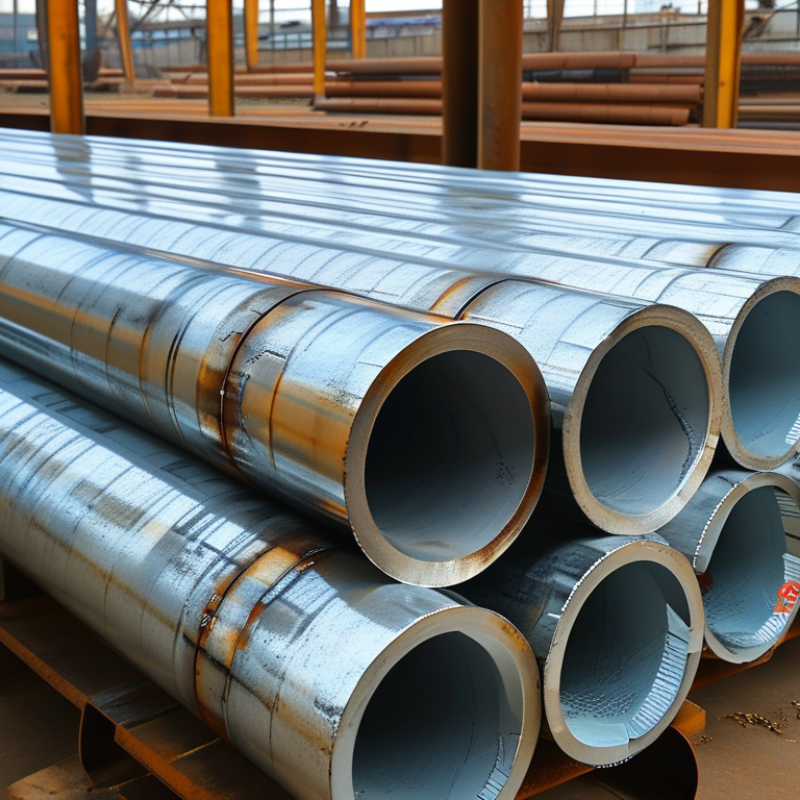
What Are the Top Galvanized Tube Types from China?

Chinese Galvanized Tube Categories Under GB/T 3091, ASTM A53, and ASTM A500

What Are the Top Galvanized Tube Types from China?

Chinese galvanized tubes are commonly selected under GB/T 3091, ASTM A53, or ASTM A500. Each standard serves a different engineering purpose.

GB/T 3091

GB/T 3091 covers welded steel pipes for low-pressure fluid service. These tubes are often hot-dip galvanized after forming. They suit water lines, sprinkler piping, and general construction. Inspectors usually check outside diameter, wall thickness, zinc coating, weld appearance, and threaded ends. A bright surface is not enough. Coating adhesion matters more.

ASTM A53 and ASTM A500

ASTM A53 includes welded and seamless pipe for mechanical and pressure applications. Galvanized A53 pipe is available in several manufacturing types and commonly uses Grade A or Grade B steel. It is practical for piping systems, handrails, and exposed utility lines. ASTM A500 is different. It covers structural tubing in round, square, and rectangular shapes. These sections support frames, columns, barriers, and equipment bases. Their structural design requirements deserve closer attention than fluid-flow assumptions.

The distinction is easy to miss. A square galvanized tube may look suitable for piping, but ASTM A500 focuses on structural performance. Likewise, an A53 pipe should not automatically replace a tube designed for load-bearing work. Chinese suppliers may offer custom lengths, zinc weights, and end treatments, but buyers should confirm the exact edition, test certificates, dimensions, and galvanizing method. Small details matter. In practice, incomplete drawings can create avoidable disputes, so specifications should state the standard and intended service clearly.

Hot-Dip vs Electro-Galvanized Tubes: Comparing 45–85 μm Zinc Coatings

What Are the Top Galvanized Tube Types from China?

For Chinese galvanized tubes, coating thickness often decides service life. Hot-dip galvanized tubes pass through molten zinc, creating a bonded zinc-iron layer. Under ISO 1461:2022, steel sections can require average coatings from 45 to 85 μm, depending on wall thickness. Thicker steel generally receives the higher value. Electro-galvanized tubes use an electric current and usually carry a thinner, smoother zinc layer. Reaching 45–85 μm is possible, but it requires additional processing and closer control. That can increase cost. Hot-dip surfaces may look uneven, yet the heavier coating usually suits outdoor frames, fencing, and humid industrial areas. The International Zinc Association reports that zinc protects steel through barrier action and sacrificial corrosion. Its performance still depends on pollution, moisture, and damage. Numbers do not tell everything.

Tips: Ask for coating-thickness results from several tube points, not one measurement. Check whether the supplier follows ISO 1461 or ASTM A123/A123M. Confirm wall thickness, weld quality, and post-galvanizing cutting. A bright surface can mislead.

China’s production scale supports broad tube availability. World Steel Association data recorded about 1.02 billion tonnes of crude steel production in China during 2023. Scale is useful, but it is not proof of consistency.

Request mill certificates, batch identification, and salt-spray results when suitable. Electro-galvanized tubes may be preferable indoors, where appearance and dimensional accuracy matter more than maximum zinc mass. Hot-dip tubes remain the more practical choice for exposed structures, although some specifications are still imperfectly matched to real weather conditions.

Round Galvanized Tubes: ASTM A53 Pressure Grades and Schedule Options

What Are the Top Galvanized Tube Types from China?

Round Galvanized Tubes: ASTM A53 Pressure Grades and Schedule Options

Round galvanized tubes are often selected for water lines, structural supports, and exposed service areas. ASTM A53 covers galvanized welded and seamless steel pipe. Grade A offers lower strength, while Grade B is commonly specified for stronger pressure applications. The correct choice depends on design pressure, temperature, pipe size, and connection method.

Schedule options control wall thickness, not simply product quality. Schedule 40 is widely used for general pressure service. Heavier options, such as Schedule 80 or Schedule 160, provide thicker walls for demanding conditions. However, schedule selection should follow the project’s engineering calculations. A thicker tube is not automatically safer.

During sourcing, I check the outside diameter, nominal wall thickness, pipe type, and end finish. I also request the material test certificate and hydrostatic test records. Galvanizing should appear continuous, without bare patches, heavy lumps, or peeling zinc. Threaded ends need careful inspection because damaged threads can cause leakage during installation.

One detail deserves extra attention. ASTM A53 compliance does not determine every allowable pressure rating. Ratings also depend on size, temperature, joining, and applicable design codes. I once underestimated how much field cutting could damage corrosion protection. Touch-up work may be necessary, but the repair method should match the project specification. Current standard editions should be verified before purchase.

Square and Rectangular Tubes: ASTM A500 Structural Grades and Applications

China’s galvanized square and rectangular tubes are widely used for structural frames, platforms, fencing, and agricultural buildings. ASTM A500/A500M covers cold-formed welded and seamless carbon-steel tubing for structural applications. Grade B commonly provides a 46 ksi minimum yield strength and 58 ksi tensile strength. Grade C raises the yield requirement to 50 ksi, making it suitable for heavier frames and load-bearing assemblies.

That distinction matters. A500 specifies mechanical performance, dimensions, and testing, but it does not automatically define the zinc coating. For hot-dip galvanizing after fabrication, buyers should reference ASTM A123/A123M. Pre-galvanized products usually involve coated sheet requirements under ASTM A653/A653M. The World Steel Association reported approximately 1.89 billion tonnes of crude steel production globally in 2023, showing the scale behind international tube supply. Scale, however, does not guarantee consistency.

During inspection, I would check the mill test certificate, outside dimensions, wall thickness, corner radius, weld seam, and coating mass. A rough corner can expose steel after cutting. A thin coating can fail sooner near drainage holes or welded joints. Small details decide service life. Some purchasing teams focus too heavily on price. I have seen that approach create avoidable rework. Galvanized rectangular tubes may look uniform, yet coating thickness and straightness can vary between batches. A practical specification should state the ASTM edition, structural grade, zinc process, coating requirement, tolerances, and inspection method. Salt-spray results alone are not enough. Field exposure remains the more honest test.

How to Select Chinese Galvanized Tubes by Strength, Coating, and Standards

When selecting galvanized tubes from China, begin with the application, not the surface appearance. Structural tubes need reliable yield strength, tensile strength, and wall thickness. Mechanical tubes may require tighter dimensions and smoother internal surfaces. For water, fencing, scaffolding, or outdoor frames, the required performance can differ greatly.

Strength should match the expected load and connection method. Check the steel grade, outside diameter, wall thickness, and weld quality. A thicker tube is not automatically stronger. Poor dimensional control can weaken welded joints. Ask for mill test certificates and verify the reported values through independent inspection when the project is critical.

Coating choice matters in humid or industrial environments. Hot-dip galvanized tubes usually provide a thicker zinc layer than pre-galvanized tubes. Request coating thickness results, adhesion checks, and visual inspection records. A bright surface can mislead. Zinc appearance alone does not prove durability.

Standards must be named clearly. Common references include GB/T 3091, ASTM A53, EN 10255, and ISO 1461, but they are not interchangeable. Confirm whether the standard covers the tube, the steel grade, or the galvanizing process. Compare sampling rules and acceptance limits. Certificates should match the actual batch, dimensions, and production date. In practice, paperwork is useful, but independent testing remains wiser. One detail is easy to miss: cut ends may have less protection unless they are properly repaired.