



Top Coffee Pouch Manufacturers for Global Buyers?
No verified expert quotation was supplied, so this introduction does not invent one. A named, attributable quote should be added only after checking its original source.
Choosing a Coffee Pouch manufacturer involves more than comparing prices. Buyers need packaging that protects aroma, seals consistently, and suits the product’s shelf life. A pouch may look impressive in a sample. It still needs to perform on a filling line.
This guide compares manufacturers through practical criteria: material options, barrier performance, closure choices, printing quality, production capacity, and quality-control processes. Ask for technical specifications, sample pouches, and clear details about testing. A matte finish, a sturdy zipper, and a clean seal are useful signs, but appearance alone proves little. Small details matter.
The right supplier depends on your coffee, order volume, and sales channels. A small roaster may value flexible order quantities and responsive service. A larger buyer may prioritize repeatable production and reliable delivery. Neither choice is universal. Supplier claims also deserve scrutiny; a polished brochure is not a substitute for documented performance.
Use the manufacturer profiles ahead to build a shortlist, then confirm capabilities directly. Compare like with like. Check lead times, customization limits, and how problems are handled after delivery. This overview is a starting point, not a substitute for your own sample review and supplier checks.
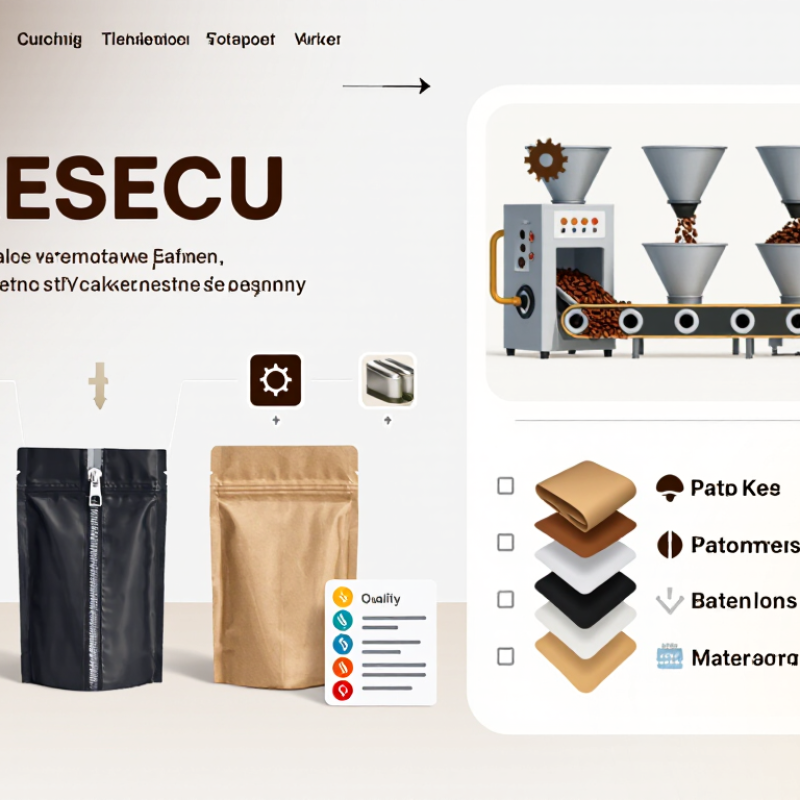
How Coffee Pouch Manufacturers Serve Global Buyers
Coffee pouch manufacturers serve global buyers by turning product requirements into packaging that can travel, store well, and work on filling lines. Buyers should share the coffee format, target shelf life, pouch size, and expected order volume early. A whole-bean pouch may need a one-way valve, while ground coffee often needs strong aroma and moisture protection. Small details matter.
Material choices affect more than appearance. Manufacturers can explain barrier layers, zipper options, seal widths, and finish types, then provide samples for inspection. Ask for testing data that matches the intended use, and check whether printed colors and dimensions stay consistent across production runs. A sample is useful. It is not the whole story. Production conditions can reveal issues that a hand-finished sample does not.
International orders also depend on clear communication. Confirm artwork files, carton counts, lead times, shipping terms, and destination-market packaging requirements in writing. Request a production schedule with approval points, especially for first orders. A good supplier should flag trade-offs, such as a thicker material increasing freight weight or a matte finish showing scuffs more easily. One detail is easy to miss: time-zone delays can slow approvals, so leave room for revisions. No process is flawless, and a practical manufacturer will discuss problems early rather than promise that none will occur.
Top Coffee Pouch Manufacturers for Global Buyers: How They Serve International Markets
| Buyer Requirement | Typical Manufacturer Service | Common Options or Considerations | Value for Global Buyers |
|---|---|---|---|
| Suitable pouch formats | Produce packaging in formats matched to the coffee product, filling process, and retail channel. | Stand-up pouches, flat-bottom bags, side-gusset bags, and flat pouches; formats and dimensions vary by supplier. | Helps buyers select packaging that fits shelf presentation, shipping, and existing filling equipment. |
| Freshness protection | Offer barrier structures designed to limit exposure to oxygen, moisture, and light. | Barrier performance depends on the material structure, thickness, pouch design, and closure. Buyers can request technical specifications and test data. | Supports product quality during storage and distribution; performance should be validated for the coffee and its intended shelf life. |
| One-way degassing | Provide optional one-way valves for packs containing freshly roasted whole-bean coffee. | Valve type and placement should suit the product, bag size, and packing process. Not every coffee product requires a valve. | Allows carbon dioxide released by roasted beans to escape while helping limit outside air entry. |
| Resealability and opening | Configure pouches with closures and opening features for different consumer uses. | Options may include press-to-close zippers, tear notches, and heat-sealed tops. | Can make packs easier to open and reseal; buyers should check compatibility with their filling and sealing equipment. |
| Material and sustainability goals | Discuss material choices and provide information about their structure and disposal requirements. | Conventional multi-material laminates and selected recyclable or paper-based constructions may be available. Recyclability depends on local collection and processing systems. | Helps buyers balance barrier needs, packaging performance, local regulations, and end-of-life expectations. |
| Printing and market localization | Support printed packaging, artwork preparation, and market-specific information. | Confirm print method, color requirements, language versions, mandatory declarations, and artwork approval steps before production. | Enables packaging to meet retailer, consumer, and labeling needs across different destination markets. |
| Food-contact documentation | Provide relevant material declarations, test reports, or compliance documents upon request. | Requirements vary by destination market and intended use. Buyers should specify the countries of sale and request documents for the exact packaging structure. | Supports due diligence and helps buyers assess whether packaging is appropriate for their target markets. |
| Quality assurance | Describe quality-control procedures and provide agreed product specifications for production runs. | Buyers can review sample approval, print checks, seal integrity, dimensional tolerances, and change-control procedures. | Creates clearer acceptance criteria and helps reduce inconsistencies between approved samples and delivered orders. |
| International ordering and delivery | Coordinate quotations, production planning, export documentation, and shipment arrangements. | Lead times, minimum order quantities, shipping terms, and available delivery routes are supplier- and order-specific. | Helps buyers plan inventory and landed costs; confirm all commercial and delivery terms in writing. |
| Sampling and customization | Offer samples or prototypes to evaluate appearance, dimensions, material feel, and filling-line fit. | Ask whether samples are stock items or custom-made, and confirm any sampling charges and timelines. | Allows practical checks before committing to a full production order. |
Note: Services, material structures, certifications, production capabilities, and commercial terms differ by manufacturer. Buyers should verify specifications and destination-market requirements directly with each supplier.