

...

What Are the Top Types of CDX Pine Plywood?

Choosing the right CDX pine plywood begins with understanding where each panel performs best. CDX describes the face grades, while the “X” indicates exterior-rated adhesive. It does not mean the panel is waterproof or permanently weatherproof. That distinction is easy to miss.

This guide examines the top types of Cdx Pine Plyood used in construction and repair work. Standard CDX panels suit roof decking, wall sheathing, and temporary outdoor exposure. Sanded versions offer a cleaner face for visible surfaces, although they may cost more. Tongue-and-groove panels can reduce movement between adjoining sheets, especially on floors and roofs. Pressure-treated options may help in damp locations, but treatment quality and local building requirements still matter.

Details matter here. A 4-by-8-foot sheet can feel solid in the store, yet edge swelling may appear after repeated rain. Check the stamp, thickness, veneer condition, and exposure rating before purchasing. Keep panels flat, separated from wet ground, and covered with airflow underneath. Small gaps between sheets can also support seasonal movement.

No single panel wins every project. A roofing contractor may prioritize stiffness, while a workshop builder may value surface appearance. Some product labels are less clear than expected. Therefore, this comparison considers strength, moisture exposure, installation behavior, cost, and practical limitations. It also recognizes an uncomfortable truth: choosing a cheaper sheet can create higher replacement costs later. Always confirm local codes and the manufacturer’s technical data before installation.
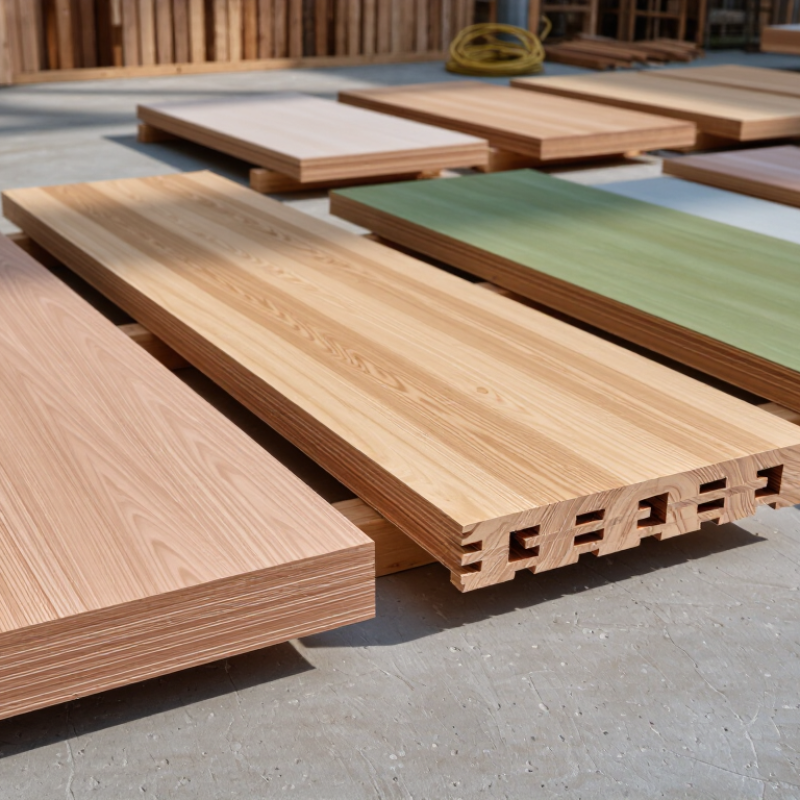
What Are the Top Types of CDX Pine Plywood?

CDX Pine Plywood: Definition, Structure, and Core Characteristics

CDX pine plywood is a structural panel made by bonding thin pine veneers with adjacent grain directions crossing. This layered construction helps the sheet resist splitting and distribute loads. Its “C” and “D” describe the face-veneer grades: the C face is better finished, while the D face may contain more knots and defects. “X” refers to Exposure 1 adhesive, intended for temporary wetting during construction—not permanent outdoor exposure.

The USDA Forest Products Laboratory’s Wood Handbook reports that wood reaches about 7.7% equilibrium moisture content at 70°F and 40% relative humidity. That figure is a general reference, not a guaranteed value for every CDX sheet; storage and site conditions matter. In practice, a panel left on damp ground can swell at its edges, even when its glue bond is rated for temporary moisture. CDX is commonly used for concealed roof, wall, and floor sheathing, where appearance is less important than a sound, properly supported panel. The grade alone does not establish the panel’s load capacity; thickness, span rating, and installation also matter.

Tips: Keep sheets flat and dry before installation, leave the specified expansion gap, and check the panel stamp for thickness and span rating. It is easy to treat “X” as waterproof. It is not.

Standard Grades of CDX Pine Plywood by Thickness and Strength

CDX pine plywood is commonly sorted by thickness, grade, and structural performance. The “C” and “D” faces allow visible knots, splits, and repairs. The “X” indicates exterior glue exposure, not permanent outdoor durability. Common thicknesses include 3/8, 1/2, 5/8, and 3/4 inch. Thinner 3/8-inch panels suit light wall sheathing when framing is closely spaced. Half-inch panels are widely used for roof and wall applications. Five-eighths and 3/4-inch sheets provide greater stiffness for floors, heavier loads, and wider joist spacing.

Thickness alone does not determine strength. A panel’s span rating, bending stiffness, veneer quality, and installation pattern also matter. For example, a 3/4-inch sheet with a suitable span rating may perform better than a thinner panel under repeated foot traffic. Check the grade stamp before buying. It should show thickness, exposure classification, and span information. A common mistake is treating “CDX” as one universal strength grade. It is not. Local building requirements may also specify fastening, spacing, or minimum thickness. I would not choose a panel from appearance alone.

Tips: Measure joist spacing first. Compare the stamped span rating with the project requirement. Keep panels dry before installation. Leave small expansion gaps at edges. When uncertain, ask a qualified building professional to review the load and framing conditions.

What Are the Top Types of CDX Pine Plywood? - Standard Grades of CDX Pine Plywood by Thickness and Strength

Nominal Thickness Typical Actual Thickness Relative Stiffness Common Applications Strength and Selection Notes
3/8 in. About 11/32 in. Lightest and least stiff option in this table Sheathing or backing where the plans and support spacing allow a thinner panel Use only where the panel’s grade stamp, span rating, and project specifications permit it. It is not interchangeable with thicker panels for the same unsupported span.
1/2 in. About 15/32 in. Greater stiffness than 3/8 in. General wall sheathing and other applications specified for this thickness Suitability depends on framing spacing, load, panel orientation, and the rated performance shown on the panel.
5/8 in. About 19/32 in. Greater stiffness than 1/2 in. Roof or floor sheathing when specified for the required support spacing and loading A thicker panel generally resists bending more than a thinner panel of comparable construction, but the grade stamp and span rating determine approved use.
3/4 in. About 23/32 in. Highest stiffness among the thicknesses listed Floor sheathing and other structural uses requiring a thicker panel, as specified Confirm the panel’s rated span, installation details, and design requirements; thickness alone does not establish a load capacity.

How to read CDX: “CDX” is a common trade description for plywood with C- and D-grade face veneers and an Exposure 1 adhesive bond classification. Exposure 1 panels are intended for construction exposure during ordinary delays, not permanent exposure to weather. Actual strength and allowable support spacing vary by panel construction and its grade stamp; check the stamp and project specifications before selecting a panel.

Pressure-Treated CDX Pine Plywood for Outdoor Construction

Pressure-treated CDX pine plywood is designed for outdoor construction, but “treated” does not mean permanently waterproof. CDX describes the panel’s face grades, while exposure performance depends on the adhesive, preservative process, and treatment category. The USDA Forest Products Laboratory’s Wood Handbook reports that wood decay risk rises when moisture remains above roughly 20 percent. Therefore, drainage and ventilation matter as much as chemical protection.

For decks, temporary formwork, sheds, and exterior wall assemblies, select panels rated for the actual exposure. The American Wood Protection Association separates above-ground exterior use from ground-contact use, including categories such as UC3B and UC4A in its current standards. A panel touching soil needs stronger protection than one fixed above a ventilated foundation. Check the end stamp. Check it again. Field cuts, drilled holes, and damaged edges should receive a compatible preservative treatment, because exposed end grain absorbs water quickly.

Installation experience reveals a frequent weakness: builders protect the panel but neglect the framing joints. Use corrosion-resistant fasteners approved for treated wood, maintain clear drainage paths, and seal vulnerable edges where the design requires it. APA’s Engineered Wood Construction Guide emphasizes panel spacing and proper fastening for dimensional movement and structural performance. Still, pressure-treated CDX can warp if stored flat without cover or installed while excessively wet. I have seen this overlooked on small outdoor projects. The better choice is not always the thickest sheet; it is the correctly rated panel, installed with realistic moisture exposure in mind.

Common CDX Pine Plywood Thicknesses for Outdoor Construction

Common panel choices include 1/2-, 5/8-, and 3/4-inch nominal thicknesses. Actual thickness is slightly less than nominal. For outdoor use, choose pressure-treated panels when required by the exposure or installation conditions, and follow the treatment label and local building code.

Sanded and Unsanded CDX Pine Plywood Surface Types

When comparing top types of CDX pine plywood, surface finish deserves close attention. Sanded and unsanded panels may share similar structural layers, yet they behave differently on site. A sanded face offers smoother, more consistent contact. It can accept paint or thin coverings with less visible grain. However, sanding does not remove open knots, patches, or face defects. The panel remains construction plywood, not furniture stock. That distinction is easy to miss.

Unsanded CDX usually keeps its rough mill face, with stronger texture and occasional raised fibers. It is commonly used for roof decking, wall sheathing, subfloors, crates, and concealed construction. The uneven surface can improve handling grip, but it may show through flexible finishes. On a damp morning, exposed edges can absorb water quickly. Seal cut edges promptly, and store panels flat above the ground. Exterior-rated glue helps, but CDX is not a permanent waterproof barrier.

For visible wall panels, sanded CDX is easier to prime, although a test coat remains wise. Different mills can vary in thickness, knot placement, and sanding quality. I have learned not to judge a sheet from one smooth corner. Check both faces, edges, moisture marks, and the grade stamp before installation. A repaired area may still appear under bright side lighting. Surface choice depends on whether preparation or economical coverage matters more.

Choosing the Right CDX Pine Plywood for Each Building Application

CDX pine plywood is not one universal product. Its best type depends on load, moisture, spacing, and finish requirements. CDX usually means C-grade and D-grade face veneers with an exposure-rated glue line. The X does not mean waterproof. It indicates limited exterior exposure during construction.

For wall and roof sheathing, 3/8-inch or 1/2-inch panels may work when framing spacing and local codes allow them. A 5/8-inch or 3/4-inch panel can provide better stiffness for floors, especially under tile or heavy equipment. Check span tables before choosing.

A thicker sheet is not automatically stronger enough for every application. I have seen projects fail because panel thickness was selected by price alone.

CDX plywood needs protection from standing water. Use it beneath roofing, siding, or flooring, not as permanently exposed cladding. For subfloors, look for properly supported panels with suitable edge spacing; tongue-and-groove edges can reduce movement between sheets.

For temporary concrete forms, CDX can be practical, but its rough face may require more finishing work. Seal cut edges where moisture is likely.

Inspect each panel for open knots, delamination, swollen edges, or warped surfaces before installation. Small defects matter.

When appearance is important, CDX often creates extra sanding and filling, so a smoother plywood grade may be the more reliable choice.