...

What Is Sandstone Stone Used For?

Sandstone Stone is a natural material formed from compacted grains of sand. Its colors range from warm beige to red, gray, and golden brown. This variation gives each slab a slightly different appearance. No two pieces look exactly alike.

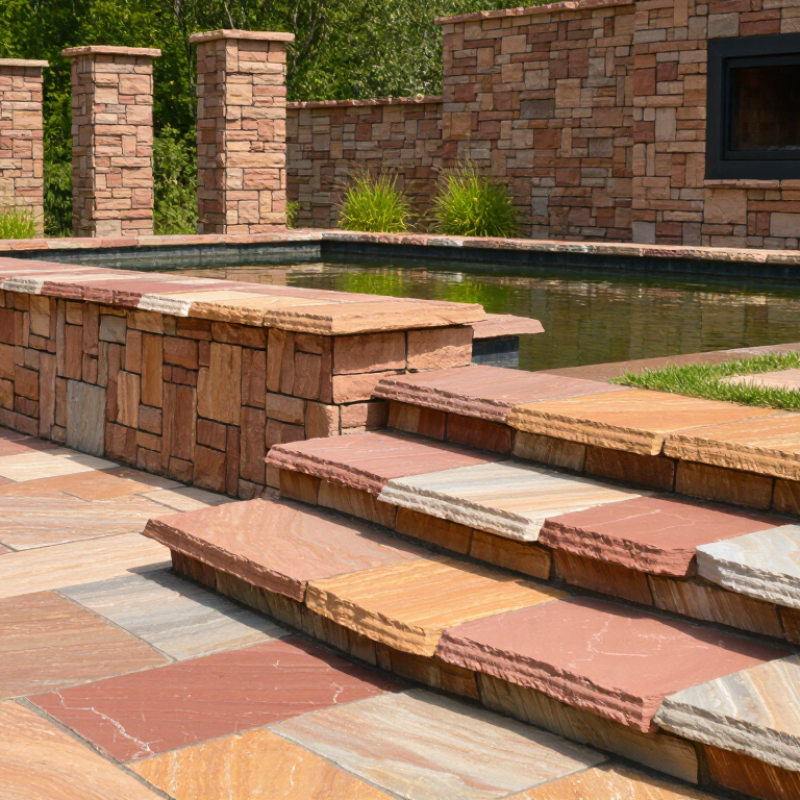
Builders use sandstone for walls, paving, steps, columns, fireplaces, and decorative facades. Garden designers also choose it for paths, retaining walls, benches, and water features. Its textured surface can provide useful grip underfoot. However, sandstone is not equally suitable for every location. Porous varieties may absorb water, stain easily, or weaken during repeated freezing and thawing.

A reliable choice begins with identifying the stone’s density, porosity, finish, and expected exposure. An experienced supplier should explain test results and recommend suitable sealing products. Installation quality matters too. Poor drainage can damage even durable sandstone. Clean cuts, stable foundations, and correctly sized joints improve long-term performance. Maintenance usually involves gentle cleaning, prompt stain removal, and periodic inspection.

Looks can mislead.

A soft, highly porous slab may appear attractive in a showroom but perform poorly outdoors. This is where practical judgment matters. Some projects need stronger granite or engineered alternatives instead. Sandstone remains valuable because it combines natural character with workable strength. Its best use depends on climate, traffic, moisture, design goals, and maintenance expectations. Understanding these factors helps property owners make a safer, more informed decision.

What Is Sandstone Stone Used For?

What Is Sandstone and How Is It Formed?

Sandstone is a sedimentary rock made mainly from sand-sized mineral grains. Quartz and feldspar are common ingredients. Over long periods, wind, rivers, and waves carry these grains into layers. Beaches, deserts, riverbeds, and shallow seas can all collect them. Pressure slowly compresses the layers. Mineral-rich water then moves through tiny spaces and cements the grains together. This process is called lithification.

The finished stone may appear cream, red, brown, yellow, or gray. Its color often reflects iron minerals or other natural materials. Grain size, cement type, and layering affect its strength. Some sandstone feels dense and smooth. Other pieces remain porous and absorb water easily. From practical stonework experience, these differences matter. Sandstone is used for walls, paving, steps, garden features, and building facades. Yet it is not suitable for every climate. Repeated freezing, salt exposure, or constant moisture can weaken certain varieties.

Tips: Check the stone’s porosity before outdoor installation. Ask for absorption and strength data. Look closely at natural bedding planes. They can split under heavy pressure. A small sample test is wise, although it cannot predict every site condition. Sandstone looks durable, but appearance alone can mislead. Proper drainage and regular inspection help preserve its surface.

What Is Sandstone Stone Used For? — What Is Sandstone and How Is It Formed?

Sandstone is a sedimentary rock formed when sand-sized particles are deposited, compacted, and cemented over time. Its composition commonly includes quartz, feldspar, rock fragments, and mineral matrix or cement. These components influence its strength, porosity, appearance, and suitability for building stone, paving, walls, flooring, monuments, and decorative features. The chart shows commonly reported compositional ranges; individual sandstone deposits can vary considerably.

What Are the Main Types and Properties of Sandstone?

Sandstone is a sedimentary rock made from compacted mineral grains, usually quartz and feldspar. Its formation often begins in deserts, river channels, beaches, or shallow seas. Over time, pressure and natural cement bind loose sand into solid stone. The grain size may be fine, medium, or coarse, and this difference affects texture, strength, and water movement.

Geologists commonly describe sandstone as quartz arenite, arkose, or lithic arenite. Quartz arenite contains mostly quartz and often offers good durability. Arkose includes more feldspar, giving it a warmer color and sometimes faster weathering. Lithic arenite contains fragments of older rocks, so its appearance can look varied and irregular. Colors range from cream and gray to red, brown, and yellow because of iron minerals and other impurities. No two slabs look exactly alike.

Sandstone is used for wall cladding, paving, steps, garden borders, fireplaces, and carved features. Its natural grip can work well on sheltered outdoor walkways, but porous surfaces may absorb rain, oil, and dirt. Sealing can reduce staining, although it may slightly change the stone’s color. Frost, salt, and repeated wetting can damage weaker varieties. In practice, I would inspect a sample before choosing it: rub the surface, check visible layers, and test water absorption. A beautiful stone is not always a practical one. Classification can also blur in the field. Surface texture, installation quality, and local climate often matter as much as the name.

What Is Sandstone Stone Used For? – Main Types and Properties of Sandstone

Dimension Sandstone Type or Feature Typical Characteristics Main Uses Important Considerations
Rock Classification Clastic sedimentary rock Formed from sand-sized mineral, rock, or organic grains that become compacted and cemented over time. Building stone, paving, walling, monuments, landscaping, and decorative surfaces. Its performance depends on grain size, cement type, porosity, weathering, and geological origin.
Grain Size Fine- to coarse-grained sandstone Most sandstone grains are approximately 0.0625 to 2 millimeters in diameter. Fine-grained varieties are commonly used for detailed carving and smooth finishes; coarser varieties are used for robust masonry and textured surfaces. Coarser grains may create a rougher surface and can affect cutting, polishing, and abrasion resistance.
Mineral Composition Quartz-rich sandstone Contains a high proportion of quartz, which is hard and generally contributes to good durability. Exterior cladding, steps, paving, retaining walls, and heavy-use architectural features. Quartz-rich stone is not automatically waterproof; pore structure and cementation still control moisture behavior.
Mineral Composition Arkose A sandstone containing a significant amount of feldspar, commonly with a pink, reddish, or light-colored appearance. Wall construction, architectural blocks, landscaping, and decorative stonework. Feldspar can weather more readily than quartz, so local climate and surface exposure should be considered.
Mineral Composition Lithic sandstone Contains abundant fragments of pre-existing rocks in addition to mineral grains. General masonry, landscape features, aggregate production, and construction fill when appropriately tested. Properties can vary widely because the rock fragments may differ in strength and weathering resistance.
Cementing Material Silica-cemented sandstone Grains are bonded mainly by silica, often producing a hard and durable stone. Exterior paving, steps, building facades, and areas subject to abrasion. Hardness may increase cutting difficulty; suitability should be confirmed for the intended finish and installation method.
Cementing Material Calcite-cemented sandstone Grains are bonded by calcium carbonate, which can react with acids. Interior flooring, wall panels, decorative masonry, and low-acid-exposure applications. Acidic cleaners and acidic environments may etch or weaken carbonate-rich surfaces.
Cementing Material Iron-oxide-cemented sandstone Iron minerals provide yellow, orange, brown, or red coloration and bind some grains together. Decorative cladding, garden walls, paving, monuments, and landscape architecture. Color can vary between layers, and prolonged moisture may contribute to staining or surface deterioration.
Color Common colors White, gray, yellow, tan, brown, red, and orange; color is influenced by minerals and cement. Facades, fireplaces, garden structures, paths, patios, wall panels, and ornamental work. Natural variation is normal; samples should be checked because color may differ between blocks or quarry layers.
Porosity Moderate to high in many varieties Connected pore spaces can allow water absorption and vapor movement. Suitable for breathable masonry, landscaping, and selected interior applications. High absorption can increase susceptibility to freeze-thaw damage, staining, salt movement, and biological growth.
Permeability Variable Water movement depends on pore connectivity, grain size, compaction, and cementation. Construction and drainage-related applications where tested performance meets project requirements. Water management, flashing, drainage, sealing, and correct detailing are essential in exposed installations.
Strength Variable compressive strength Strength ranges widely among sandstone varieties; dense, well-cemented stone is generally stronger than friable stone. Load-bearing masonry, paving, steps, retaining walls, and structural or semi-structural elements when engineered. Use project-specific test data rather than assuming all sandstone has the same load-bearing capacity.
Workability Generally easy to cut and shape Many varieties can be sawn, split, carved, or textured, although hardness varies. Sculpture, columns, moldings, cladding, fireplaces, benches, and custom architectural details. Soft or poorly cemented stone may chip, abrade, or shed grains during fabrication and installation.
Surface Finish Natural cleft, sawn, honed, brushed, or textured Finishes can emphasize grain, bedding planes, color variation, and surface texture. Flooring, wall panels, patios, walkways, steps, countertops in suitable settings, and decorative features. Rough finishes improve slip resistance, while smoother finishes are easier to clean but may become slippery when wet.
Thermal Behavior Moderate thermal mass Sandstone can absorb and slowly release heat, depending on density and moisture content. Interior walling, fireplaces, solar-exposed masonry, courtyards, and landscape structures. Thermal performance is not the same as insulation; moisture and temperature cycling should be considered.
Weather Resistance Moderate to high, depending on variety Dense, well-cemented sandstone generally resists weathering better than porous or friable stone. Exterior walls, paving, steps, monuments, retaining walls, and garden architecture. Freeze-thaw cycles, salt, acid rain, persistent dampness, and incorrect cleaning can accelerate deterioration.
Typical Applications Construction and architecture Used as dimension stone, ashlar, veneer, blocks, slabs, and architectural details. Building facades, walls, arches, columns, window surrounds, fireplaces, flooring, and staircases. Stone thickness, anchoring, structural design, water control, and local building requirements must be evaluated.
Typical Applications Landscaping and outdoor design Natural texture and color make sandstone suitable for outdoor hardscape features. Patios, garden paths, paving slabs, steps, seating, fountains, edging, rock gardens, and retaining walls. Select a variety tested for local climate, expected traffic, slip resistance, and water exposure.
Typical Applications Industrial and raw-material uses Crushed sandstone can provide mineral aggregate, while high-purity sand may serve specialized industrial purposes. Road base, concrete and asphalt aggregate, fill, filtration media, and selected glass or foundry applications. Material must meet the relevant grading, cleanliness, strength, and chemical requirements for the application.
Maintenance Regular cleaning and moisture control Routine care usually involves gentle cleaning, removal of standing water, and inspection of joints and surfaces. Preserves appearance and service life in floors, facades, paving, walls, and monuments. Avoid harsh acids, abrasive cleaning, and unsuitable sealers; test cleaning methods on an inconspicuous area first.

How Is Sandstone Used in Construction and Architecture?

Sandstone is used in construction because it combines workable texture with natural visual character. Builders cut it into wall blocks, paving slabs, steps, columns, and decorative panels. Its visible grains can create a softer appearance than concrete or polished stone. Many historic buildings use sandstone for facades, arches, window surrounds, and garden walls. It is also useful for restoration, when matching an existing stone’s color and grain matters.

In architecture, sandstone supports both structure and atmosphere. A honey-colored wall can make a courtyard feel warmer, while rough-cut blocks add a grounded, handmade quality. However, sandstone is porous. Water can enter tiny spaces, then cause staining or damage during repeated freezing. In coastal areas, salt exposure may increase surface wear. On site, careful installers check each piece for cracks, weak bedding planes, and inconsistent thickness. Cutting direction matters. I once underestimated that detail. The finished surface looked attractive, but several pieces weathered unevenly.

Tips: Ask for laboratory test results covering water absorption, compressive strength, and frost resistance. Choose a finish suited to the location, not only the color. Use sloped caps and proper drainage to keep water away from joints. Clean sandstone gently; harsh chemicals may change its surface. Local climate matters. A stone that performs well in a dry region may need extra protection in a wet one.

How Is Sandstone Used for Landscaping and Interior Design?

Sandstone is used for landscaping and interior design because its grain, warm color, and workable texture create a natural visual rhythm. In outdoor projects, it suits patios, garden steps, retaining walls, pool surrounds, and low boundary walls. Its rougher finishes can improve traction after rain. However, sandstone is porous, so poor drainage may cause staining, cracking, or surface scaling. A 2024 market assessment by Grand View Research estimated the global natural stone market would grow at about 4.6% annually through 2030. That growth reflects continued demand for durable, natural architectural materials.

Tips: Match the stone to local weather. Ask suppliers for water absorption and freeze-thaw test results. ASTM testing can reveal performance differences between samples. Use a sloped base beneath paving, not just compacted soil. I have seen attractive patios fail because water stayed beneath the slabs. That detail is easy to overlook.

Inside, sandstone works well for fireplace surrounds, feature walls, flooring, window ledges, and bathroom accents. Honed surfaces feel calm and refined, while split faces provide stronger texture. Light sandstone can make a narrow hallway appear brighter. Yet interior use needs restraint. Heavy variation may look beautiful on one sample and distracting across a whole wall. Sealers can reduce staining, but they do not make the surface maintenance-free. The U.S. Geological Survey’s 2024 Mineral Commodity Summaries places dimension stone within the broader construction-materials sector, where selection increasingly depends on performance, finish, and lifecycle value. Testing one installed sample first remains a sensible, imperfect safeguard.

What Are the Benefits and Limitations of Sandstone?

Sandstone is used for paving, wall cladding, steps, garden paths, and low retaining walls. Its layered texture gives outdoor spaces a warm, natural appearance. Many masons also value its workable surface, which allows accurate cutting around corners and drainage channels. The U.S. Geological Survey’s 2024 Dimension Stone report placed U.S. dimension-stone sales at roughly 2 million metric tons in recent reporting, with sandstone included among the commercial stone categories. Demand remains practical, not merely decorative.

Its main benefit is visual and functional flexibility. Textured sandstone can provide useful traction around patios and entrances. It also handles moderate heat, making it suitable for fireplaces when correctly selected and installed. Yet sandstone is not maintenance-free. Its pores can absorb water, oil, and de-icing salts. Freeze-thaw cycles may cause scaling or cracks, especially in poorly drained areas. Some softer varieties wear quickly under heavy foot traffic.

Moisture matters greatly.

Research from Grand View Research reported a global natural-stone market value above 50 billion dollars in 2023, with continued growth expected through the decade. That market figure covers many stones, not sandstone alone, so it should not be treated as a sandstone forecast. In practice, installers should check absorption, density, slip resistance, and freeze-thaw performance against project requirements. ASTM C616/C616M provides a recognized specification framework for sandstone dimension stone. A common mistake is choosing by color alone. Beautiful stone can still fail beside a leaking planter or an unsealed winter walkway.