Why Choose a UAV Camera Gimbal for Aerial Imaging?
Why Choose a Uav Camera Gimbal for Aerial Imaging?
Aerial imaging demands more than a capable aircraft and a sharp camera. Wind, vibration, sudden turns, and changing light can quickly damage image quality. A Uav Camera Gimbal helps stabilize the camera during flight, keeping buildings, roads, fields, and coastlines visually steady. It turns unstable movement into smoother footage and more dependable photographs.
Eric Cheng, an aerial imaging specialist and author of Aerial Photography and Videography Using Drones, described the camera as “the eye of the drone.” That simple observation explains the gimbal’s importance. If the eye shakes, the entire mission becomes less useful. A three-axis system can correct roll, pitch, and yaw, while remote control allows operators to adjust viewing angles without changing the aircraft’s path. This separation improves safety, framing, and operational efficiency.
The benefits are easy to see in practice. Survey images show clearer edges. Inspection footage reveals smaller surface details. Film scenes appear less distracting. A stable lens also reduces the need for excessive digital correction after landing. However, no gimbal is magic. A poorly balanced payload, weak calibration, or aggressive flight can still produce blurred images. This is where experience matters. Operators should check mounting points, test stabilization, and review sample footage before important work begins. Sometimes, a lighter setup performs better than a more expensive one. That fact deserves attention. Choosing the right Uav Camera Gimbal means matching stabilization, payload capacity, control features, and camera compatibility to the real mission—not simply selecting the most advanced model.
What Is a UAV Camera Gimbal?
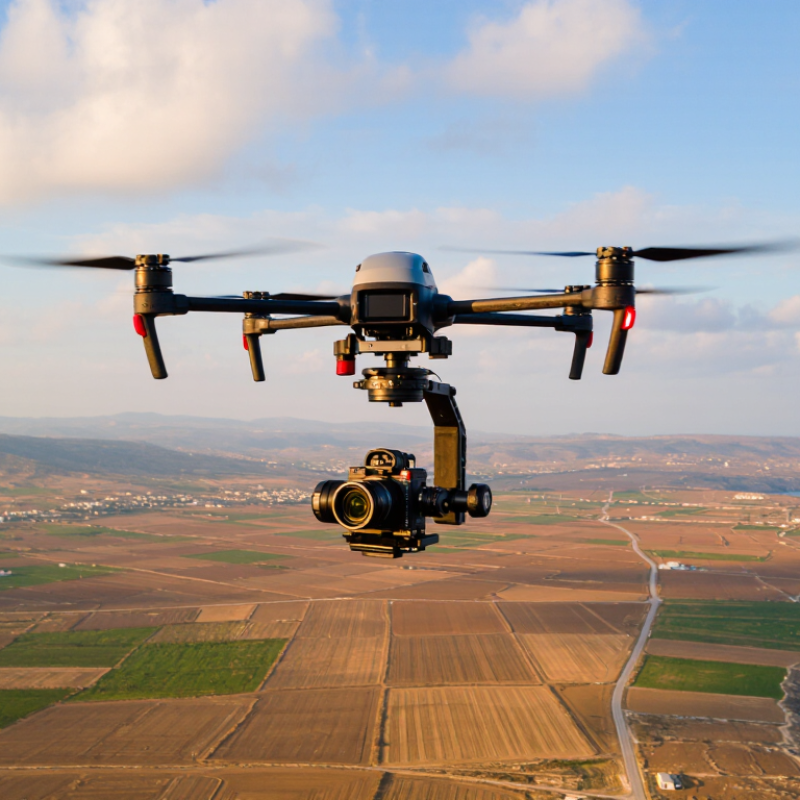
A UAV camera gimbal is a motorized mounting system that stabilizes a camera beneath an unmanned aerial vehicle. It uses sensors, control software, and small motors to counter unwanted movement during flight. When the aircraft tilts, the gimbal adjusts the camera in the opposite direction. The horizon stays nearly level.
A typical gimbal controls two or three axes: pitch, roll, and yaw. Pitch changes the viewing angle, while roll reduces side-to-side slant. Yaw helps the camera follow a subject or maintain a chosen direction. Inside the assembly, an inertial sensor detects vibration and rotation many times each second. The flight controller and gimbal controller then coordinate their responses.
In practical aerial work, correct balancing matters as much as motor power. A poorly balanced camera can drain batteries, create jitter, or overload the motors. I have seen clear footage become unusable after a loose mounting screw shifted the payload. Small details matter.
Calibration should happen before each important mission. Wind, dust, temperature, and rapid acceleration can still affect performance. No gimbal removes every movement. It only manages movement within its design limits. Operators should check the payload weight, control latency, and recorded horizon before relying on the images. A test flight over a safe, open area often reveals problems that a workbench cannot. The first result may disappoint. That is useful feedback.
How UAV Camera Gimbals Stabilize Aerial Images
Why Choose a UAV Camera Gimbal for Aerial Imaging?
A UAV camera gimbal keeps aerial imaging steady while the aircraft moves through wind, turns, and sudden altitude changes. Its value becomes clearest when capturing rooftops, coastlines, or narrow roads from above. Without stabilization, each frame may show blur, tilted horizons, or distracting vibration. The result is visible.
Most professional gimbals use three rotating axes to control pitch, roll, and yaw. An inertial measurement unit detects movement through gyroscopes and accelerometers. The control system then sends rapid corrections to small motors. These adjustments happen continuously, often faster than the operator can react. Vibration-damping mounts also reduce high-frequency shaking from propellers and motors. This combined system helps the camera maintain a stable viewing direction, even during a sharp flight path.
In practical field work, I have found that calibration matters as much as hardware quality. A balanced payload reduces motor strain and improves response. Operators should check horizon alignment before each mission, especially after changing lenses or batteries. Slower shutter speeds still demand careful flight control. No gimbal can remove every problem. Strong wind, loose mounting, or poor settings may create soft images. I have also seen stabilization overcorrect during abrupt maneuvers, producing small but noticeable shifts. Reviewing test footage frame by frame remains essential. Reliable aerial imaging comes from combining mechanical stabilization, sensible camera settings, and disciplined flight practice.
Key Benefits for Aerial Imaging
Why Choose a UAV Camera Gimbal for Aerial Imaging?
Key Benefits for Aerial Imaging
A UAV camera gimbal stabilizes the lens while the aircraft moves through wind, turns, and sudden altitude changes. This matters when mapping rooftops, inspecting power lines, or recording a shoreline at low altitude. In field work, stable footage reduces blurred frames and improves the consistency of overlapping images. Small details become easier to verify.
The commercial opportunity is expanding. MarketsandMarkets’ UAV Market report projects growth from 30.6 billion dollars in 2022 to 58.4 billion dollars by 2027.
The European Commission’s Drone Strategy 2.0 estimates that drone services could generate 14.5 billion euros and 145,000 jobs by 2030.
These figures indicate stronger demand for dependable aerial data, not merely attractive video.
A gimbal also supports repeatable workflows. Operators can hold a fixed viewing angle, trigger planned image sequences, and capture sharper thermal or multispectral frames. That can improve inspection records and reduce unnecessary flights. Still, a gimbal is not a magic solution. Vibration, poor lighting, lens calibration, and operator error can weaken results. Reported market forecasts also vary by definition and region. Careful testing is necessary.
From practical experience, the best setup balances stabilization, payload weight, sensor resolution, and battery endurance. A heavier camera may provide richer data, but it can shorten flight time. Sometimes, simpler equipment performs better.
Essential Features to Consider
Why Choose a UAV Camera Gimbal for Aerial Imaging?
Essential Features to Consider
A UAV camera gimbal turns unstable flight into usable aerial imagery. According to MarketsandMarkets’ 2024 Drone Market report, the global drone market may grow from about USD 30.6 billion in 2024 to USD 54.6 billion by 2029. As missions expand, image reliability matters more than attractive specifications. A three-axis stabilization system should correct roll, pitch, and yaw during wind, turns, and sudden braking. In field tests, even a small horizon drift can complicate mapping and inspection.
Look for low vibration, fast response, and precise calibration. A gimbal with under 0.02° control accuracy can produce smoother frames, but this figure means little without real flight testing. Payload capacity is equally important. The mount must support the camera, lens, cables, and protective housing without exhausting the UAV’s flight time. Small details matter. Loose connectors can ruin a survey.
Sensor compatibility also deserves careful review. A visible-light camera may suit construction records, while thermal or multispectral sensors require stable alignment and accurate metadata. The 2023 Drone Industry Insights report identifies inspection and surveying as major commercial applications, where repeatable data supports professional decisions. Choose a gimbal with timestamped orientation data, low transmission delay, and weather resistance. IP ratings help, but seals can weaken after repeated maintenance. That is an easy detail to overlook. No specification replaces a practical test in wind, low light, and uneven temperature.
Why Choose a UAV Camera Gimbal for Aerial Imaging?
A stabilized gimbal helps maintain a steady viewing direction while the UAV moves. The chart below shows how horizontal field of view changes with focal length for a 1/2.8-inch-class sensor with an approximate 6.4 mm sensor width.
Key consideration: Shorter focal lengths provide a wider field of view for surveying and situational awareness, while longer focal lengths provide narrower framing for distant subjects. A gimbal should also provide smooth multi-axis stabilization, accurate control, suitable payload capacity, and reliable image transmission.