
...

What Are the Types of Construction Machines?

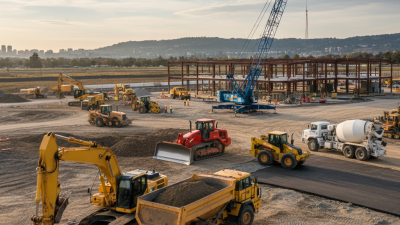
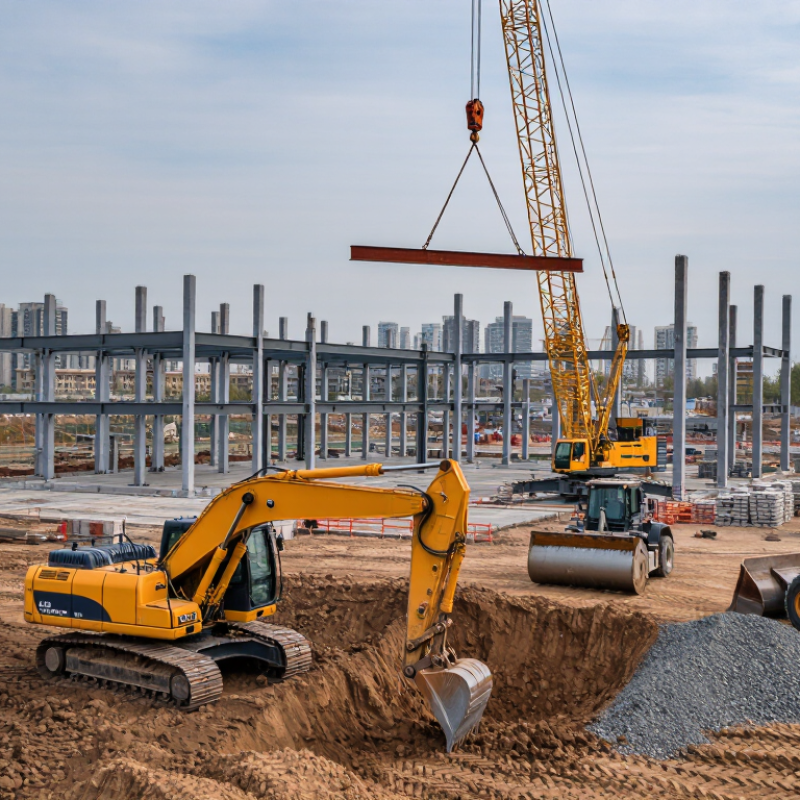
Construction machines shape the pace, safety, and quality of modern building projects. They lift steel beams, move soil, crush rock, drill foundations, and smooth fresh asphalt. Each machine has a distinct purpose. Excavators dig with controlled force. Bulldozers push heavy materials across uneven ground. Cranes raise loads high above crowded sites. Compactors press loose soil into a stable base.

Choosing the right equipment is not simply a matter of size or horsepower. A narrow excavator may outperform a larger model in a confined urban site. An articulated dump truck can handle rough terrain, while a wheel loader offers faster material handling on firm ground. Fuel use, attachment options, operator visibility, maintenance access, and ground pressure also matter.

As Caterpillar founder Benjamin Holt reportedly stated, “The machine is merely a tool; the operator is the master.” That idea remains important today. Advanced controls can improve precision, but they cannot replace sound judgment. Poor planning still creates delays, even with excellent equipment. Sometimes, the most powerful machine is the wrong choice.

This guide examines the main types of construction machines and the work each performs best. It considers earthmoving, lifting, hauling, roadbuilding, and specialized equipment. Real jobsite conditions will guide the discussion, including muddy tracks, limited space, heavy loads, and changing weather. Readers will also see why productivity must be balanced with safety, operating cost, environmental impact, and long-term reliability.
What Are the Types of Construction Machines?

Construction Machine Classes Under ISO 6165: Mass, Function, and Mobility

What Are the Types of Construction Machines?

Construction Machine Classes Under ISO 6165: Mass, Function, and Mobility

ISO 6165 provides a shared vocabulary for classifying earth-moving machinery. It separates machines by their main function, such as excavating, loading, grading, hauling, or compacting. An excavator removes soil with a digging attachment. A loader carries loose material in a front-mounted bucket. A grader trims surfaces with a long blade.

Mass also matters in practical machine selection. Operating mass affects transport planning, ground pressure, stability, and lifting requirements. However, ISO 6165 does not create one universal light, medium, and heavy table for every machine type. That detail is easy to misunderstand. A compact excavator and a large excavator may perform similar tasks, but their working limits differ sharply.

Mobility creates another important class distinction. Tracked machines spread their weight across a larger contact area and often work well on soft ground. Wheeled machines travel faster between work areas and suit firm surfaces. Some machines are self-propelled, while others require towing or controlled movement by an operator. Site observations show that the boundary is not always neat. Attachments can change a machine’s practical role, and a loader may become a tool carrier during one shift. Operators, planners, and inspectors should check the current ISO terminology, operating mass, attachment, and travel system before assigning a machine to a task.

Earthmoving Machines: Excavators up to 1,000+ Tonnes and 360° Rotation

Earthmoving machines form the working core of many large construction projects. Among them, hydraulic excavators can exceed 1,000 tonnes in operating weight. Their massive crawler tracks spread the load across weak or uneven ground. This reduces sinking, but does not remove the risk.

A large excavator can rotate through 360 degrees on a heavy-duty slew ring. The upper structure carries the engine, hydraulic system, counterweight, and operator cab. A long boom and stick reach deep cuts, wide foundations, and large material piles. High-capacity buckets move significant volumes with each cycle. Still, bucket size alone does not determine productivity. Haul distance, soil density, truck positioning, and cycle timing matter just as much.

Experienced operators watch the ground before moving the machine. They check bench edges, buried services, overhead lines, and changing weather. The machine may look stable, yet uneven loading can shift its center of gravity. A small swing angle can also change the counterweight’s effect. That detail is easy to underestimate.

Maintenance crews inspect hydraulic hoses, track assemblies, swing bearings, and structural welds. Tiny leaks can become serious failures under extreme pressure. Clear communication around the swing radius remains essential. No shortcut replaces a controlled exclusion zone. In practice, even a well-planned lift may need adjustment after the first bucket. Soil often behaves differently than the survey suggests. That is where careful observation matters.

Lifting Machines: Mobile Cranes up to 3,000 Tonnes and Forklifts

What Are the Types of Construction Machines?

Lifting Machines: Mobile Cranes up to 3,000 Tonnes and Forklifts

Mobile cranes support heavy lifting where access, reach, and relocation matter. Common types include truck-mounted, rough-terrain, all-terrain, and crawler cranes. Their rated capacity can range from a few tonnes to nearly 3,000 tonnes for specialized heavy-lift units. However, capacity alone does not guarantee a safe lift. Load radius, boom length, wind, ground pressure, and outrigger position can change the real lifting limit.

Small details matter.

ISO 4305 testing principles help assess crane stability and rated performance. Field planning should also verify soil bearing capacity, lifting accessories, exclusion zones, and communication methods. A clean load chart may look precise, but actual sites rarely remain perfect. Mud, uneven ground, or a late design change can undermine an otherwise careful plan.

Forklifts handle shorter-distance material movement, especially around warehouses, factories, and construction compounds. Their performance depends on load centre, mast height, tire condition, and floor quality. The World Industrial Truck Statistics reported roughly 2.4 million industrial trucks sold globally in 2023, showing the scale of demand for powered handling equipment. ISO 5053-1 classifies industrial trucks and supports consistent terminology. Yet operators still need practical judgment. A pallet that fits the rated capacity may become unstable when lifted too high or carried across a damaged surface. I sometimes think capacity labels receive more attention than visibility, training, and daily inspection. That imbalance deserves correction.

Road Construction Machines: Pavers, Rollers, and Graders by Width

Road construction machines are often selected by working width, not appearance. A paver commonly places asphalt across a 1.8 to 9-meter range. Narrow screeds suit urban repairs, while wider screeds reduce longitudinal joints on highways. However, wider is not always better. The haul route, lane geometry, and daily tonnage must support it. The Federal Highway Administration’s 2023 Highway Statistics records about 4.2 million miles of public roads in the United States. That scale explains why contractors need both compact and high-capacity paving equipment.

Rollers require a different width decision. A drum around 1.2 to 2.1 meters can provide practical coverage without blocking adjacent lanes. Steel drums improve smoothness, while pneumatic rollers help close surface voids. Graders usually work with moldboards near 3.7 to 4.3 meters wide. Their long blades create precise cross slopes, especially during base preparation. Width must match the target pass and overlap. Excessive overlap wastes time and may disturb the finished surface.

Material choice also changes the calculation. The National Asphalt Pavement Association’s 2023 Asphalt Pavement Industry Survey reported about 89.2 million tons of reclaimed asphalt pavement used in 2022. Recycled mixtures can behave differently during compaction. I have found that production estimates often look convincing on paper, then fail beside tight curbs or soft shoulders. My first width estimate was too optimistic. Field measurements, test sections, and operator feedback deserve more trust than a simple catalogue number.

What Are the Types of Construction Machines? - Road Construction Machines: Pavers, Rollers, and Graders by Width

Machine Type Typical Working Width Primary Road Construction Function Common Material or Surface Typical Machine Configuration Width Selection Guidance
Mini Asphalt Paver 0.8–2.5 m Places asphalt in narrow lanes, footpaths, cycleways, utility trenches, and small repair areas. Hot-mix asphalt and other bituminous mixtures Compact tracked or wheeled machine with an adjustable screed Best suited to confined work areas where maneuverability is more important than maximum production.
Standard Asphalt Paver 2.5–7.5 m Spreads, levels, and partially compacts asphalt layers for urban roads and general highway construction. Asphalt base, binder, and wearing courses Tracked or wheeled paver with hydraulic screed extensions A medium width provides a practical balance between paving output, joint control, and site access.
Large Asphalt Paver 6.0–12.0 m Paves wide lanes and large roadway sections with fewer longitudinal joints. High-volume hot-mix asphalt High-capacity tracked paver with wide adjustable screed Suitable for major highways, airport pavements, and other projects requiring high daily output.
Single-Drum Vibratory Roller 1.2–2.2 m drum width Compacts soil, aggregate base, and subbase materials using static weight and vibration. Granular soil, crushed stone, gravel, and engineered fill One vibrating steel drum with rear tires or a rigid rear frame Narrow drums improve access in smaller work zones; wider drums increase coverage on open embankments.
Tandem Vibratory Roller 1.0–2.1 m total drum width Compacts asphalt layers and provides a smooth, dense finished surface. Asphalt mixtures and granular base materials Two steel drums, commonly with vibration and optional oscillation Common working widths around 1.3–1.7 m are suitable for many road lanes and urban paving projects.
Pneumatic-Tire Roller 1.5–2.3 m rolling width Provides kneading and sealing action to improve density and surface uniformity. Asphalt, soil-cement, treated base, and granular materials Multiple rubber tires with adjustable ballast and tire pressure Useful where contact pressure and tire flexibility are needed to close surface voids and blend asphalt joints.
Static Steel-Wheel Roller 1.0–2.1 m drum width Performs finish rolling and surface smoothing without applying vibration. Asphalt wearing courses and sensitive compacted materials One or two smooth steel drums operated in static mode Typically used after vibratory passes to remove marks and achieve the required surface texture.
Motor Grader 2.5–4.3 m moldboard width Fine-grades, shapes, and maintains road profiles, shoulders, ditches, and drainage slopes. Soil, gravel, crushed aggregate, and unbound base materials Articulated chassis with a centrally mounted adjustable moldboard A wider moldboard covers more area per pass, while a narrower blade offers better control in restricted spaces.
Heavy-Duty Motor Grader 3.7–4.9 m moldboard width Performs large-scale earthwork, aggregate spreading, high-production grading, and slope shaping. Road base, embankment fill, aggregates, and mineral materials High-power articulated grader with long wheelbase and heavy moldboard Most effective on broad road corridors and large sites where turning space and production capacity are available.
Cold Planer 0.35–2.2 m milling width Removes a controlled depth of existing pavement before resurfacing or full-depth rehabilitation. Asphalt pavement and, with suitable tooling, cement-bound surfaces Tracked milling machine with a rotating cutting drum The cutting width should match the repair area and lane arrangement to reduce unnecessary passes and joints.
Road Recycler or Stabilizer 1.5–2.5 m recycling width Reclaims existing pavement or mixes stabilizing agents into in-place soil and base materials. Reclaimed asphalt pavement, granular base, soil, lime, cement, or emulsion-treated material Self-propelled machine with a full-width milling and mixing rotor The working width is selected according to lane width, treatment depth, and the desired number of passes.

Concrete Equipment: Mixers and Pumps Delivering up to 200 m³ per Hour

What Are the Types of Construction Machines?

Concrete mixers and pumps form a connected production system. Mixers combine cement, aggregates, water, and admixtures with controlled timing. Pumps then move the fresh concrete through pipelines to slabs, columns, or deep foundations. Some high-capacity systems advertise delivery rates of up to 200 m³ per hour. That figure is a limit, not a guarantee.

At 200 m³ per hour, ten-cubic-metre loads must arrive every three minutes. Any delay can create pressure on the pump and a cold joint in the structure. Actual output depends on slump, aggregate size, pipeline length, elevation, and cleaning time. ACI 304R guidance stresses controlled placement and consistent concrete properties. Site crews should check moisture content before batching. Small errors there can change pumpability quickly. It happens.

The International Energy Agency reports that cement production creates about 7% of global carbon dioxide emissions. Efficient batching can reduce rejected loads, unnecessary idling, and material waste. The 2023 UNEP Global Status Report for Buildings and Construction also links the sector to roughly 37% of global energy-related emissions. These figures make equipment selection more than a speed decision. Operators should match pump capacity with delivery schedules, access limits, and crew skill. A smaller pump may perform better on a congested site. The largest number is not always the best answer.