



10 Best Places to Buy Second Hand Industrial Equipment
Buying second hand industrial equipment can reduce upfront costs and keep productive machinery in service longer. Yet a low price alone proves little. Buyers must weigh condition, maintenance history, parts availability, and transport costs. The Circularity Gap Report 2024 estimates that just 7.2% of materials used globally come from recycled sources. Reusing machinery can support a more circular approach, but the benefit depends on the machine’s remaining life and operating efficiency.
A practical search starts with clear requirements: capacity, power supply, footprint, controls, and required safety features. Then compare established equipment dealers, manufacturer refurbishment programs, industrial auctions, specialist marketplaces, and local resellers. Ask for serial-plate details, service records, operating-hour readings, and a live demonstration. Inspect wear points closely. Check spindle play, hydraulic leaks, electrical cabinets, and signs of improvised repairs. For electronics-heavy equipment, disposal also matters: the UN’s Global E-waste Monitor 2024 reports that 22.3% of the world’s 2022 e-waste was documented as properly collected and recycled. That figure does not describe industrial machinery overall, but it highlights why end-of-life plans deserve attention.
The ten places in this guide offer different balances of selection, inspection, and buyer support. Some listings provide detailed records; others may offer little beyond photographs. That gap matters. A machine that looks clean under warehouse lights may still need costly repairs. Verify claims independently, arrange an inspection where possible, and include freight and commissioning in the budget. A careful purchase is not always the cheapest one.
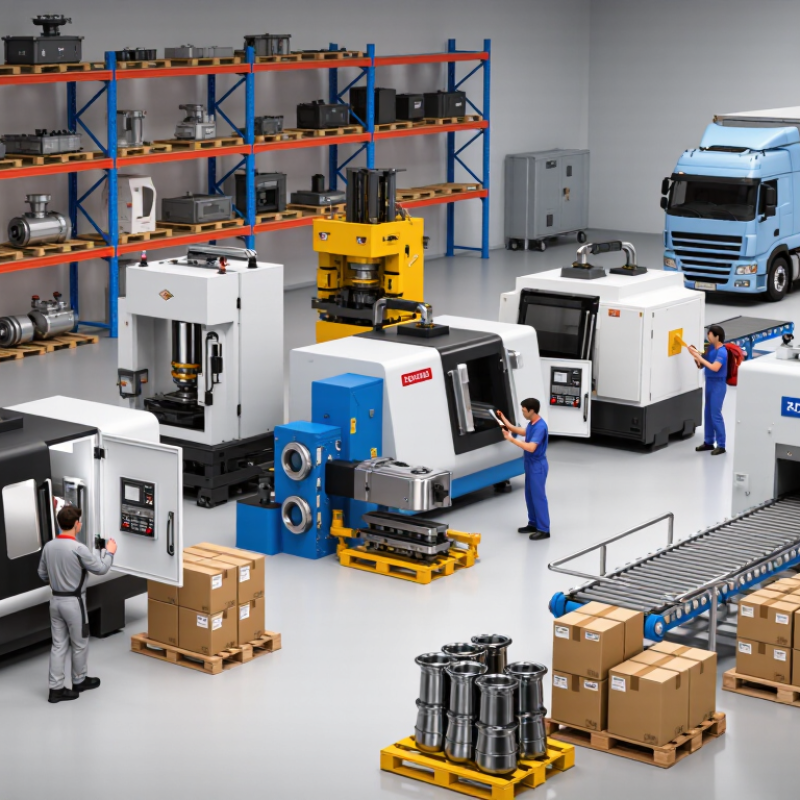
Understanding the Second-Hand Industrial Equipment Market
The second-hand industrial equipment market is not one uniform pool. It includes machines sold as-is, inspected equipment, and professionally remanufactured units. Their prices may look similar online, but their risks differ. A used press with clear service records and a recent spindle inspection is not equivalent to one with only a polished exterior. Buyers should compare operating hours, maintenance history, parts availability, and the cost of recommissioning—not just the asking price.
The European Remanufacturing Network’s 2015 market study estimated Europe’s remanufacturing market at €30–40 billion across sectors. That is not a measure of used machinery sales; it shows the wider value of restoring products for another service life. The UN International Resource Panel’s 2018 report also described remanufacturing as a significant part of circular manufacturing. For buyers, this matters because refurbishment can improve reliability, but the label alone proves little. Ask for inspection records, replaced-component details, and a load test where practical. Small details matter. A low purchase price can hide transport, installation, or downtime costs. I would still treat every machine as a case-by-case decision; even a thorough inspection cannot remove all uncertainty.
10 Best Places to Buy Second Hand Industrial Equipment - Understanding the Second-Hand Industrial Equipment Market
Compare these common buying channels by equipment availability, pricing approach, inspection options, and key considerations. Inventory and sale terms vary by seller and location.
| Buying channel | Common equipment | Pricing approach | Inspection and records | Best suited for | Key consideration |
|---|---|---|---|---|---|
| 1. Online industrial equipment marketplaces | Machine tools, pumps, compressors, material-handling equipment, and production machinery | Fixed asking prices, negotiated offers, or auction listings | Listing details vary; request operating videos, maintenance records, and an in-person inspection | Buyers comparing a broad range of equipment and locations | Confirm the seller’s authority, equipment location, condition, and removal terms before payment |
| 2. Industrial auction platforms | Surplus machinery, factory assets, tools, and equipment from business closures | Competitive bidding, often with buyer’s fees and defined payment deadlines | Inspection periods may be limited; lots are commonly sold under stated auction terms | Buyers who can assess equipment quickly and act within sale deadlines | Include fees, taxes, rigging, and transport in the maximum bid |
| 3. Independent used-equipment dealers | Refurbished or used machinery, including machine tools and processing equipment | Quoted prices, with negotiation depending on condition and included services | Some dealers provide testing, service histories, or limited warranties; verify coverage in writing | Buyers who value assistance with selection, inspection, and logistics | Ask what refurbishment included and whether parts, installation, or after-sales support are available |
| 4. Machinery brokers | Specialized production lines, large machinery, and hard-to-find equipment | Seller-set or negotiated pricing; brokerage fees may apply | Documentation and inspection access depend on the owner and broker’s arrangement | Buyers seeking a particular machine type or help sourcing equipment across regions | Clarify who owns the equipment, who pays the fee, and how condition claims are verified |
| 5. Manufacturer or authorized dealer used-equipment programs | Trade-ins, inspected machinery, and equipment previously used in demonstrations or rental fleets | Quoted pricing that may reflect inspection, servicing, or included support | May offer documented inspections or limited warranty options; terms differ by program | Buyers prioritizing traceable records and access to compatible parts or service | Check warranty exclusions, operating hours, service history, and compatibility with existing systems |
| 6. Surplus asset liquidators | Excess inventory, retired production equipment, electrical components, and facility assets | Fixed-price sales, negotiated offers, or bulk-lot pricing | Condition ranges from unused surplus to as-is used equipment; request serial and condition details | Buyers looking for surplus stock or multiple items from one source | Verify completeness, storage conditions, return terms, and whether testing is possible |
| 7. Government and public-sector surplus auctions | Workshop machinery, generators, vehicles, tools, and maintenance equipment | Auction-based pricing, with deposits or administrative fees possible | Public inspection information and sale conditions are typically specified for each lot | Buyers comfortable reviewing public sale documents and arranging collection | Review eligibility, payment rules, collection deadlines, and any restrictions on resale or use |
| 8. Bankruptcy and insolvency sales | Factory machinery, production lines, stock, and facility equipment | Auction or court-supervised sale; payment and completion schedules may be strict | Inspection access and available records depend on the sale administrator and asset condition | Experienced buyers able to evaluate assets and meet short deadlines | Check title, liens, sale approval requirements, taxes, and responsibility for removal |
| 9. Factory closure and plant decommissioning sales | Complete lines, conveyors, process equipment, utilities, and supporting machinery | Individual or bulk negotiations; pricing may depend on removal timing and lot size | On-site access can allow technical review, but equipment may be disconnected or not operational | Buyers seeking related equipment or larger production assets | Budget for disassembly, lifting, utilities disconnection, transport, and site safety requirements |
| 10. Local classified listings and industrial trade networks | Small machine tools, workshop equipment, spare parts, and locally available machinery | Usually seller-set and negotiable; payment arrangements vary | Often limited formal inspection or warranty support; arrange a test and verify ownership | Local buyers who can inspect and collect equipment directly | Use secure payment practices and confirm power requirements, dimensions, and loading access |
Before buying: Verify the equipment’s identity, operating condition, ownership, electrical and safety requirements, total landed cost, and written sale terms. Whenever practical, have a qualified technician inspect the machine before purchase.
Related Posts
-
Why Buy Second Hand Industrial Equipment?
-
How to Buy Second Hand Industrial Equipment from China?
-
Where to Buy Second Hand Industrial Equipment in 2026?
-
China Best Surplus Machinery Suppliers How To Choose?
-
Top 5 Second Hand Industrial Equipment Options for Your Business Needs
-
2026 Best Second Hand Industrial Equipment for Global Buyers?